HHSRS Reform 2026: What the New Fire Hazard Rules Mean for Manchester HMO Landlords
05/11/2026
If you own or manage an HMO in Manchester, you’ve probably had a fire risk assessment done and ticked that box in your mind. Fair enough. But the rules around how councils judge fire hazards in rented property changed underneath you on 23 June 2026, and most landlords I talk to haven’t caught up with what that actually means.
The Housing Health and Safety Rating System, or HHSRS, is the framework councils use to inspect rented homes and decide whether a hazard is serious enough to act on. It sits alongside, not instead of, your fire risk assessment duty under the Fire Safety Order. From this summer, HHSRS got its first proper overhaul in twenty years, fire hazards were redefined, and councils were handed a faster, cheaper way to fine you for getting it wrong. I’ve set out exactly what changed below, what it means for a Manchester HMO specifically, and where an up-to-date fire risk assessment now earns its keep more than ever.
HHSRS was last reviewed in 2006. The Housing Health and Safety Rating System (England) Amendment Regulations 2026 brought the biggest changes since then, and they took effect on 23 June 2026, with enforcement guidance published the same day. Any council inspection that started on or after 22 June 2026 follows the new system; anything inspected before that date is still judged under the old one.
The headline change is that the 29 prescribed hazards HHSRS used to assess have been reduced to 21. Several were merged because they were statistically similar in how likely they were to occur and how much harm they tended to cause. Fire sits within the “Protection against accidents” group, and it’s one of the hazards that was rewritten rather than just renumbered.
The government’s own case for the reform was that the old system had become too complicated for councils to apply consistently, and too slow to translate into action against the worst properties. Around one in ten privately rented homes in England is estimated to contain at least one of the most serious hazards, and ministers were explicit that the old scoring system wasn’t getting enough of those properties fixed quickly enough. Simplifying the bands and giving councils a faster fixed penalty was the direct response to that.

Before the reform, the fire hazard was narrower: broadly, the risk of fire and explosion itself. The updated definition is deliberately wider. It now covers exposure to uncontrolled fire and the associated smoke and fumes, not just the flames, and it has been extended to include building collapse caused by fire or explosion.
That broadening matters for older Manchester housing stock in particular. A lot of our HMOs are converted Victorian and Edwardian terraces with timber floors and staircases, where smoke spread and structural integrity during a fire are genuinely live risks, not theoretical ones. An assessor working to the new definition has more scope to flag a property than one working to the old, narrower wording.
HHSRS used to score each hazard and sort it into lettered bands, with the most serious sitting in the bands that triggered a mandatory council response, known as Category 1. That system has been replaced with three plain-English bands: High, Medium and Low, based on a numerical score. A score of 1,000 or more is High and corresponds to what was Category 1. A score of 100 to 999 is Medium, and under 100 is Low; both now sit under what was Category 2.
Councils must act when they find a High hazard. They have discretion on Medium and Low hazards. The practical effect for a landlord is the same as before: the worst hazards still force a council’s hand. What’s changed is how fast and how directly they can now act once they do.
| Aspect | Before 23 June 2026 | From 23 June 2026 |
|---|---|---|
| Number of prescribed hazards | 29 | 21, several merged where statistically similar |
| Hazard scoring | Lettered bands | High (1,000+), Medium (100–999), Low (under 100) |
| Most serious hazards | Category 1 — council must act | Relabelled “High” — council must still act |
| “Fire and Explosions” hazard | Fire and explosion risk | Broadened to include exposure to uncontrolled fire, associated smoke and fumes, and building collapse caused by fire or explosion |
| Council’s fire-hazard fining power | Existing housing offence penalties, case by case | New fixed civil penalty of up to £7,000 per High hazard, alongside existing powers |
This is the part that should get your attention. From 22 June 2026, under powers created by the Renters’ Rights Act, a council can issue a civil penalty of up to £7,000 for each High hazard it finds at an inspection, including a fire hazard. It sits alongside the council’s existing powers to force repairs, carry out emergency works, and recover its own costs — it doesn’t replace them, it adds a quicker lever.
I tell every landlord I work with the same thing: this isn’t a fine for having a fire risk, it’s a fine for refusing to fix one once a council has found it at that level. The difference matters, but it only protects you if you act when the chance comes.
How big is the exposure across the sector? Analysis published by property data firm Inventory Base in August 2026 estimated that 504,808 privately rented homes in England have at least one Category 1 (now High) hazard. Apply the maximum £7,000 penalty to every one of those properties and you get a theoretical ceiling of roughly £3.5 billion — not a prediction of what councils will actually collect, since enforcement is still a case-by-case decision, but a clear sign of how much room the new power gives them.
Manchester City Council already has a track record of using civil penalties against landlords over fire safety failures. In one case, a letting agency managing an HMO near Rusholme was fined £21,500 after inspectors found obstructed escape routes, doors that needed a key to unlock in an emergency, and no smoke alarms on first inspection. That case predates this year’s reform, but it shows the council is already willing to use its full civil penalty powers where fire precautions have been ignored — and it now has a faster route to do exactly that.
An HHSRS inspection and a fire risk assessment aren’t the same document, but they’re looking at a lot of the same things. A council inspector scoring the fire hazard at your HMO will weigh many of the same features a competent fire risk assessor already checks under the Regulatory Reform (Fire Safety) Order 2005. If your fire risk assessment is current, specific to your property, and actually acted upon, you’ve already dealt with most of what an HHSRS inspection would flag.
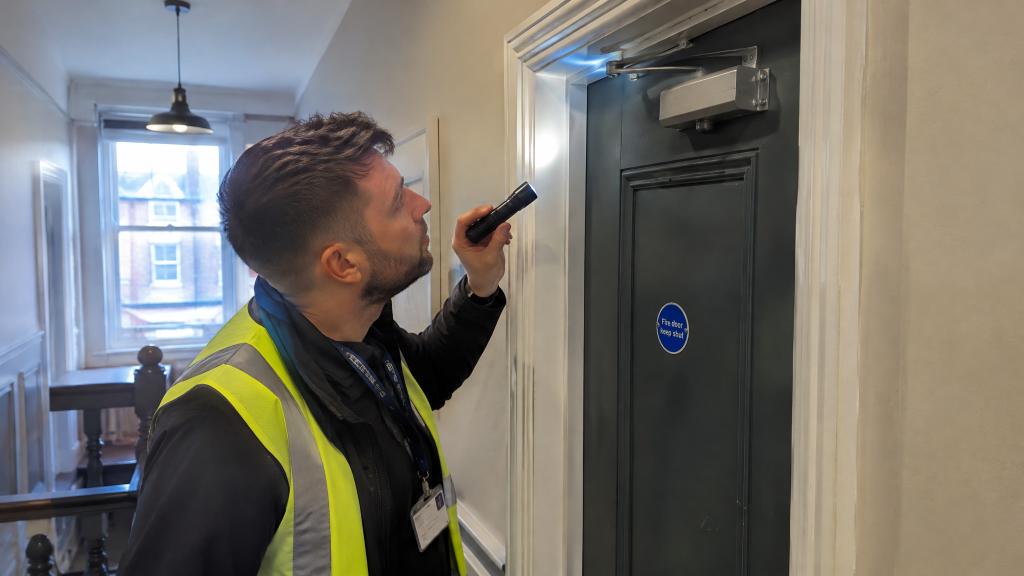
Features that reduce the fire score under HHSRS, and that a proper fire risk assessment should already be covering, include:
Notice that last point. It’s exactly the failing found at the Rusholme HMO above, and it’s one of the quickest things to fix and one of the easiest for an inspector to spot.
I mentioned the Rusholme case above because it’s a useful reality check. Manchester’s Rogue Landlord team, part of its Housing Compliance service, has pursued civil penalties and prosecutions against landlords over fire safety failures for years — this isn’t a new appetite created by the 2026 reform, it’s an existing one that the reform has just made faster to act on.
In an earlier set of Manchester Magistrates’ Court cases, three separate landlords were ordered to pay a combined total of over £27,500 after inspectors found fire safety precautions ignored across illegally converted shared houses in Harpurhey and the city centre, alongside hazardous electrics and general disrepair. None of those cases needed the new HHSRS bands or the £7,000 fixed penalty to happen. They happened under the council’s ordinary enforcement powers, because the fire hazards were there to find.
What the 2026 reform changes isn’t whether Manchester City Council will act on a fire hazard. It’s how quickly, and with less process, it now can.
Greater Manchester has one of the highest concentrations of HMOs outside London, much of it in converted Victorian and Edwardian terraces across areas like Rusholme, Fallowfield, Harpurhey and Longsight. That housing stock wasn’t built with shared escape routes in mind, which is exactly the territory the broadened fire hazard definition now covers more closely.
It’s also worth remembering that an HHSRS inspection and your HMO licence conditions aren’t the same thing, even though they’re often checked at the same visit. A licensed HMO can still pick up a High fire hazard finding if the property has moved on from its original licence inspection, for example through tenant changes, added furniture, or informal alterations to a room layout. If your property also falls under one of the selective licensing schemes now running across several Greater Manchester boroughs, you’re potentially answerable to two separate inspection regimes, which makes keeping your own fire risk assessment current even more valuable as a single, consistent reference point.
A £7,000 civil penalty isn’t the only cost that follows a High fire hazard finding. Most landlord insurance policies require you to maintain the property to a reasonable standard and to hold a valid fire risk assessment where one is legally required. A council enforcement record showing an unaddressed fire hazard is exactly the kind of evidence an insurer can point to when deciding whether to pay out on a claim, quite separately from any fine. We’ve covered this relationship in more detail in our guide to fire risk assessments and landlord insurance, and it’s worth reading alongside this article if you haven’t already.
Weighed against all of that, the cost of a professional fire risk assessment looks modest. Our guide to what HMO landlords actually pay for a fire risk assessment in 2026 sets out typical pricing, and it’s a fraction of a single £7,000 penalty, let alone the insurance and reputational knock that can follow one.
It’s worth separating the HHSRS reform, which is already in force, from the Decent Homes Standard, which isn’t yet and won’t be for some time. The revised Decent Homes Standard extends a set of minimum quality criteria to the private rented sector for the first time, and criterion A requires a property to be free of serious Category 1 (now High) hazards, including fire risks. Criterion B goes further, covering the condition of fire alarm systems, sprinklers and fire safety signage, and it sets a requirement for an Electrical Installation Condition Report at least every five years.
According to the government’s own January 2026 policy statement, the Decent Homes Standard applies to the private rented sector from 2035. That’s a long runway, and I’d treat it as a planning horizon rather than an urgent deadline. The HHSRS reform, by contrast, is already live and already enforceable, which is why it deserves your attention first.
If you’ve read our separate piece on Awaab’s Law and fire safety, you’ll know it extends fixed response timescales, originally written for damp and mould, into the private rented sector for a wider set of hazards. It’s a different mechanism from the HHSRS reform covered here: Awaab’s Law is about how quickly you must respond once a hazard is reported, while the HHSRS changes are about how a council scores and penalises a hazard once it inspects. The two regimes overlap in their subject matter but work through separate legal routes, and a landlord juggling an HMO portfolio needs to understand both rather than assuming one covers the other.
None of this should mean starting from scratch. If your fire risk assessment is genuinely current and your HMO is properly managed, you’re most of the way there already. Here’s the practical order I’d work through:
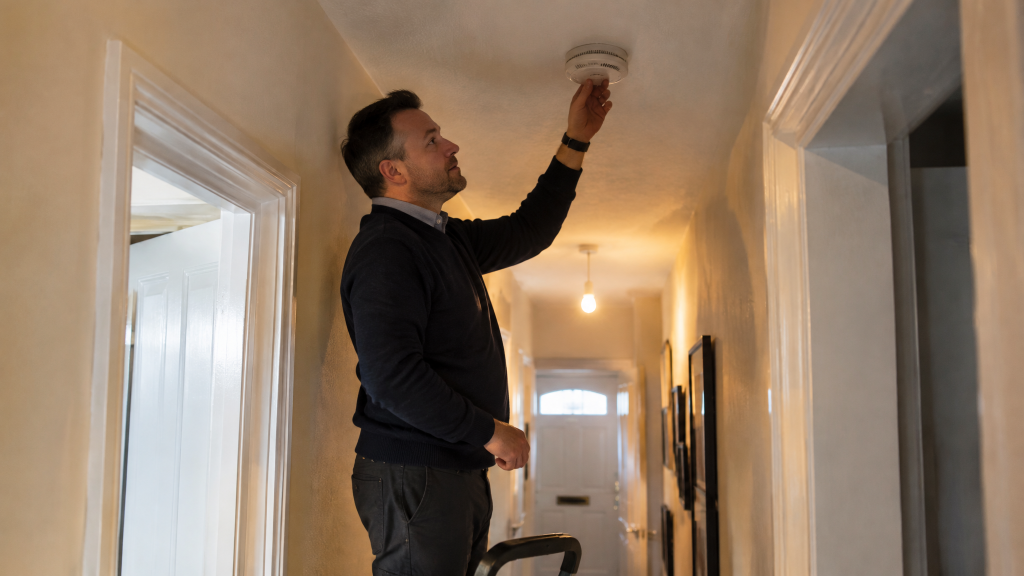
A fire risk assessment isn’t a certificate you file away. Done properly, it’s a working document that tells you, in plain terms, where your property stands against exactly the kind of scrutiny an HHSRS inspection now applies, and it gives you a dated, written record of what you’ve already fixed and when.
The landlords who come to us worried are nearly always the ones who’ve gone two or three years without a reassessment, not the ones who’ve had one recently and are managing a small list of actions. A current assessment is the cheapest insurance you’ll buy against a £7,000 fine.
If you manage an HMO in Manchester, or anywhere across Greater Manchester, and you’re not certain your last fire risk assessment reflects the property as it stands today, that’s the gap worth closing first. The reform hasn’t created new fire safety standards out of nowhere; it’s just made the gap between “looks fine” and “actually compliant” a much more expensive one to leave open.
The Housing Health and Safety Rating System is the framework councils use to inspect rented homes and score hazards, including fire. A fire risk assessment is a separate duty under the Fire Safety Order, carried out by or for the landlord. They cover overlapping ground, but HHSRS is a council inspection tool and a fire risk assessment is your own compliance document.
The Housing Health and Safety Rating System (England) Amendment Regulations 2026 took effect on 23 June 2026, with the new £7,000 civil penalty power available from 22 June 2026. Inspections that started before that date are assessed under the old system.
It applies to all privately rented homes in England, not just HMOs. HMOs tend to carry a higher fire risk profile because of shared escape routes and higher occupancy, which is why the changes are particularly relevant for Manchester’s large HMO sector.
The power allows a civil penalty for a High hazard without the council first issuing an improvement notice, though in practice how each council uses that power varies. Manchester City Council has an established record of using its enforcement powers fully once a serious fire hazard is found, so relying on a warning first isn’t a safe assumption.
Awaab’s Law sets fixed timescales for responding to reported hazards once a tenant raises them. The HHSRS reform changes how a council scores and penalises a hazard it finds during its own inspection. They’re separate legal mechanisms that can both apply to the same property.
Not yet. The Decent Homes Standard is due to apply to the private rented sector from 2035, according to the government’s January 2026 policy statement. The HHSRS reform covered in this article is already in force and is the more immediate priority.
If it’s current, specific to your property, and you’ve acted on its findings, it covers most of what an HHSRS fire inspection looks for. An assessment that’s several years old, or one that was never followed up with repairs, won’t give you the same protection.
The HHSRS reform hasn’t changed the standard review periods for fire risk assessments. See our separate guide on how often fire risk assessments should be reviewed for the detail, and review sooner than that standard period if your property’s occupancy or layout has changed.
Ask for a copy of the inspection findings in writing and address anything flagged as High without delay. If you’re unsure how a finding maps onto your existing fire risk assessment, get a professional opinion rather than assuming it’s already covered.
If you own or manage an HMO in Manchester, you've probably had a fire risk assessment done and ticked that box in your mind. Fair...
Most fire risk assessment guidance is written for a landlord with one HMO. Check it, book it, file it, forget it for a year. That...