
How Often Should Fire Risk Assessments Be Reviewed in the UK?
21/01/2026
One of the first questions property managers and business owners ask is, “how often do I need to get my fire risk assessment reviewed?” While UK law does not set a hard expiry date on your report, the established best practice is a formal review at least every 12 months.
This annual check is widely considered the minimum standard for keeping your premises safe and compliant. This article is for business owners, landlords, facilities managers, and anyone designated as the ‘Responsible Person’ under UK fire safety law. By the end, you will understand your legal duty to review your assessment, know what triggers an immediate review, and recognise the serious consequences of neglect.
As a business owner, landlord, or managing agent in the UK, your core responsibility is to ensure your fire risk assessment remains ‘suitable and sufficient’ at all times. This is not a one-off task but an ongoing legal duty. The annual review is the primary method of demonstrating you are fulfilling this obligation.
Think of it less as a bureaucratic chore and more as a vital health check for your building and the people within it. Over twelve months, many small changes can accumulate, slowly rendering your existing assessment obsolete. New hazards can emerge, and the safety measures you once relied upon may no longer be as effective.
That phrase, ‘suitable and sufficient’, is the cornerstone of the Regulatory Reform (Fire Safety) Order 2005. It means your assessment must be a realistic, current, and accurate reflection of the real-world fire risks within your premises. An outdated document fails this test.
An assessment is considered suitable and sufficient if it:
If your assessment no longer matches the reality of your building’s layout, its use, or its occupants, it is neither suitable nor sufficient. This is a major compliance failure and a breach of your legal duties.
The annual review is your formal, documented opportunity to confirm that your existing assessment is still valid. It is a proactive step that demonstrates due diligence to enforcing authorities, such as your local Fire and Rescue Service.
Under the Regulatory Reform (Fire Safety) Order 2005, there is no rigid timetable dictating exactly how often fire risk assessments must be reviewed, but the law insists they be kept ‘suitable and sufficient’ at all times. This means a formal review at least every 12 months is the gold standard recommended by fire authorities, insurers, and competent professionals.
This duty also includes ensuring specific safety features, like emergency lighting and fire doors, are regularly checked and maintained. An annual review is the ideal time to confirm that all critical parts of your fire safety plan are in place and functioning correctly. A failure here could have devastating consequences in an emergency.
A fire risk assessment is a living document, not a certificate to be filed away and forgotten. It must evolve with your property and its use to remain effective and legally compliant.
When it comes to fire safety in a UK property, the law is clear: the buck stops with one person. This individual is legally known as the Responsible Person, a specific duty defined by the Regulatory Reform (Fire Safety) Order 2005. It is not just a title; it is a serious legal obligation. The first step to compliance is determining if that person is you.
Simply put, the Responsible Person is the individual or entity who has control over the premises. They are personally accountable for ensuring the building is safe from fire. Critically, this duty cannot be delegated, even if you hire external experts to provide advice or carry out an assessment.
You can delegate tasks, but you can never delegate the ultimate responsibility for acting on the findings and keeping the assessment under regular review.
The identity of the Responsible Person is not always obvious and changes depending on the property type. It is vital to know who holds this duty, as they are the first point of contact for the Fire and Rescue Service and can be prosecuted if things go wrong.
Here are the most common scenarios:
Being the Responsible Person involves much more than simply commissioning a fire risk assessment once. Your legal duties are continuous and demand active management of your property’s entire fire safety strategy.
Consider a facilities manager in a Bristol office block. Their job is not just to book the annual review. They must also ensure every action point in the report—like fixing a faulty fire door or upgrading an alarm panel—is completed, paid for, and properly documented.
It is the same for a landlord with several rental properties across London. They need a system to track when each assessment is due for review. They are also responsible for acting on recommendations, whether that is installing interlinked smoke alarms in an HMO or clearing combustible clutter from a communal hallway.
The role of the Responsible Person is active, not passive. You must understand the risks identified in your assessment, implement the necessary control measures, and maintain a continuous cycle of review to ensure ongoing safety and legal compliance.
Pleading ignorance is not a defence. The law expects you to take all reasonable steps to protect people in your building, and that starts with owning your role as the Responsible Person. Failing to do so can lead to significant fines and, in the most serious cases, a prison sentence.
While an annual review sets a good rhythm for your fire safety checks, it is not the only time your fire risk assessment needs attention. UK fire safety law is very clear: you must review your assessment immediately whenever a ‘significant change’ occurs on your premises.
Ignoring this is a major compliance failure. It means your assessment is no longer valid, leaving you non-compliant and dangerously exposed to risk. A significant change is anything that could introduce new fire hazards or render your existing safety measures ineffective. Your assessment must be a living document that reflects the building today, not a historical snapshot filed away in a drawer.
One of the most common triggers is making physical changes to the property. Even what seems like a minor alteration can have a significant knock-on effect on fire safety, especially regarding how people escape in an emergency.
Consider these common scenarios:
How you use a space is just as important as its physical layout. If the purpose of a room or the whole building changes, the fire risks will almost certainly change too. An assessment for a quiet storage area is completely unsuitable for a busy new office.
For instance, a property manager in Liverpool converts a disused ground-floor storeroom into a small office for two staff. This introduces new ignition sources like computers and heaters, increases the number of people who need to escape from that area, and changes the overall fire load. The old assessment is now dangerously out of date and needs a full review.
Any material change to what happens inside your building means your fire risk assessment is no longer suitable and sufficient. The Responsible Person has a legal duty to initiate a review as soon as such a change is planned or occurs.
Your assessment must also account for the people inside the building. A sudden increase in numbers or a change in the type of occupants can drastically alter your risk profile.
Consider these situations:
Finally, introducing new risks into the building or having an incident are clear signs that your current measures are not adequate. This could be anything from storing new types of flammable liquids to installing powerful new machinery that could be an ignition source.
Perhaps the most critical trigger of all is a fire-related incident. Any fire, no matter how small, or even a near miss that could have led to one, is a massive wake-up call. Serious incidents, often managed by advanced emergency response platforms, are clear indicators that an immediate review of your fire risk assessment is essential. It is a crucial chance to learn lessons and prevent something much worse from happening.
The law sees certain events as non-negotiable triggers for an immediate review of your Fire Risk Assessment (FRA). Waiting for your annual review date is not an option. These events fundamentally change the risk profile of your property, making your existing assessment invalid overnight.
Here is a checklist of common triggers that demand you act right away.
| Trigger Event | Example Scenario | Why It Demands a Review |
|---|---|---|
| Structural Alterations | Installing new partition walls, removing a wall, or adding a mezzanine floor. | Changes escape routes, obstructs signage, and can compromise fire compartmentation. |
| Change of Use | A storage room is converted into an office, or a retail shop becomes a café. | Introduces new ignition sources (e.g., cooking equipment), increases occupancy, and alters the fire load. |
| Significant Occupancy Increase | A business hires 20 more staff, or an HMO landlord rents out a previously empty room. | Puts more strain on escape routes and assembly points, requiring a revised evacuation plan. |
| Introduction of Vulnerable People | A care home accepts a resident with mobility issues, or a nursery opens in the building. | The existing evacuation strategy may be too slow or unsuitable for those needing assistance. |
| New Flammable Substances | A workshop starts storing flammable solvents, or a factory introduces gas cylinders. | Creates new, high-consequence fire and explosion hazards that must be specifically managed. |
| Major New Equipment | A factory installs a large piece of machinery that generates heat or has powerful electrics. | Adds a significant new potential ignition source that was not covered in the original assessment. |
| A Fire or a Near Miss | A small fire starts in a bin from a discarded cigarette, or an overloaded socket smoulders. | Proves that existing controls are failing or inadequate. It’s a clear warning that must be acted on. |
| Changes to Fire Safety Systems | The fire alarm system is altered or extended, or a new type of extinguisher is installed. | The assessment must be updated to reflect the new systems and ensure they are adequate for the current risks. |
Treating your fire risk assessment as a “living document” is the core principle here. If anything on this list happens, your duty as the Responsible Person is to ensure the assessment is reviewed and updated to keep people safe and your property compliant.
Applying a one-size-fits-all approach to fire risk assessment reviews is not just ineffective—it is dangerous and non-compliant. The law is clear: your fire safety measures must be appropriate for the specific risks in your building. A quiet, low-occupancy warehouse has a completely different risk profile from a bustling city-centre hotel, and their review schedules must reflect that.
As the Responsible Person, you must understand your property’s unique characteristics to decide how often your fire risk assessment needs a fresh pair of eyes. The baseline annual check is a good starting point, but for many properties, it is simply not enough to keep the assessment ‘suitable and sufficient’.
For most low-risk commercial spaces, such as a standard office or a small retail shop, an annual review is generally considered adequate—as long as nothing significant changes. The environment in these buildings tends to be relatively stable. The occupants are usually the same employees who are awake, alert, and familiar with the building and its emergency procedures.
Even here, however, complacency is a risk. A shop changing its stock could introduce new flammable materials, or a minor office reshuffle might accidentally block a once-clear escape route. That annual review is your formal opportunity to spot this type of gradual change before it escalates into a serious hazard.
Blocks of flats are more complex. While the individual flats are private homes, the common areas—hallways, stairwells, and entrance lobbies—fall squarely under the Fire Safety Order. The Responsible Person, often a freeholder or managing agent, is legally required to manage the fire safety of these shared spaces.
For a modern, purpose-built block with a simple layout, an annual review is often sufficient. But for older buildings, especially conversions with complex layouts or a history of fire safety issues, you will likely need a more frequent review cycle. These properties can present unique challenges, such as outdated construction or confusing escape routes, that require closer monitoring.
This flowchart shows the critical triggers that demand an immediate review of your fire risk assessment, regardless of your property type or when your next scheduled check is due.

As the visual makes clear, any significant change—whether to the building itself, its occupants, or following an incident—overrides your planned schedule. It demands immediate action.
Some properties are automatically classified as high-risk. This is usually due to the occupants and the devastating consequences a fire could have. These premises demand a much more rigorous review schedule than the standard 12 months.
In high-risk properties, the concept of an ‘annual review’ should be seen as the absolute bare minimum. A dynamic approach that responds to the changing needs of vulnerable occupants is essential for maintaining safety and compliance.
Places like care homes, schools, and complex HMOs often need their fire risk assessment reviewed every 6 months or even quarterly. This is not just best practice; it is driven by the presence of vulnerable occupants and constantly shifting risks. The Regulatory Reform (Fire Safety) Order 2005 is very specific on this, stating that a review is required whenever there is reason to suspect the assessment is no longer valid.
A fire risk assessment review is far more than a quick glance at last year’s document to check the date. To be legally compliant and genuinely effective, it must be a proactive, systematic process. Whether you do it yourself or bring in a professional, the core steps remain the same.
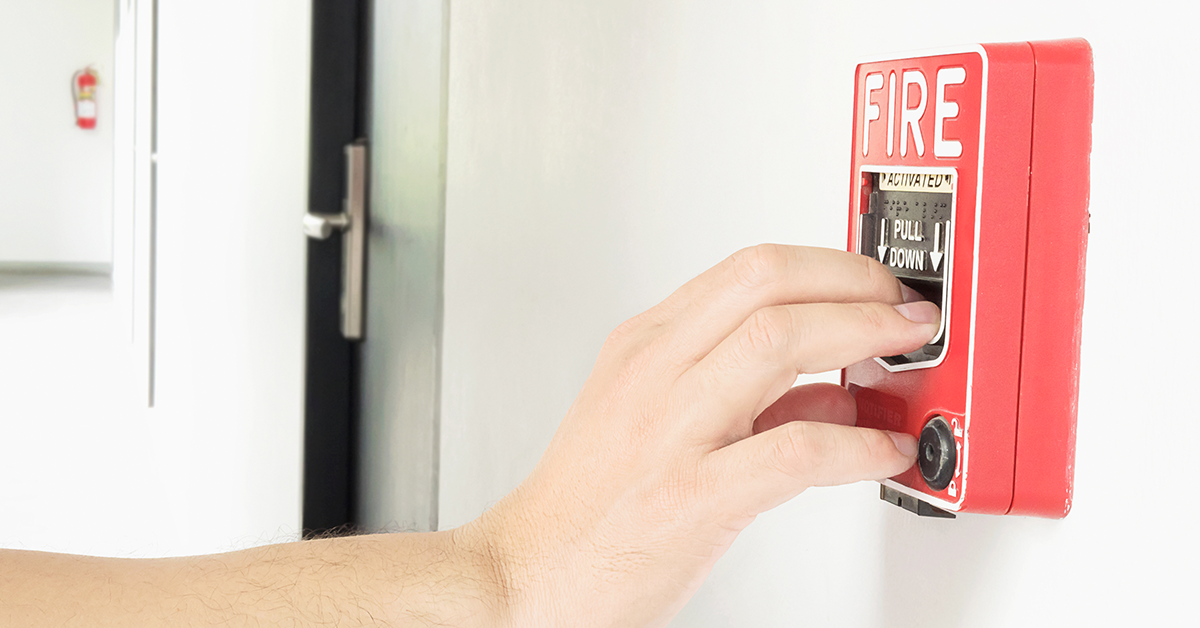
The goal is simple: confirm that the original assessment’s findings are still accurate and that the safety measures in place are still adequate for the risks present today. This is not just a paper exercise; it demands a physical inspection of the property and a critical look at your procedures.
First, you need to walk the premises. This is the most critical part of any review. You are looking for any changes, wear and tear, or new hazards that have emerged since the last assessment.
Your physical check should include:
This hands-on approach ensures you are not just reviewing a theoretical document but confirming the real-world state of your fire safety.
A huge part of the review process is accountability. Your previous fire risk assessment almost certainly came with an action plan listing recommendations to reduce risk. An essential step is to verify that this work has actually been completed.
For example, if the last assessment recommended installing new smoke seals or upgrading the emergency lighting, you must check that this has been carried out and documented. If actions are still outstanding, you need to establish why and set a new deadline for their completion. This creates a clear audit trail, showing enforcing authorities that you are actively managing your fire safety.
A fire risk assessment review is your chance to close the loop. It is not just about finding new problems but also confirming that old ones have been properly fixed. An action plan that is never acted upon is a major red flag for inspectors.
Beyond the physical walk-around, a thorough review means checking that your fire safety systems and procedures are working and up to date. This is where your logbooks and records become vital.
You should:
This part of the process confirms that your life safety systems will work when you need them most. Using a comprehensive fire risk assessment checklist can help ensure no critical element is missed. This practical tool guides the Responsible Person through each necessary step, from escape routes to alarm systems.
Allowing your fire risk assessment to become out of date is one of the most serious compliance failures a Responsible Person can make. An old assessment is not just a piece of paper that needs updating; it is a direct failure of your legal duty, leaving your business, your tenants, and yourself exposed to severe consequences.
These risks are not theoretical. They are real legal, financial, and—most importantly—human consequences. Once you understand what is at stake, it becomes clear why regular reviews are a non-negotiable part of managing any property.
Local Fire and Rescue Services have considerable powers to act when they find non-compliance. If an inspector discovers your assessment is out of date or no longer fit for purpose, they will not ignore it.
Their enforcement powers are serious and include:
An outdated fire risk assessment is never seen as a minor oversight. Enforcing authorities view it as a fundamental breakdown in safety management, which can trigger immediate and severe penalties.
The financial penalties for breaching the Fire Safety Order can be significant. For serious offences, the courts can impose unlimited fines in GBP (£). In the most severe cases, a prison sentence is a very real possibility for the Responsible Person.
Furthermore, an outdated assessment can have a catastrophic effect on your insurance. If a fire breaks out, you can be certain your insurer will scrutinise your compliance records. If your assessment is found to be invalid, they may argue you have breached your policy terms, potentially leaving you personally liable for all costs—from rebuilding the property to covering compensation claims.
This kind of financial ruin is a direct result of neglecting the review process. The reputational damage from a prosecution or a serious incident can be just as devastating, shattering the trust of customers, tenants, and business partners for years.
UK fire safety law is clear that whoever carries out the assessment, especially the formal annual review, must be competent to do so. An independent, professionally trained assessor brings a fresh, objective eye that an in-house team can lack simply through familiarity with the building, and is more likely to catch hidden hazards or subtle compliance gaps. Engaging a competent external assessor for the review is a straightforward way to protect the business, reduce risk, and demonstrate that the legal duty has genuinely been met, rather than just ticked off.
To clarify common points of confusion, here are straightforward answers to the questions we hear most often from landlords, business owners, and property managers about the review process.
While the law does not give a fixed expiry date, the established best practice across the UK is to conduct a formal review at least once every 12 months.
For buildings with higher risks, such as care homes, busy HMOs, or complex commercial sites, this needs to be more frequent. A six-month or even quarterly review may be necessary to stay on top of any changes.
Yes, as the Responsible Person, you can carry out the review yourself, but only if you are competent to do so. This means you need the appropriate knowledge, experience, and a solid grasp of current fire safety standards to confidently identify hazards and evaluate risks.
If you have any doubt about your ability to do a thorough job, you have a legal duty to appoint a competent external expert. Remember, the ultimate responsibility for ensuring the assessment is ‘suitable and sufficient’ always rests with you.
A review is a health check for your existing fire risk assessment. You are checking to ensure it is still accurate and valid. It is a process to confirm that nothing significant has changed in the building and that you have acted on any recommendations from the last report.
A new assessment, on the other hand, is a complete, top-to-bottom re-evaluation of the entire premises from scratch. You would need a new assessment if the building has undergone major structural work, its purpose has changed entirely, or the old one is so out of date that it no longer reflects the reality of the risks.
Failing to keep your assessment under regular review is not just poor practice—it is a direct breach of the Regulatory Reform (Fire Safety) Order 2005.
If the Fire and Rescue Service discovers this during an inspection, it can trigger enforcement action. This could mean legal notices demanding immediate action, unlimited fines in GBP (£), or in the most serious cases, prosecution and even imprisonment.
Ensuring your fire risk assessment is reviewed regularly by a competent person is the cornerstone of responsible property management and legal compliance. If you need an expert eye to conduct a thorough review or a new assessment, HMO Fire Risk Assessment delivers certified, easy-to-understand reports that keep your building safe and compliant.
Book your professional fire risk assessment with us today by visiting https://hmofireriskassessment.com.
Most HMO landlords I talk to can rattle off their fire door requirements, their alarm grade, and their emergency lighting checks without missing a beat....

Most of the fire safety advice on this site assumes you already have a working HMO. This one is for the stage before that: the...