
Fire Risk Assessment Cost UK: What HMO Landlords Actually Pay in 2026
14/09/2026
“How much is this going to cost me?” is the first question almost every landlord asks when they ring us about a fire risk assessment, and it’s a fair one. Unlike a boiler service or a gas safety certificate, there’s no fixed national price list for fire risk assessments, and the range you’ll see quoted online can look bafflingly wide. This guide sets out what UK landlords and property managers actually pay in 2026, what drives that price up or down, and how to tell a properly priced assessment from a cut-price one that leaves you exposed.
I’ve written this specifically with HMO and small commercial landlords in mind, since that’s where most of the pricing confusion sits. A single self-contained flat is a different job entirely to a six-bedroom HMO with shared kitchens and a fire door on every room, and the quote should reflect that. By the end of this guide you’ll know roughly what to expect to pay, what genuinely moves that price, and what questions to ask before you accept any quote.
Prices vary by property type, size and complexity, but the table below reflects the ranges UK fire risk assessors are typically quoting for a first assessment in 2026, excluding VAT.
| Property type | Typical first-assessment cost | Typical review cost |
|---|---|---|
| Small HMO (up to 6 lettable rooms) | £150 – £350 | £100 – £200 |
| Large HMO (7+ rooms or 3+ storeys) | £350 – £600 | £200 – £350 |
| Residential block (communal areas only) | £300 – £500 | £200 – £350 |
| Small office or retail unit | £200 – £350 | £150 – £250 |
| Warehouse or light industrial | £250 – £450 | £175 – £300 |
| Hotel, pub or restaurant | £300 – £550 | £200 – £375 |
| Care home or supported living | £450 – £800 | £300 – £550 |
Reviews cost less than a first assessment because the assessor is updating an existing baseline rather than starting from scratch. If you’ve never had a review-priced quote and you’re being charged full price every time, ask your assessor why — it’s a reasonable question and a competent assessor will have a straight answer.
These figures also shift a little depending on where in the UK you’re based. Assessors covering London and the South East often quote towards the upper end of these ranges, reflecting higher travel costs and overheads, while the North West and Midlands markets, Manchester included, tend to sit closer to the middle of the range or below. Whatever region you’re in, treat a quote that’s dramatically below these bands as a reason to ask more questions, not a reason to celebrate.
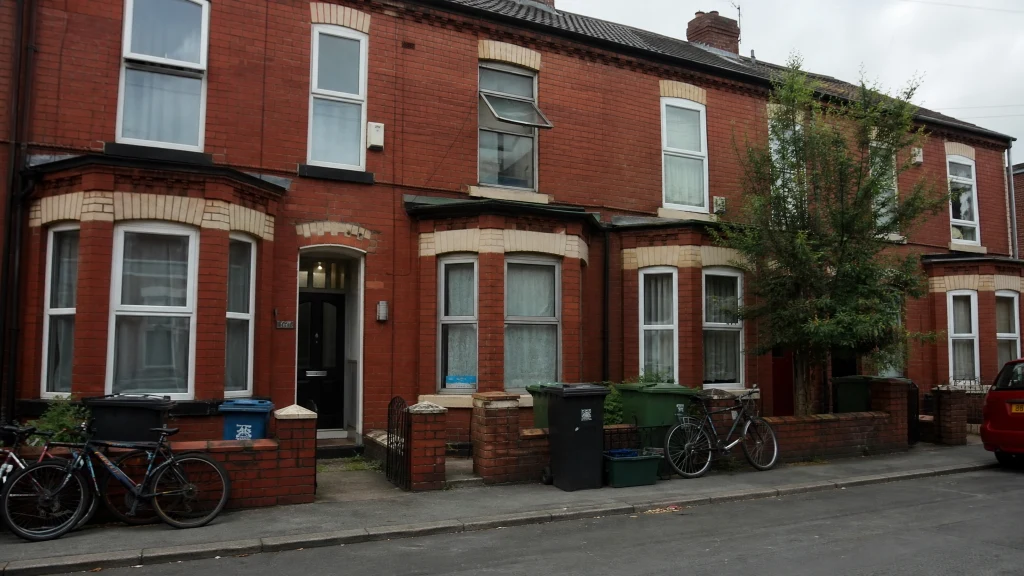
No two quotes should look identical, because no two buildings are identical. These are the factors that genuinely move the price, in roughly the order they matter:
Not every fire risk assessment is the same depth of investigation, and the type you need has a direct effect on the price. The industry standard, PAS 79, sets out four broad types, and most residential landlords will only ever need the first two.
A Type 1 assessment is a non-intrusive review of the common parts of a building — escape routes, fire doors, alarm systems and management arrangements — without opening up walls or floors to inspect what’s behind them. This covers the vast majority of HMOs and is what most of the pricing in this guide refers to. We’ve covered exactly what’s involved in our fire risk assessment checklist, and gone into more depth on the standard itself in our complete guide to fire risk assessments.
A Type 2 assessment includes everything in Type 1 plus limited intrusive inspection of common parts — lifting a section of ceiling tile, for example, to check compartmentation is actually as it appears. Types 3 and 4 extend this further into individual flats, and are far less common outside larger blocks or where there’s a specific concern about fire spread between units. If your assessor recommends stepping up from a Type 1 to a Type 2, it’s usually because something during the visit gave them reason to want to check further, not an upsell — ask them to explain the specific concern before agreeing to the extra cost.
HMOs sit at the more expensive end of residential fire risk assessments, and there’s a good reason for it. You’re not assessing one household’s risk to itself — you’re assessing the risk that one tenant’s kitchen fire, cigarette, or overloaded extension lead poses to everyone else sharing that staircase.
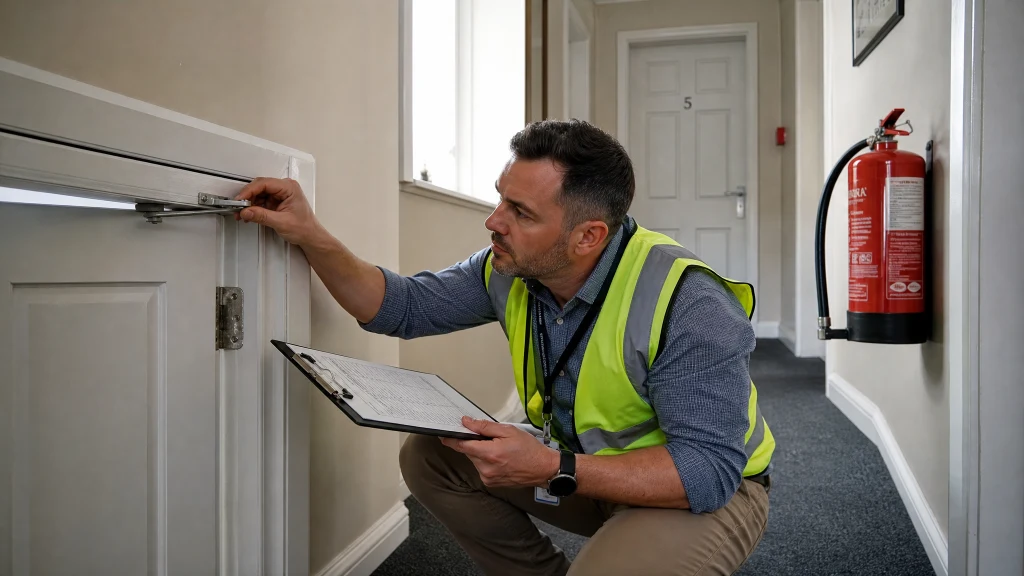
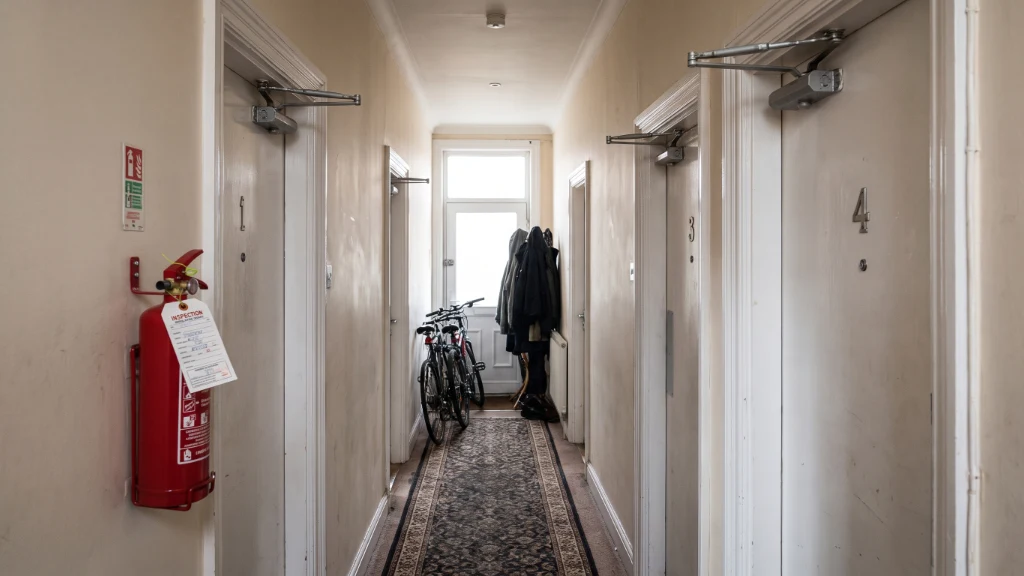
That means an assessor working on an HMO has to check every fire door and its self-closer, every escape route from every room, the fire-resistance of the walls and floors separating each letting, the alarm system’s coverage and category, and the emergency lighting along every escape route — not just the parts of the building the landlord happens to maintain directly. For a HMO landlord working through their legal duties, that thoroughness is exactly what you’re paying for, and it’s also what keeps you on the right side of your licence conditions.
It’s also worth understanding that HMO assessments typically take longer on-site, not just longer to write up. An assessor checking a six-room HMO with a shared kitchen might reasonably spend ninety minutes to two hours on-site, compared with thirty to forty-five minutes for a single flat of similar size, simply because there are more doors, more escape routes, and more tenant behaviour to account for.
I still see landlords comparing an HMO quote against a price they got for a single self-contained flat and asking why the HMO costs more. It’s not the same job. A shared means of escape means one person’s negligence becomes everyone’s risk, and a proper assessment has to reflect that.
Yes, for any building that isn’t a single private dwelling. The Regulatory Reform (Fire Safety) Order 2005 places a legal duty on the “responsible person” for a building — usually the landlord, freeholder or managing agent — to carry out and regularly review a suitable fire risk assessment. New rules that came into force on 1 October 2023 tightened this further, making a fire risk assessment a legal requirement for any building you’re responsible for that isn’t a single private dwelling, which covers effectively every HMO in the country, according to the National Residential Landlords Association.
The penalties for getting this wrong are not trivial. Breaching the Fire Safety Order in a way that puts someone at risk of death or serious injury carries an unlimited fine in the magistrates’ court, or at the Crown Court, an unlimited fine and up to two years in prison, as set out in GOV.UK’s own enforcement and sanctions guidance. We’ve covered the full detail of these obligations in our guide to UK fire risk assessment legal requirements, but the short version is: this isn’t a compliance box you can leave unticked and hope nobody notices.
Set against those figures, even the most expensive quote in our pricing table above looks like exactly what it is: a modest, predictable cost that protects you from an unpredictable and potentially business-ending one.
If your property needs an HMO licence, fire safety compliance sits at the heart of what your local council is checking, both at the licensing stage and afterwards. In Manchester, for example, the council’s fire safety protocol for HMOs confirms that both the local housing authority and Greater Manchester Fire and Rescue Service enforce fire safety obligations under the Housing Act 2004 and the Regulatory Reform (Fire Safety) Order 2005, and can take enforcement action against non-compliant properties.
A current, suitable fire risk assessment is the document that demonstrates you’ve actually thought about the specific risks in your specific property, rather than just installed a smoke alarm and hoped for the best. Councils running licensing inspections expect to see it, and a missing or clearly inadequate assessment is one of the fastest ways to turn a routine licence renewal into an enforcement problem.
Most councils won’t refuse a licence outright for an out-of-date assessment, but they will typically issue conditions requiring you to commission a new one within a set timeframe, and they may flag the property for a follow-up inspection. Getting a review done before you apply, rather than after a council asks for one, is the cheaper and less stressful option every time.
There’s no single fixed interval written into law — the Fire Safety Order requires you to review your assessment “regularly,” and what counts as regular depends on the risk level and whether anything has changed. We’ve set out the full detail, including what actually triggers an earlier review, in our guide to how often fire risk assessments should be reviewed. As a rule of thumb, most HMOs and higher-risk properties are reviewed annually, with an earlier review triggered by any significant change: a refurbishment, a change of use, a near-miss, or a change in the number of households.
Budgeting for an annual review, rather than treating your first assessment as a one-off cost, is the single biggest mindset shift that keeps landlords compliant and keeps the ongoing cost manageable — a review at £150-£350 is a much smaller bill than a first assessment, and a far smaller bill than an enforcement notice.
I understand the appeal of the lowest quote in your inbox, particularly if you’re managing several properties and the costs add up. But a fire risk assessment is one of the few compliance documents where the cheapest option can genuinely cost you more later — either because it misses something a proper assessment would have caught, or because it isn’t detailed enough to satisfy your council if something does go wrong.
A fire risk assessment that took twenty minutes and came back with no findings isn’t a bargain, it’s a liability with a receipt attached. If an assessor hasn’t asked to see your escape routes, your fire doors, and your alarm test log, they haven’t actually assessed anything.
Before you accept the cheapest quote, work through these steps:
A properly priced fire risk assessment should always include a physical inspection of the building (not a desk-based review from photos you send over), a written report identifying hazards and rating the level of risk against each one, a prioritised action plan with realistic timescales for any remedial work, and the assessor’s contact details for follow-up questions. Our fire risk assessment checklist sets out exactly what a thorough assessment should cover, room by room, if you want to check a report you’ve already had against what should have been looked at.
What you shouldn’t accept, at any price, is a report that reads as generic — the same boilerplate paragraphs you’d find copied into any other property’s assessment, with only the address changed. If the findings section doesn’t reference anything specific to your actual building, it wasn’t a proper assessment. A genuine assessor’s report should mention your building’s actual layout, its actual alarm system, and the actual condition of its actual fire doors, not a generic description that could apply to any HMO in the country.

It’s worth being clear about what the assessment fee doesn’t include, since this is a common source of confusion. The assessment identifies and rates risks; it doesn’t include fitting new fire doors, installing or upgrading an alarm system, or carrying out any of the remedial work the report recommends. Those are separate costs, quoted separately, and it’s sensible to ask your assessor for a rough sense of likely remedial costs while they’re still on-site, so nothing in the final report comes as a complete surprise.
The best way to keep your fire risk assessment costs predictable, rather than a recurring surprise, is to treat the annual review as a fixed line item in your property budget rather than something you shop around for cold each time. An assessor who already knows your building from a previous visit will usually be faster, and therefore cheaper, on a review than a new assessor starting from zero.
It’s also worth asking whether your assessor will flag issues as they find them, rather than saving everything for the final report. A good assessor tells you on the day if they’ve spotted something urgent — a fire door wedged open, a blocked escape route — rather than making you wait a week for a PDF to find out your building had an immediate risk sitting in it.
If you manage a portfolio of HMOs rather than a single property, ask about portfolio pricing. Most assessors will offer a modest discount for booking several properties together, since it reduces their own travel and admin time, and it’s a straightforward way to bring your average cost per property down without compromising on the quality of the assessment itself.
The only way to get a genuinely accurate quote, rather than a rough band from a table like the one above, is to give an assessor enough detail to price the job properly before they arrive. That means telling them the number of lettable rooms, the number of storeys, whether there’s a shared kitchen or bathroom, when the property was built or last significantly altered, and whether this is a first assessment or a review of an existing one.
A quote given without any of that information isn’t really a quote — it’s a guess, and guesses have a habit of changing once the assessor actually sees the building. If you’re comparing multiple quotes, give every assessor the same information so you’re comparing genuinely equivalent prices rather than one detailed quote against one optimistic guess.
At HMO Fire Risk Assessment, every quote is based on the actual details of your property before we set foot in it, and the price we quote is the price you pay — no surprise extras added once we’re on-site, and no vague “from £X” figure that turns out to be the absolute minimum for the smallest possible property. If you’re weighing up a quote from us against another assessor, the clearest way to compare is to ask both of us the same six questions from the “cutting corners” section above, and see how the answers stack up.
It’s ongoing. You need a first assessment when you take on a new property or change of use, and then regular reviews after that — typically annually for HMOs and higher-risk properties. Budget for both, not just the first visit.
Legally, yes, if you’re competent to do so, but the law requires the “responsible person” to be genuinely competent to identify and rate fire risks, and most landlords aren’t trained fire risk assessors. For anything beyond a single self-contained flat, a professional assessment is the safer and usually the more cost-effective route once you factor in the risk of getting it wrong.
Mostly qualifications, thoroughness, and what’s included in the report. A £120 quote and a £350 quote for the same HMO are rarely offering the same service — ask exactly what’s covered before comparing on price alone.
No. The assessment fee covers identifying and rating the risks, not remedial work. Any fire doors, alarms, or escape route issues the assessment identifies will need to be fixed separately, and it’s worth budgeting for that possibility before you book the assessment, not after.
A Type 1 assessment is what most HMOs and residential blocks actually need, and it’s already the more affordable end of the PAS 79 classification — you’re not downgrading by booking one, you’re booking the right assessment for a typical HMO. Only step up to a Type 2 or above if your assessor identifies a specific reason to look further.
Most HMO landlords I talk to can rattle off their fire door requirements, their alarm grade, and their emergency lighting checks without missing a beat....
Most of the fire safety advice on this site assumes you already have a working HMO. This one is for the stage before that: the...