

Fire Safety During Void Periods: What Manchester HMO Landlords Risk Between Tenancies
17/11/2026
I get called out to assess HMOs at every stage of a landlord’s ownership: fresh conversions, portfolios that have been running for a decade, properties that have just failed a council inspection. But one of the quietest fire safety gaps I see has nothing to do with the building’s age or the landlord’s experience. It’s what happens to a room in the gap between one tenant leaving and the next one moving in.
A void period feels like a pause. The room is empty, nobody’s cooking in it, nobody’s charging a phone next to the bed, so surely the fire risk drops too. In an occupied HMO, that assumption is wrong, and it’s wrong in a way that matters more than it would in a single-let house standing empty on its own. Other tenants are still living in the rest of the building while that room sits vacant, which means any new risk you introduce during the turnover is a risk to people who have nothing to do with it.
This guide covers what actually changes, legally and practically, when an HMO room goes void, why the risks during a turnover are genuinely different from the risks in a wholly empty property, and what a sensible void-to-relet routine looks like for a Manchester landlord who wants to stay on the right side of both the Fire Safety Order and their own common sense.
Most fire safety routines are built around the building being lived in. Alarms get tested because someone’s there to hear the chirp and report it. Escape routes stay clear because people walk them every day and notice when something’s in the way. Fire doors get checked because a tenant complains when one doesn’t close properly. A void room removes the person who would normally catch these things, right at the point when the room is most likely to be disturbed by clearing out, cleaning, repairs or redecoration.
I see this gap most often with landlords who manage turnover themselves, rather than through an agent with a formal checkout and check-in process. The room gets cleared, maybe repainted, and relet, with fire safety treated as something to check once the new tenant has moved in rather than something to actively manage during the gap itself. By the time anyone looks closely, the new tenant has already been living with whatever was missed.
I tell landlords the same thing every time I inspect a property mid-turnover: a void room isn’t a pause in your fire safety duties, it’s a working window where things are more likely to go wrong, not less. Doors get propped open for furniture, smoke alarms get knocked or isolated during redecorating, and nobody’s there afterwards to notice if they don’t go back on.
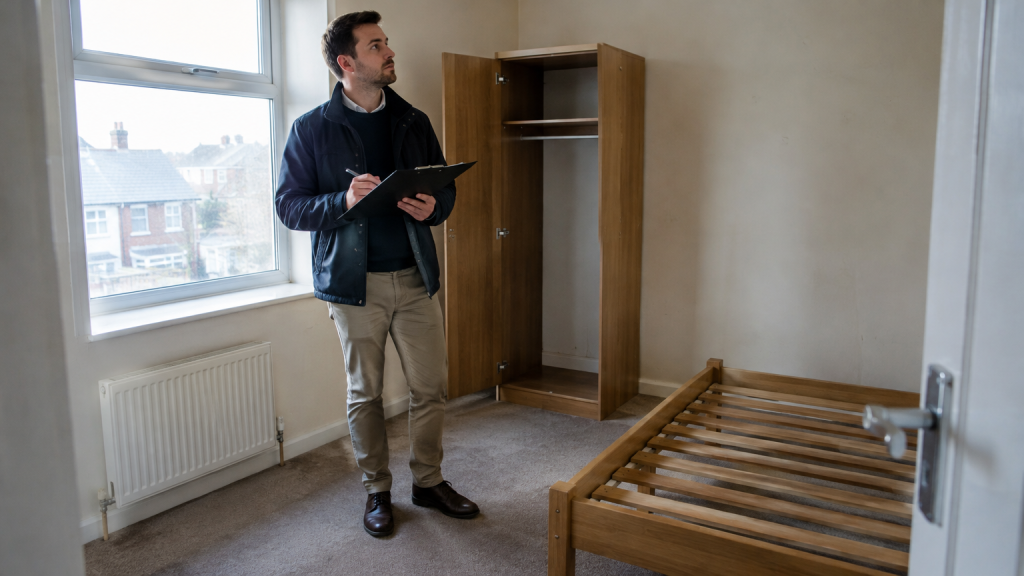
It’s worth being precise about this, because landlords sometimes assume an empty room sits outside their fire safety obligations until a new tenant signs. It doesn’t. Two separate pieces of legislation bear directly on a void room in an occupied HMO, and neither one carries an occupancy exemption for the duties that matter most.
The Regulatory Reform (Fire Safety) Order 2005 requires the responsible person to keep a “suitable and sufficient” fire risk assessment for the premises. Article 9(3) sets out when that assessment has to be reviewed, and it’s triggered by more than just the calendar. It must be reviewed “if there is reason to suspect that it is no longer valid” or “there has been a significant change in the matters to which it relates,” which explicitly includes changes to the premises itself.
A room coming back into use after standing empty, a change in how a room is used during the gap (stored furniture rather than a bedroom, for instance), or building work carried out during a turnover can all count as exactly that kind of significant change, in the same way that works carried out to an occupied HMO can (see our guide to converting a house into an HMO for how this plays out at the larger end of the scale). You don’t necessarily need to commission a brand-new full assessment every time a tenant moves out, but you do need to actively consider whether the turnover has changed anything the existing assessment relied on, and record that you’ve done so.
The Management of Houses in Multiple Occupation (England) Regulations 2006 go further and remove any ambiguity about occupancy. Regulation 4(1) requires the manager to ensure that “all means of escape from fire in the HMO are kept free from obstruction” and “maintained in good order and repair.” Regulation 4(2) requires that “any fire fighting equipment and fire alarms are maintained in good working order.”
Neither paragraph includes a time limit or an exemption for when a room happens to be unoccupied. The only occupancy-linked exemption in Regulation 4 applies to a different duty entirely, the notice requirement in paragraph (3), not to the escape-route or equipment duties. In plain terms, a blocked corridor or a disconnected alarm is a breach whether the room next to it has a tenant in it or not.
It helps to see the duties that actually keep applying during a void room side by side with the ones that don’t, since landlords often assume the wrong one has lapsed.
| Duty or requirement | Still applies during a void room? | What it actually requires |
|---|---|---|
| Fire Safety Order, Article 9 review duty | Yes, when triggered | Review the fire risk assessment if there’s a significant change, such as building work or a change in how the room’s used |
| HMO Management Regs 2006, Regulation 4(1)-(2) | Yes, continuously, no exemption | Means of escape kept clear and in good repair; alarms and firefighting equipment kept in working order |
| Manchester HMO licence, General Condition 20 | Triggered at relet | A written property systems guide given to every new occupier, evidenced to the council on request |
| Buildings insurance unoccupancy clause | Usually not for a single room | Restricts cover, typically after around 30 days, but is written around the whole property standing empty |
Most of the fire safety advice written for empty properties assumes the whole building is standing vacant, boarded up and unvisited for weeks. That’s a different problem with different solutions, like anti-arson letterboxes and boarding up windows. A single void room inside an HMO where other tenants are still living day to day carries its own, more specific set of risks.
An empty room is an obvious place to put things. Old furniture from the last tenant, a landlord’s own spare mattresses, paint tins and decorating materials left between jobs, boxes of fixtures waiting to be fitted. Every one of these adds to the combustible load in a room that may share a wall, floor or escape route with occupied rooms, and none of it was accounted for in the fire risk assessment that covered the room as a bedroom.
Redecorating between tenancies often means a contractor working alone, moving furniture through communal escape routes and propping fire doors open so they can carry things through without the door swinging back. If that door doesn’t get closed and the self-closer checked afterwards, every tenant on that escape route is relying on a door that no longer does its job, and the same logic applies to every other part of a shared escape route, which we cover in more depth in our guide to fire risk assessment in communal areas. Hot work, such as soldering pipework or using a heat gun to strip old paint, carries its own ignition risk in a room that nobody’s actively watching once the contractor leaves for the day.

Smoke alarms get knocked, covered or deliberately isolated during redecoration, usually to stop dust or paint fumes setting them off. That’s a reasonable short-term step. The risk is that nobody remembers to put the alarm back into service once the work’s done, and the next time anyone finds out is when the new tenant notices it doesn’t work, or doesn’t notice at all. The NRLA’s own guidance for landlords is explicit that alarms must be in working order “at the start of each new tenancy,” which only holds if someone actually checks before handing over the keys.
A void room inside an occupied HMO is genuinely more dangerous to the other tenants than a void room in an otherwise empty house, because an unauthorised person getting into that room puts people elsewhere in the building at risk, not just the empty room itself. If locks aren’t changed between tenancies and old keys are still in circulation, or if a room is left unsecured during works, you’ve created an access risk inside a building where other people are relying on you to control who can get in.
The clearest UK data on unoccupied-space fire risk comes from the commercial and whole-building side rather than single HMO rooms specifically, but the underlying pattern is relevant. An Aviva-sourced estimate widely cited across the UK fire and insurance trade press puts the number of fires in empty buildings at roughly 9,000 a year across the UK, with unoccupied buildings accounting for around a quarter of all direct fire damage costs. Hereford & Worcester Fire and Rescue Service’s own advice for empty and derelict buildings recommends removing combustible materials and ignition sources, keeping the building secure, and maintaining fire protection systems throughout any unoccupied period, precisely because risk doesn’t fall to zero just because nobody’s living there.
None of that data is about a single bedroom sitting empty for two or three weeks inside an otherwise fully tenanted HMO, and I’d be overstating the comparison if I claimed it was. Void periods also tend to cluster around the quieter months, which is one more reason to read this alongside our guide to winter fire safety in HMOs. What it does establish, and what the Fire and Rescue Service guidance makes explicit, is the underlying principle: an unoccupied space still needs active management, not a lower standard of care, because nobody’s presence to catch a developing problem early is itself a risk.
Manchester City Council’s standard HMO licence conditions don’t require you to notify the council every time a room becomes vacant or a new tenant moves in, and there’s no formal register of room-by-room occupancy that the council expects you to maintain. That’s worth knowing, because it means the licensing system itself won’t catch a turnover-related fire safety lapse. Nobody at the council is checking.
For the wider licensing picture, our guide to HMO licensing in Manchester covers what the licence does and doesn’t check. What the turnover-specific conditions do require is more useful than it first looks. General Condition 20 of Manchester’s HMO licence requires the licence holder to provide a basic guide to the property’s systems to every new occupier, and to produce written evidence of having done so if the council asks. That’s a genuine compliance checkpoint built into every single turnover, and it’s the natural moment to brief a new tenant on the fire action notice, the escape route, and where the alarms and extinguishers are, rather than treating it as paperwork to tick off separately from the fire safety side of the handover.
Landlord insurance policies typically include an unoccupancy clause that restricts cover, or applies a higher excess, once a property has stood empty beyond a set period, commonly around 30 days according to the National Residential Landlords Association’s own guidance for landlords managing empty properties. That clause is written around the whole property being vacant, not a single room inside a building where other tenants are still living, so a short void on one room in an otherwise occupied HMO shouldn’t trigger it.
Where this does matter is at the edges: a portfolio landlord who ends up with an entire HMO standing empty between licensees, or a room that sits void for months rather than weeks while a wider refurbishment drags on. Check your specific policy wording rather than assuming the standard 30-day figure applies, because insurers vary on both the threshold and what they require you to do (turning off water at the mains, draining the system, providing photographic evidence of security) to keep cover in place, and a lapsed unoccupancy condition can sit alongside the issues we cover in our guide to fire risk assessments and landlord insurance.
Every policy I’ve seen a landlord get caught out by had the unoccupancy clause sitting in plain sight in the schedule. Nobody reads the small print until there’s a claim, and a fire claim on a property that was technically in breach of an unoccupancy condition is exactly the kind of thing that can turn a bad week into a ruinous one.
This is the routine I’d want running every time a room in one of my own properties came free, regardless of how short the gap is expected to be.
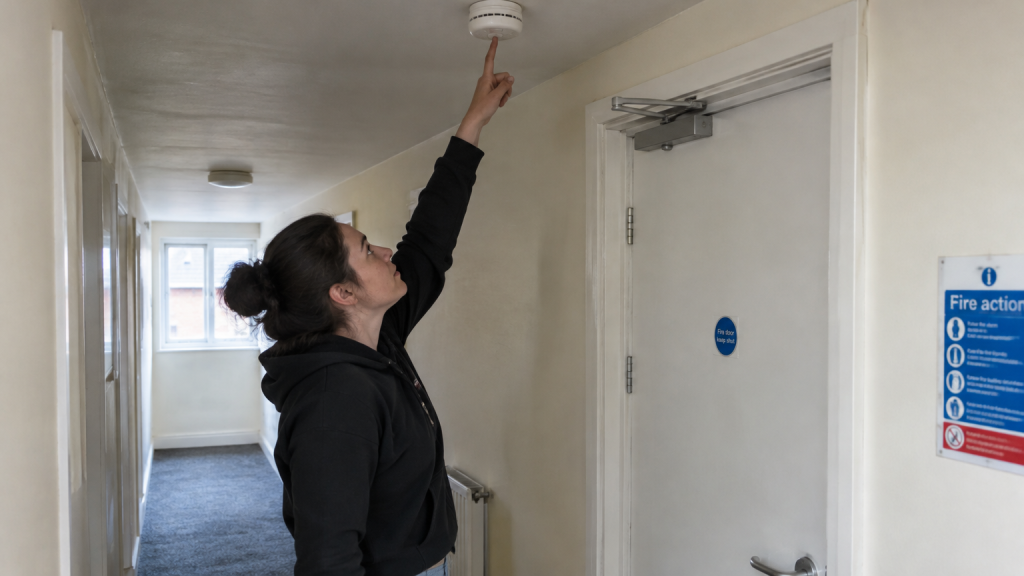
Most turnovers won’t need a full new fire risk assessment. A tenant leaving and a near-identical tenant moving in, with no building work and no change to how the room’s used, is unlikely to count as the kind of significant change Article 9 has in mind. The judgement call comes when the turnover involves something that genuinely changes the risk picture.
That includes any building work beyond cosmetic redecoration, a change in the room’s intended occupancy (a single occupant replaced by a couple, for instance, if that affects fire loading or escape numbers), a period where the room was used for storage rather than left simply vacant, or anything the walk-round in step one of the checklist above turned up that wasn’t accounted for in the existing assessment. When in doubt, the safer and cheaper option is a short, documented review rather than assuming the last full assessment still covers it, and it’s worth cross-checking against our broader guide on how often fire risk assessments should be reviewed.
The turnovers that worry me most aren’t the ones where something’s obviously broken. They’re the ones where everything looks fine on a quick look round, because that’s exactly when a landlord decides there’s nothing to record and nothing to review, right up until the one time it mattered.
Not automatically. A straightforward turnover with no building work and no change in how the room’s used is unlikely to count as a significant change under Article 9 of the Fire Safety Order. You should still actively consider whether anything has changed and record that decision, rather than simply assuming the existing assessment still applies.
Yes. Regulation 4 of the Management of Houses in Multiple Occupation (England) Regulations 2006 requires means of escape to be kept free from obstruction and maintained in good order, and fire alarms and firefighting equipment kept in good working order, with no exemption for an unoccupied room.
No. Manchester’s standard HMO licence conditions don’t require notification of room-by-room occupancy changes. The licence conditions do require a basic property systems guide to be given to every new occupier, which is a useful moment to cover fire safety information as part of the handover.
Usually not, because unoccupancy clauses are typically written around the whole property standing vacant, commonly after around 30 days, rather than one room in an otherwise occupied HMO. Check your own policy wording, since insurers vary, and the position changes if an entire HMO stands empty between licensees.
Treat it with caution. Storing furniture, decorating materials or fixtures in a vacant room adds to the combustible load in a space that may share walls, floors or an escape route with occupied rooms, and that load wasn’t accounted for in the existing fire risk assessment. Clear combustible waste and materials promptly rather than letting them build up.
The RRFSO’s duties fall on the “responsible person,” which in practice usually means the landlord, employer, or whoever has control of the premises, and a managing agent acting on the landlord’s behalf doesn’t remove the landlord’s own underlying responsibility. Agree clearly in writing who is checking fire doors, alarms and escape routes during any turnover a contractor or agent is managing.
Confirm the alarm has been physically reconnected, not just left covered or taped over, and test it before the room is relet. If the alarm is part of an interlinked system, check that the room’s unit is communicating correctly with the rest of the system rather than just sounding on its own.
Cosmetic redecoration alone is unlikely to count as a significant change under Article 9. The risk during that work, such as doors propped open or alarms isolated, is a live safety issue to manage at the time rather than a trigger for reassessment, provided everything is reinstated and checked before the room is relet.
A void period isn’t a gap in your fire safety responsibilities, it’s a point where those responsibilities are easier to overlook and more likely to be disturbed. The law doesn’t treat an empty room any differently, and the risks it introduces, often through the very process of clearing and preparing it for the next tenant, land on everyone else still living in the building, not just the person who eventually moves in.
Building a short, consistent routine around every turnover, walking the room and escape route on day one, controlling contractors properly, checking alarms and doors before handover, and treating the licence-required new-occupier guide as a genuine fire safety conversation rather than paperwork, closes a gap that’s easy to miss and genuinely costly to get wrong. If it’s been a while since your fire risk assessment reflected how your HMO actually runs between tenancies, that’s usually the simplest place to start.
I get called out to assess HMOs at every stage of a landlord's ownership: fresh conversions, portfolios that have been running for a decade, properties...

Ask ten Manchester landlords what their HMO's fire evacuation strategy is, and most will tell you it has an alarm and a fire door. That...