Winter Fire Safety in HMOs: A Landlord’s Guide to the Season’s Biggest Risks
01/10/2026
Every autumn, the same pattern plays out in HMOs across Manchester. The central heating goes on properly for the first time since March. A tenant plugs in a portable heater because their room’s always the cold one. Someone drags an electric blanket out of storage, and the shared tumble dryer starts running flat out because nobody wants wet washing hanging around in October.
None of this is unusual. All of it changes the risk profile of the property, often without the landlord knowing anything has changed at all.
I get asked most years, usually around now, whether a fire risk assessment needs “doing again” for winter. The honest answer is: not necessarily. But the questions a good assessment asks, and the hazards a landlord should actually be checking, shift as the weather turns.
This guide sets out exactly what changes, what the current UK figures say about where the risk sits, and what a Manchester HMO landlord should be doing about it before the clocks go back.
It’s worth being precise here rather than reaching for the obvious headline. Home Office figures for England show accidental dwelling fires were broadly stable across the year to March 2025. Outdoor fires actually peak in the summer months, not winter. If you’re picturing a dramatic January spike in house fires generally, the national data doesn’t support that story.
What does change is the mix of causes. Misuse of equipment or appliances already accounts for 29% of accidental dwelling fires nationally, and that category doesn’t sit still through the year. As portable heaters, electric blankets and extra loads of washing come into regular use, the hazards an HMO landlord needs to manage shift toward a cluster of seasonal, appliance-driven ones.
Greater Manchester Fire and Rescue Service’s own winter safety campaign makes this point directly, focusing squarely on cooking, candles and heating as the hazards worth repeating every year as the nights draw in.
For a shared house with several unrelated tenants, each running their own heater, lamp, phone charger and laundry cycle on a fixed electrical installation that wasn’t designed for any of that, the seasonal shift matters more than it would in a single-family home. That’s the gap this article is for.
I’ve lost count of the number of HMO fire risk assessments I’ve reviewed where the electrical installation was perfectly sound in May and overloaded by December, purely because of what tenants plugged in once the weather turned. The wiring didn’t change. The load on it did.
Portable heaters are the single most predictable seasonal addition to any shared house, and they’re also one of the better-documented fire risks in UK housing. Government fire safety guidance puts heaters behind roughly three fires a day across the country, a figure that holds up across multiple winters rather than being a one-off spike.
Greater Manchester Fire and Rescue Service’s own figures, drawn from a three-year average of fires attended across the city region, recorded 96 fires caused by heaters and heating equipment. That sits on top of 409 fires linked to faulty wiring, cabling and plugs, many of which involve exactly the kind of extension leads a portable heater typically runs from.
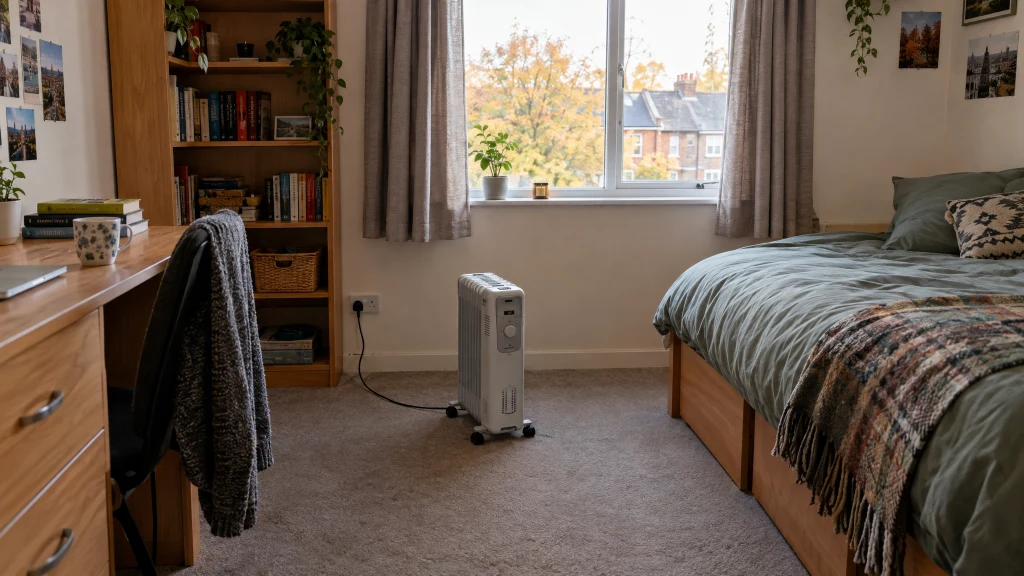
In a single tenancy, a landlord has some visibility over what gets plugged in. In an HMO, each tenant typically brings their own electrical items, and a landlord often only discovers a heater exists once it’s already been in use for weeks.
The common failure points are consistent across the fire and rescue guidance I’ve reviewed for this piece:
None of this means banning heaters outright is realistic or necessary. It means the fire risk assessment, and the tenancy terms underneath it, need to say something specific about them rather than staying silent.
A sensible approach fits comfortably inside an existing fire risk assessment rather than requiring a separate process. It covers three things: whether portable heating is addressed in writing to tenants, whether communal areas have a clear rule on heater use, and whether the electrical installation has had a recent Electrical Installation Condition Report that accounts for likely winter loads.
The National Residential Landlords Association’s own winter checklist makes the same point for electrical safety more broadly. It applies with more force in a house with several independent tenants than in a single let.
Electric blankets might look like a low-tech, low-risk item, but the current UK data doesn’t back that up. Electrical Safety First recorded 31 accidental electric blanket fires in England during 2024/25, a 24% rise on the previous year and a five-year high. Eleven casualties or fatalities were recorded in that same period.
That’s a sharper year-on-year increase than almost any other appliance category the charity tracks. It’s happening for a reason that applies directly to HMO tenants: rising energy costs are pushing people toward cheaper, localised heating rather than running the whole property’s heating for longer.
Giuseppe Capanna, a product safety engineer at Electrical Safety First, put the risk plainly. People “struggling with the cost-of-living can often turn to alternative heating devices… but they are not without risk,” and when a fire starts in a bed, injuries are a common result rather than a rare one.
Government winter safety guidance adds the practical detail that often gets missed: electric blankets shouldn’t be used alongside a hot water bottle, and should be unplugged before sleep unless they carry a specific thermostat rating for overnight use. They should be stored flat or rolled rather than folded, checked roughly every three years, and replaced outright once they’re over ten years old.
In an HMO, a landlord has no way to inspect a tenant’s own electric blanket, and shouldn’t need to. What a fire risk assessment can reasonably cover is whether the tenancy agreement or house rules say anything about personal heating appliances at all, and whether tenants have been given basic safety information. That costs nothing to include, and it closes a gap that rising energy prices are actively widening.
Winter means more laundry dried indoors, more often, usually in a shared machine running back-to-back loads for several tenants rather than one household’s weekly wash. Greater Manchester’s own data recorded 82 fires linked to washing machines and tumble dryers over a recent three-year period, making white goods one of the larger single categories behind faulty wiring and lighting.
Nationally, cause analysis from fire safety training providers working from Home Office data treats tumble dryers as one of the most consistent appliance-fire categories year after year. The usual drivers are lint build-up, blocked vents and units running unattended for hours at a time.
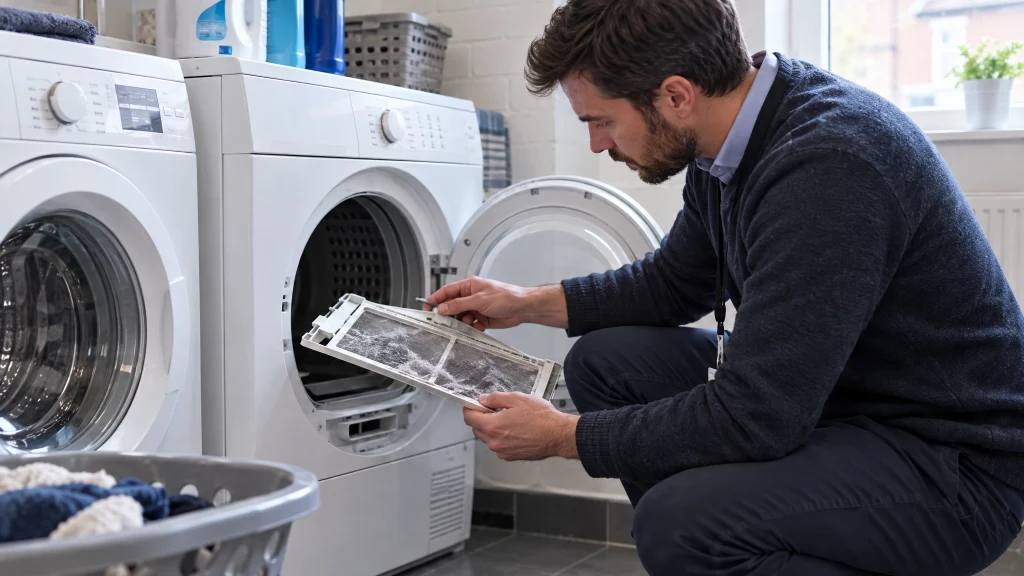
This isn’t a hypothetical risk. In October 2025, London Fire Brigade issued a public warning about specific heat pump tumble dryer models sold under the Haier, Hoover, Candy, Caple, Baumatic, Iberna, Lamona and Montpellier brands. The warning followed an earlier repair programme that failed to fully resolve an internal short-circuit fault.
Over 100,000 units were affected, and the Brigade was explicit that appliances already modified under the first repair round still needed the newer fix, since the original repair “did not fully eliminate the fire risk.”
If an HMO has a shared tumble dryer, checking its brand and model against that recall list takes minutes and costs nothing. It’s exactly the kind of practical, current check that belongs in a fire risk assessment review rather than being left to chance.
A recalled dryer sitting in a communal laundry room, still being used by three or four tenants who’ve never heard of the recall, is one of the easiest preventable risks I come across. It’s not a structural fire safety failing. It’s a five-minute check nobody’s done.
Candles remain a stubbornly consistent cause of house fires, and winter brings two separate reasons for their use to rise. Darker evenings mean more ambient candle use generally, and the same energy-cost pressure driving electric blanket use also pushes some tenants toward candles during power cuts rather than paying for alternative lighting.
Government guidance is unambiguous that battery-powered torches are the safer option during an outage. Where candles are unavoidable, they need a proper holder and clear space away from curtains and furniture, and must be extinguished completely before anyone leaves the room or goes to bed.
Greater Manchester Fire and Rescue Service repeats the same core message in its own winter campaign: never leave a lit candle unattended, and put it out properly rather than letting it burn down.
For a landlord, this sits squarely in tenant communication territory rather than anything structural. A short, clear note in the winter welcome pack, covering candles, heaters and the laundry room in one go, does more for genuine fire safety than most paperwork exercises.
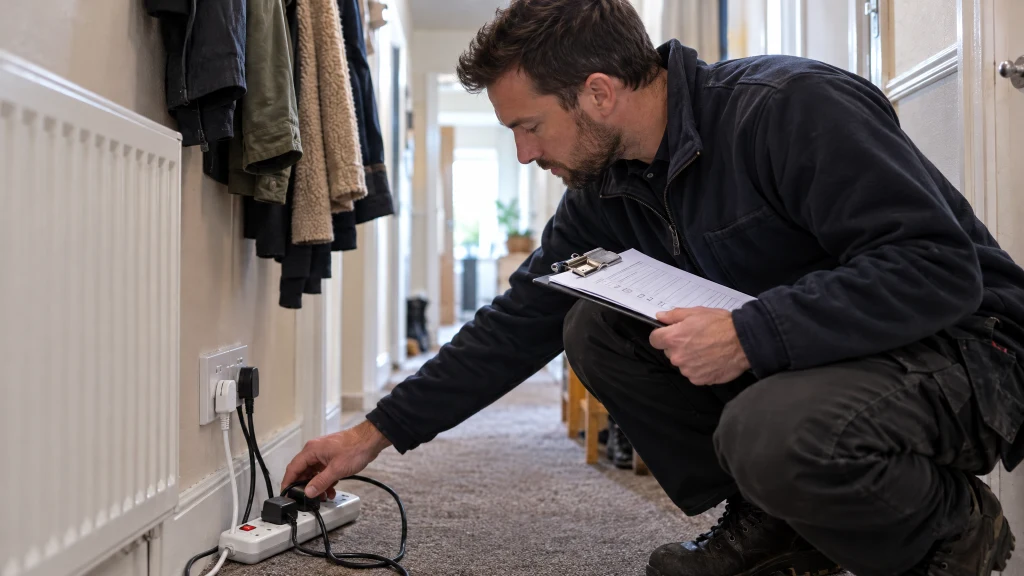
Every item covered so far, the heater, the electric blanket, the extra laundry load, typically arrives in an HMO via an extension lead rather than a dedicated socket. Shared houses rarely have enough wall sockets for the number of devices several independent tenants actually own.
Greater Manchester’s figure of 409 fires linked to faulty wiring, cabling and plugs over a recent three-year period is, by a wide margin, the largest single category of electrical fire recorded in the city region. It sits well ahead of lighting, heating equipment and white goods combined.
Winter adds load to a wiring system that was already working harder than its summer baseline. A communal hallway with one double socket feeding a lamp, a router and a phone charger in September can easily be feeding a heater, a humidifier and two phone chargers by November, often without the landlord being aware the extra load exists.
This is precisely the kind of change a fire risk assessment is meant to pick up. Not a change to the building, but a change to how it’s actually being used.
This is a particularly live issue for the converted terrace stock that makes up a large share of Manchester’s HMO market, in areas like Fallowfield, Rusholme and Withington. Many of these houses were built as single-family homes decades before anyone imagined five or six unrelated tenants living there, each with their own laptop, phone charger, lamp and, come winter, their own heater.
The original electrical layout simply wasn’t designed for that load. That’s exactly why fire risk assessments for student HMOs in Manchester need to look specifically at socket provision and extension lead use, rather than treating the property the way a purpose-built block of flats would be treated.
The Regulatory Reform (Fire Safety) Order 2005 doesn’t set a fixed review date for a fire risk assessment. Instead, it requires the assessment to be reviewed regularly and whenever a significant change occurs, giving a change of use, an alteration to the building or a change in occupancy as examples.
A shift in how tenants use electrical appliances through the colder months sits in the same spirit as those examples, even though it isn’t a structural change to the property itself.
Since 1 October 2023, the Fire Safety (England) Regulations 2022 have also required responsible persons for multi-occupied residential buildings, which includes HMOs, to record the fire risk assessment in full, identify who carried it out, and pass on fire safety information to residents.
A seasonal check doesn’t need to be a full re-assessment from scratch. It does need to be documented if it changes anything the written assessment currently says, and it needs to actually happen rather than being assumed.
| Winter hazard | Why it matters more in an HMO | What to check this month |
|---|---|---|
| Portable heaters | Multiple tenants, multiple heaters, no central oversight of what’s plugged in | Written heater policy, safe positioning, no use on extension leads already under load |
| Electric blankets | 24% year-on-year rise in fires, often used unattended overnight | Basic safety information issued to tenants; no landlord inspection needed |
| Tumble dryers | Shared laundry rooms run far more cycles than a single household | Brand/model checked against the current recall list; lint filter and vent condition |
| Candles | Darker evenings plus power-cut use during cost-of-living pressure | Torches available; candle use covered in tenant information |
| Extension leads | Wiring load rises sharply as heating, laundry and lighting all increase together | Current EICR reflects likely winter load; no daisy-chained extension leads |
Most of this comes down to a short list of checks that take an afternoon, not a full re-inspection. I’d suggest working through these before the heating season properly sets in, rather than reacting once a tenant reports a problem:
A fire risk assessment only works if the people living in the property understand the basics too. The clearest, shortest version I give landlords to pass on covers:
None of this is complicated, and none of it requires specialist knowledge. It just needs saying, clearly and in writing, at the point in the year when it’s actually relevant, rather than buried in a tenancy agreement nobody rereads.
A seasonal check like the one above is good practice, and it’s genuinely useful. It isn’t a substitute for a proper fire risk assessment carried out by a competent person, particularly if the property hasn’t had one recently, occupancy has changed, or you’re not confident the existing assessment reflects how the house is actually being used today.
What a fire risk assessment actually costs varies by property size and complexity. It’s worth weighing against what happens if you don’t have one at all when an incident or an inspection exposes the gap.
This matters particularly for licensed HMOs in Manchester, where fire safety compliance is tied directly to licence conditions. It also matters for properties where communal areas see the heaviest seasonal change in how they’re used.
If the property also has tenants charging e-bikes, scooters or power tool batteries over winter, that’s a related but distinct hazard worth reading about separately. Lithium-ion battery fires behave very differently to the appliance fires covered here, and need their own specific precautions.
Not necessarily a brand new one. The law requires a fire risk assessment to be reviewed regularly and whenever a significant change occurs, and a seasonal shift in how tenants use electrical appliances fits that spirit even if it isn’t a change to the building itself. A documented seasonal check against the existing assessment is usually sufficient unless something more substantial has changed.
You can set reasonable house rules, including restricting or banning portable heaters, provided tenants are given adequate heating by other means and the rule is communicated clearly in writing. A blanket ban without providing a workable alternative tends to push tenants toward using heaters anyway, just without telling you.
The current data doesn’t support dismissing it. Electrical Safety First recorded a 24% year-on-year rise in accidental electric blanket fires in England for 2024/25, a five-year high, with 11 casualties or fatalities in that period. It’s a smaller category than cooking or heating fires overall, but the trend is moving in the wrong direction.
Check the model and serial number against the manufacturer’s current recall notice, which for the heat pump dryers named by London Fire Brigade in October 2025 covers the Haier, Hoover, Candy, Caple, Baumatic, Iberna, Lamona and Montpellier brands. If in doubt, the manufacturer’s own safety recall page will confirm whether a specific model and serial range is affected.
The written record requirements introduced from October 2023 apply to responsible persons for multi-occupied residential buildings, which includes HMOs, alongside purpose-built and converted flats. If you’re the responsible person for an HMO, you should already be keeping a written fire risk assessment and passing fire safety information to residents and any other responsible parties in the building.
Walk the property specifically looking for extension leads under load, since that’s the largest electrical fire category recorded by Greater Manchester Fire and Rescue Service, and the point where most of the other seasonal risks, heaters, lamps, chargers, actually converge. It takes an afternoon and catches more real risk than almost anything else on this list.
Most HMO landlords I talk to can rattle off their fire door requirements, their alarm grade, and their emergency lighting checks without missing a beat....

Most of the fire safety advice on this site assumes you already have a working HMO. This one is for the stage before that: the...