Awaab’s Law and Fire Safety: What HMO Landlords Need to Know
29/09/2026
On 30 November 2026, a new legal duty comes into force for social landlords across England: if a tenant reports a fire hazard, there is now a fixed clock on when it has to be investigated and fixed. It is called Awaab’s Law, and its second phase brings fire and electrical hazards into scope for the first time. Right now, it only applies to social housing. But the private rented sector is next in line, and for HMO landlords, that matters more than it might first appear.
I get asked a version of the same question most weeks: “does any of this actually apply to me yet?” The honest answer is no, not yet, not directly. But the law is a signal, not a surprise. It tells you exactly which hazards regulators are about to take far more seriously, and fire sits right at the top of that list. This guide sets out what Awaab’s Law actually changes, where private landlords genuinely stand today, and why an HMO in Manchester has more to worry about from existing fire safety law than from anything Awaab’s Law adds. If you haven’t read our wider guide to fire risk assessments for HMOs, it’s worth doing so alongside this one.
Awaab’s Law takes its name from Awaab Ishak, a two-year-old who died in 2020 after prolonged exposure to mould in his family’s social housing flat in Rochdale. The coroner’s findings led directly to a change in the law: the Social Housing (Regulation) Act 2023 gave the government the power to set legally binding timescales for social landlords to fix dangerous hazards, rather than leaving it to their discretion.
Phase 1 came into force on 27 October 2025, and it dealt specifically with damp and mould. Social landlords must now investigate reported damp and mould within fixed timescales, make emergency hazards safe within 24 hours, and keep clear records of what they did and when. It was the first time a specific class of housing hazard came with a legal stopwatch attached, rather than a vague duty to act “reasonably”.
Phase 2 is what’s making the news right now, because it lands on 30 November 2026, which at the time of writing is a matter of weeks away. It widens the net considerably: excess cold and excess heat, falls, structural collapse and explosions, damaged electrics, and, for the first time, fire hazards. According to law firm Trowers & Hamlins, fire hazards are “among the most significant additions” in this phase, sitting alongside electrical defects such as exposed wiring and damaged consumer units.
It helps to see the rollout as a single timeline rather than a series of disconnected announcements. Here’s how the phases break down so far, based on the guidance social landlords have already been given.
| Phase | Date | Hazards covered | Applies to |
|---|---|---|---|
| Phase 1 | 27 October 2025 | Damp and mould, plus all emergency hazards generally | Social landlords only |
| Phase 2 | 30 November 2026 | Fire and electrical hazards, excess cold and heat, falls, structural collapse, hygiene and pests | Social landlords only |
| Phase 3 | Not yet confirmed | The remaining Housing Health and Safety Rating System hazard categories | Social landlords only |
| Private rented sector extension | Not yet confirmed; 2027 at the earliest | Expected to mirror the social housing phases, starting with emergency hazards | Private landlords, via the Renters’ Rights Act 2025 |
Nothing in that table is guesswork. The dates for Phases 1 and 2 are confirmed and already in secondary legislation. The private rented sector row is the only genuinely open question, and it’s worth being precise about why.
Fire doesn’t get treated as a single, generic risk under this framework. It’s assessed the same way every hazard is assessed under the Housing Health and Safety Rating System, or HHSRS, which has underpinned housing law since the Housing Act 2004. Awaab’s Law doesn’t replace HHSRS; it bolts legally enforceable deadlines onto it for social landlords.
HHSRS works on a simple formula: likelihood multiplied by the seriousness of the likely outcome gives a numerical score. A property with a genuinely dangerous fire risk, poor escape routes, no working detection, doors that wouldn’t hold back smoke for long enough, will score in the “high” band. Anything landing in that band becomes a Category 1 hazard, and Category 1 is the threshold that triggers a council’s legal duty to act, not just a discretionary power.
According to the National Residential Landlords Association’s own HHSRS guidance, assessors look specifically at fire-resistant doors and their ability to contain a fire, the presence and adequacy of smoke and heat detection, whether escape routes run cleanly from bedrooms without passing back through other rooms, and whether sockets are overloaded. Crucially, the NRLA is explicit that fire risk varies considerably depending on whether a property is an HMO, and that HMO landlords should have a professional fire risk assessment carried out on top of standard HHSRS considerations, not instead of it.
There’s no single trigger. It’s a combination of factors that, taken together, push the likelihood and severity score high enough. In a typical Manchester HMO conversion, the usual suspects are a missing or inadequate interlinked alarm system across bedrooms and communal areas, fire doors that have been wedged open or had their self-closers removed, an escape route that runs through a single stairwell with no protection, and sockets in bedrooms that were never designed for the number of appliances now plugged into them.
I’ve lost count of the number of HMOs I’ve walked into where every individual fire safety item looks fine in isolation, a fire door here, an alarm there, but nobody has ever looked at how they work together as a system. That’s exactly what a proper fire risk assessment is for, and it’s exactly what HHSRS scoring penalises when it’s missing.
No. This is worth stating plainly, because a lot of the coverage around Phase 2 has been imprecise about scope. Every primary and legal-sector source describes Phase 2 as applying to social housing landlords specifically. If you’re a private landlord letting an HMO in Manchester, nothing in the current regulations imposes a legal deadline on you to fix a reported fire hazard within a set number of hours or days.
The mechanism for extending Awaab’s Law to private landlords already exists. The Renters’ Rights Act 2025 received Royal Assent in late 2025 and contains the legal powers needed to apply Awaab’s Law style duties to the private rented sector. But a power in an Act of Parliament isn’t the same as a rule in force. The government still has to consult on the detail and lay separate regulations, and property-standards reforms have deliberately been placed in a later phase of the Act’s confirmed implementation timeline, behind the tenancy reforms that took effect from 1 May 2026.
Legal commentary through 2026 has consistently pointed to 2027 as the earliest realistic point at which Awaab’s Law could reach private landlords, and even that isn’t confirmed. The expected shape, once it does land, is that it will mirror the social housing rollout: starting with emergency hazards and damp and mould, then widening to fire and electrical hazards in a subsequent phase. In other words, if the pattern holds, fire hazard deadlines for private landlords could sit a full phase or more behind wherever social housing has already reached.
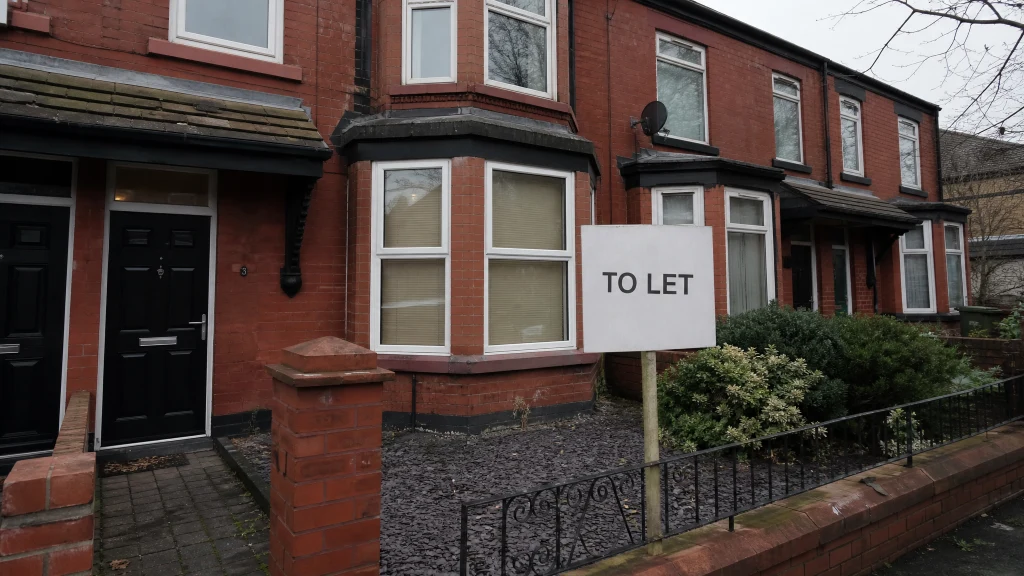
Here’s the part that I think gets missed in most of the coverage. Waiting for Awaab’s Law to reach the private rented sector treats fire safety enforcement as something that starts on some future date. It doesn’t. It’s already here, just under a different name.
HHSRS itself, and the enforcement powers that sit behind it, have applied to private landlords since 2006. Under the Housing Act 2004, a local authority has a mandatory duty to take enforcement action wherever it identifies a Category 1 hazard in a property, fire included. That’s confirmed directly by Shelter Legal England’s own guidance for housing professionals. Manchester City Council doesn’t need Awaab’s Law to serve an improvement notice, a prohibition order, or in the most serious cases take emergency remedial action itself, if an inspector finds a Category 1 fire hazard in your HMO today.
Manchester City Council’s own HMO Standards and Guidance document sets out exactly what it expects to see: a fire risk assessment of common areas carried out by a competent person under the Regulatory Reform (Fire Safety) Order 2005, smoke detection tested annually to BS 5839-1, emergency lighting serviced and tested to BS 5266-8 where escape routes need it, and a clear rule that no security device or lock should ever be capable of blocking an escape route. None of that is new, and none of it is waiting on Awaab’s Law to matter.
A landlord who treats fire safety as a box to tick once, at the point of licensing, is taking on more legal exposure than the Awaab’s Law headlines suggest, not less. Awaab’s Law is about response deadlines once a hazard has already been reported. HHSRS enforcement doesn’t wait for a report at all; a routine inspection or a licensing renewal visit can trigger it independently.
The practical fire hazards that keep coming up in Manchester’s converted terraces and shared houses tend to fall into a short, recognisable list:
Every one of those is a genuine, common finding, and every one of them is capable of tipping an HHSRS fire score into Category 1 territory on its own, before you even factor in how they interact with each other.
Fire safety isn’t sitting in a separate compartment from the rest of your compliance obligations. Whether your HMO needs a licence at all, and what that licence requires, is a question we’ve covered in detail in our guide to HMO licensing in Manchester, and we’ve specifically addressed whether falling under the mandatory licensing threshold changes anything in our guide for unlicensed HMOs. It doesn’t. Fire safety law applies regardless of licensing status.
The same logic increasingly applies to insurance. A documented fire risk assessment isn’t just a defence against enforcement action; it’s becoming standard evidence insurers expect to see before they’ll confirm cover, particularly after a claim. We’ve set out how the two interact in our guide to fire risk assessments and landlord insurance.
The landlords who come out of an HMO fire risk assessment well aren’t the ones with the newest building. They’re the ones who’ve had someone competent check that the individual safety features they installed years ago are still doing their job, and still work together.
A fire risk assessment carried out under the Fire Safety Order isn’t a form-filling exercise. It’s a systematic walk through the property that identifies specific hazards, assesses who’s at risk from them, and sets out what needs to change and by when.
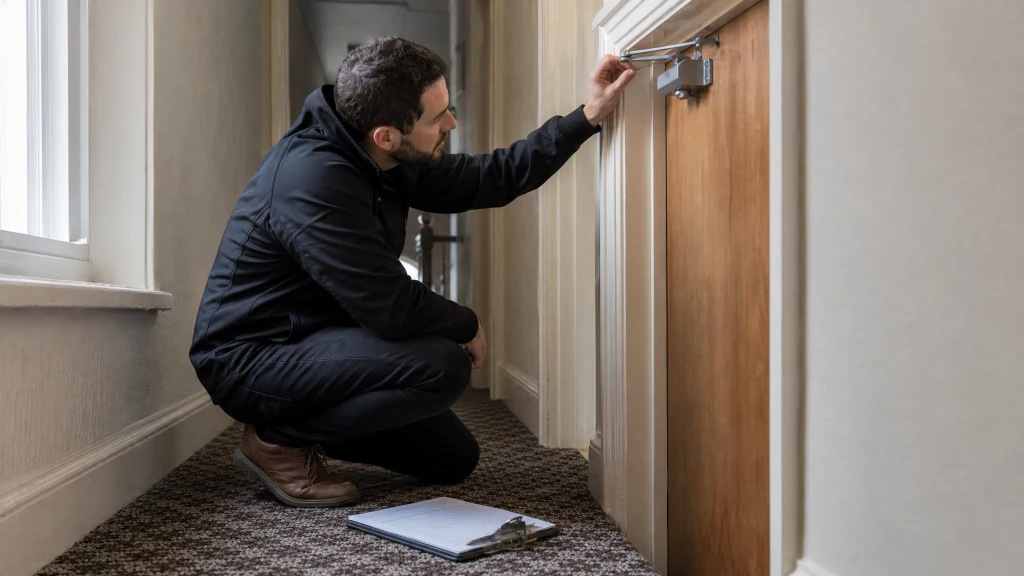
An assessor checks that every fire door on an escape route actually closes and latches under its own self-closer, that the door and frame together still provide the fire-resistance rating the property needs, and that nothing, from a wedged-open door to a missing intumescent strip, has quietly undermined that over time.

This covers whether the alarm system is adequate for the property’s layout and occupancy, whether it’s genuinely interlinked so one triggered alarm sounds throughout, and whether emergency lighting, where the escape route needs it, is present, working, and has been tested and logged to BS 5266-8 as Manchester’s own guidance expects.
The assessor traces every realistic escape route from every room, checking for anything obstructing it, whether locks or security devices could trap someone trying to leave, and whether signage is clear enough for someone unfamiliar with the property to find their way out in the dark, in smoke, in a hurry. Shared hallways, stairwells and kitchens get particular attention here; our guide to fire risk assessments in communal areas goes into this in more depth if your HMO has extensive shared space.
A typical visit runs through the same broad sequence every time, even though the specific findings vary property to property:
That final step matters more than landlords sometimes assume. A report that just lists problems without timescales gives a council inspector nothing to measure you against later. A properly written one becomes your evidence that you identified and acted on risks proactively, which is exactly the posture that keeps a routine inspection from turning into enforcement action.
You don’t need to wait for the private rented sector extension to behave as though it’s already here. Most of what it would eventually require, you should already be doing under existing fire safety and HHSRS law anyway.
None of that requires Awaab’s Law to reach the private rented sector to be worth doing. It requires only that Category 1 fire hazards remain enforceable today, which they already are.
The consequences sit on two separate tracks, and it’s worth understanding both. Breach the Regulatory Reform (Fire Safety) Order 2005 as the responsible person and, according to London Fire Brigade’s own guidance, you face an unlimited fine or imprisonment, with the most serious cases going to the Crown Court. Separately, if Manchester City Council identifies a Category 1 fire hazard through HHSRS, it has a mandatory duty to act, whether through an improvement notice, a prohibition order restricting the property’s use, or, where the risk is immediate, emergency remedial action carried out at your expense.
There’s a further point that rarely gets mentioned: London Fire Brigade notes that 60% of businesses don’t recover after a serious fire. That statistic is aimed at commercial premises, but the underlying logic applies just as directly to an HMO. A fire that spreads because compartmentation failed doesn’t just bring legal exposure. It brings void periods, insurance disputes, and reputational damage with letting agents and prospective tenants that can outlast any fine. We go through the fuller range of consequences, including what happens if a fire actually occurs without an assessment on file, in our guide to what happens if you don’t have a fire risk assessment.
None of this needs to be a source of anxiety if you keep on top of it. A property with a current, well-documented fire risk assessment and a landlord who acts on its findings is in a genuinely strong position, whatever happens to Awaab’s Law over the next couple of years. If it’s been a while since your last assessment, or you’ve never had one done properly for this specific property, get in touch and we’ll arrange one before Phase 2 makes fire safety the story everyone’s suddenly paying attention to.
No. As it stands, Awaab’s Law applies only to social housing landlords. Its Phase 2 expansion to fire and electrical hazards takes effect on 30 November 2026, and even then it remains restricted to the social housing sector. Private landlords, including HMO landlords, aren’t covered yet.
There’s no confirmed date. The Renters’ Rights Act 2025 gives the government the power to extend it to the private rented sector, but the detailed regulations haven’t been laid. Legal commentators have suggested 2027 as the earliest realistic point, though this could move.
Because Category 1 fire hazards under the Housing Health and Safety Rating System are already enforceable against private landlords, and have been since 2006. Manchester City Council can act on a serious fire hazard in your HMO today, with no need for Awaab’s Law to extend to the private rented sector first.
Awaab’s Law sets legal deadlines for a landlord to respond once a hazard has been reported. A fire risk assessment under the Fire Safety Order is a separate, proactive duty to identify and address fire risks before anyone reports anything. HMO landlords already have to do the second one regardless of what Awaab’s Law eventually requires.
There’s no single defining feature. It’s the combined score of likelihood and severity across factors such as fire door condition, alarm coverage and interlinking, escape route integrity, and electrical loading. Several moderate issues together can score as high as one severe one.
Yes, on more than one basis. A breach of the Fire Safety Order can bring an unlimited fine or imprisonment. Separately, licensing and housing condition breaches under the Housing Act 2004 can bring their own civil penalties, independent of any prosecution under fire safety legislation.
At least annually, and sooner if the property’s occupancy, layout or fire safety equipment changes. A fire risk assessment isn’t a one-off certificate; it’s a live document that should be reviewed whenever the risk picture shifts.
The clearest primary sources are the government’s own implementation updates for the Renters’ Rights Act 2025 and the statutory guidance published alongside each Awaab’s Law phase for social landlords. Both are the sources this article draws its dates and scope from, rather than secondary commentary.
Most HMO landlords I talk to can rattle off their fire door requirements, their alarm grade, and their emergency lighting checks without missing a beat....

Most of the fire safety advice on this site assumes you already have a working HMO. This one is for the stage before that: the...