
What Happens If You Don’t Have a Fire Risk Assessment? UK Landlord Guide
17/09/2026
Most landlords who get caught without a fire risk assessment do not find out the hard way because of a fire. They find out because a council officer, a mortgage broker, an insurer or a tenant’s solicitor asks to see one, and there is nothing to show them. By that point, the conversation is no longer about compliance. It is about fines, licences, insurance cover and, in the worst cases, prison.
I get asked some version of “what actually happens if I just don’t bother” more often than you would think, usually from a landlord who has owned an HMO for years without incident and has quietly assumed the risk is theoretical. It isn’t. The Regulatory Reform (Fire Safety) Order 2005 gives fire and rescue authorities real enforcement teeth, and 2026 has already produced court cases that show exactly how those teeth get used against ordinary private landlords, not just rogue operators running dozens of properties.
This guide sets out, in plain terms, what actually happens if you do not have a fire risk assessment: the notices you can be served, the fines and prison terms the law allows, what it does to your HMO licence and your insurance, and what two real 2026 court cases looked like from the inside.
If you are a landlord, managing agent, or anyone with control of a rented property in England or Wales, you are almost certainly a “Responsible Person” under the Regulatory Reform (Fire Safety) Order 2005. That duty applies whether the property is a single let, a block of flats, or a house in multiple occupation, and it applies from the day you start letting, not from the day a council officer asks about it.
The assumption I see most often is that enforcement is something that happens to other people, usually large, badly-run portfolios in London. The two cases later in this guide show that assumption is wrong on both counts: one involved a small private landlord in Lincoln with a single HMO, fined within the last few months.
It doesn’t matter whether you self-manage the property or use a letting agent, either. The Fire Safety Order can attach responsibility to whoever actually has control of fire precautions in practice, and using an agent does not automatically transfer the legal duty away from the owner. If you have never had a written agreement clarifying who holds this responsibility, that gap is itself worth closing before anything else on this list.
In our experience, enforcement rarely starts with a fire. It usually starts with something far more mundane: a tenant complaint about a broken smoke alarm, a routine HMO licence renewal, or a fire and rescue service audit that happens to coincide with a gas or electrical safety visit. Whatever triggers the first knock on the door, the assessment either exists and is current, or it doesn’t.
If you are still unsure whether the duty applies to you, or want the full detail on what a compliant assessment actually needs to cover, our guide to the Regulatory Reform (Fire Safety) Order walks through it in full. This article focuses specifically on what happens when that duty is ignored.
Every rented property needs a fire risk assessment, but HMOs sit at the sharp end of enforcement, and Manchester’s rental market makes that especially relevant. With one of the largest student populations of any UK city and dense concentrations of shared housing across areas like Fallowfield, Rusholme, Withington and Victoria Park, the city has no shortage of higher-occupancy properties where a fire risk assessment gap turns into a serious hazard fast.
An HMO typically means more unrelated occupants, more shared escape routes, more kitchens and heating appliances in everyday use, and less control over how carefully any individual tenant behaves around basic fire risks like candles, cigarettes or overloaded extension leads. Fire and rescue services know this, which is part of why inspectors’ powers under the Fire Safety Order specifically extend into HMOs and shared domestic premises in a way they don’t for a single self-contained let.
That heightened risk profile is exactly why both the fines and the scrutiny tend to land harder on HMO landlords than on landlords of standard single-let properties, and why the licensing and Rent Repayment Order risks covered later in this guide sit almost entirely within the HMO sector.

Fire and rescue authorities do not go straight to prosecution. GOV.UK’s own guidance on enforcement sets out a clear escalation ladder, and it is worth understanding each rung, because the sanctions get considerably more serious the further up it you go.
For minor, low-risk breaches, an inspecting officer may simply give verbal advice, or issue a non-statutory “Letter of Fire Safety Matters” setting out what needs fixing. There is no criminal offence for ignoring a non-statutory notice on its own. But GOV.UK is explicit that non-compliance with one “can however be used as evidence in any subsequent prosecution and/or as an aggravating factor in sentencing.” Ignoring the polite version of a warning is what turns a small problem into a court date.
Once breaches are more serious, an enforcing authority can issue one of three statutory notices, and failing to comply with any of them is a specific criminal offence in its own right, separate from the underlying fire safety breach.
| Notice Type | When It’s Used | What It Means for You |
|---|---|---|
| Enforcement Notice | The authority believes you have failed to meet a requirement of the Fire Safety Order | Sets out the breach and a remedial timescale of at least 28 days; failing to comply is a separate offence |
| Prohibition Notice | There is an urgent, serious risk to life, including within an HMO’s shared areas | Restricts or bans use of the premises immediately, and can remain in force indefinitely |
| Alterations Notice | The premises are high-risk, or could become so through planned changes | Requires you to notify the authority before making certain changes to the building or its use |
A prohibition notice is the one that should genuinely worry HMO landlords. GOV.UK’s guidance confirms inspectors’ powers extend to “houses in multiple occupation (HMO), blocks of flats and buildings which may contain a mix of both commercial and domestic premises,” and that a prohibition notice can restrict use of private dwellings within an HMO, even though it cannot be issued against a single private dwelling house on its own. In practice, that can mean tenants being told they cannot stay in the building until the risk is fixed.
A prohibition notice normally takes immediate effect. Once served, it remains in force until the serious risk has genuinely been removed, however long that takes.
This is where most landlords underestimate the exposure. If an enforcing authority believes a breach exposes people to the risk of death or serious injury, or if you fail to comply with a statutory notice, GOV.UK’s guidance is unambiguous about the maximum penalty: “an unlimited fine in the magistrates’ court or, at the Crown Court, an unlimited fine and/or a term of imprisonment not exceeding two years.”
There is no cap. The £5,000 figure some landlords have heard quoted online applies to a narrower, separate offence under the Smoke and Carbon Monoxide Alarm Regulations, not to a serious Fire Safety Order breach. For the offences that actually carry the fire and prosecution risk, the fine has no ceiling at all.
A common misconception is that operating through a limited company shields the individual behind it. It doesn’t, reliably. GOV.UK’s guidance confirms individuals can be prosecuted personally where an offence “was the result of neglect or consent by an officer of the company,” or where a manager had contractual responsibility for fire precautions that were “so inadequate that people were placed at risk of death or serious injury.” Sole traders face the same exposure directly, with no company structure between them and the charge sheet.
Since 2023, the Fire Safety (England) Regulations 2022 have sat alongside the Fire Safety Order for buildings that contain two or more sets of domestic premises, which includes HMOs. Not every duty under those Regulations applies to every HMO in the same way it applies to a tall block of flats, but GOV.UK’s own enforcement guidance treats a breach of the Regulations exactly the same way as a breach of the Order itself for sanctions purposes: the same statutory notices, and the same maximum penalty of an unlimited fine and up to two years in prison. A missing fire risk assessment rarely stays a single, isolated failing under just one piece of legislation.
Two prosecutions concluded in the summer of 2026 show how this plays out for landlords who look nothing alike on paper, one running a large converted HMO in London, the other a single let in Lincoln.
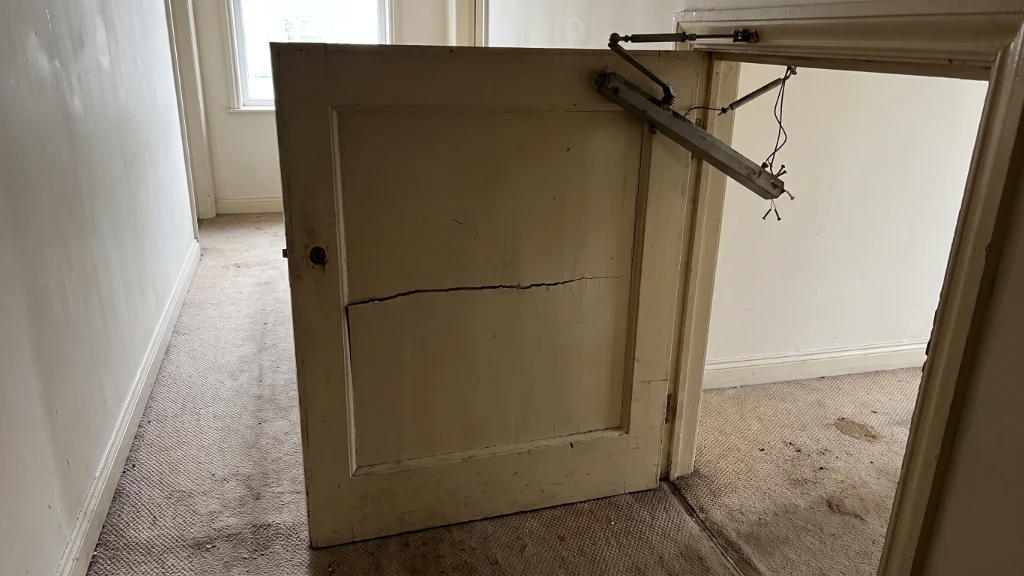
In Kensington, a 36 Hyde Park Gate property had been converted from four bedrooms into 22, and was being run as an HMO without a licence. When Kensington and Chelsea Council officers visited with the Met Police and London Fire Brigade, they found defective and damaged fire doors, inadequate fire separation between bedrooms, no fire safety protection in the boiler room or lobby, and covered fire alarms alongside burnt-out electrical sockets. At sentencing on 30 June 2026, the letting company, Blackstone Properties Management Limited, was fined £30,000 plus prosecution costs of £12,176.68. The landlord behind it, Mohammed Rasool, was fined a further £20,000 personally.
In Lincoln, the scale was smaller but the outcome followed the same pattern. Lincolnshire Fire and Rescue identified immediate fire safety risks at an HMO during a visit in January 2025, prompting an Emergency Prohibition Order. Landlord Anita Sharma pleaded guilty to seven breaches of the Management of Houses in Multiple Occupation (England) Regulations 2006 and, at a sentencing hearing on 12 June 2026, was fined £4,000, ordered to pay £2,000 in council costs, and given an £800 court surcharge.
The gap between a £34,000 corporate case and a roughly £6,800 sole-trader case matters less than what both have in common: a fire authority found fire safety failings, a council prosecuted, and a court convicted. Portfolio size didn’t decide the outcome. The state of the property did.
It’s also worth noticing what triggered each case. Neither started with a fire. The Hyde Park Gate investigation began with a single tenant complaint back in 2020, and the Lincoln case began when tenants raised concerns that prompted a routine fire and rescue service visit. In both cases, the fire safety failings were found as part of a wider housing standards investigation rather than a dedicated fire inspection, which is exactly the pattern most HMO landlords should expect: fire risk rarely gets checked in isolation from everything else a council is already looking at.
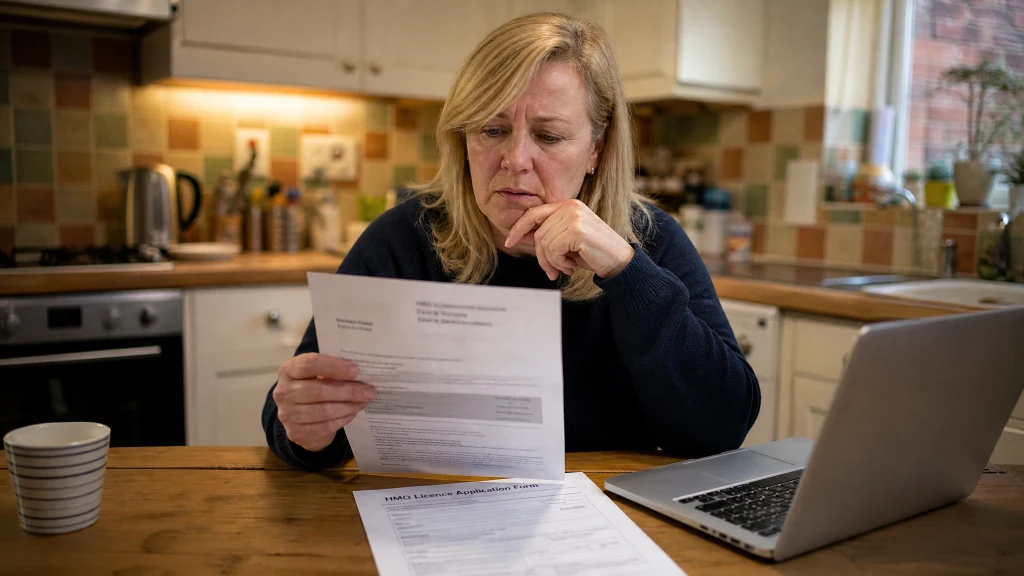
For HMO landlords specifically, a missing or inadequate fire risk assessment rarely sits in isolation. It tends to surface alongside a licensing problem, and the two together carry their own separate financial risk on top of anything the Fire Safety Order allows.
Under the Renters’ Rights Act 2025, councils can impose a civil penalty as an alternative to prosecution for operating an unlicensed HMO, and the statutory maximum for that penalty is £40,000. Manchester City Council has updated its own Civil Penalty Policy specifically to reflect the Renters’ Rights Act 2025, with the new enforcement approach applying to non-compliance identified from 1 May 2026 onwards. A fire risk assessment is standard evidence councils expect to see as part of a licence application, so a missing one and a missing licence tend to be found together, not separately.
A Rent Repayment Order lets a tenant or local authority reclaim rent from a landlord who has committed certain housing offences, including operating an unlicensed HMO. Under the Renters’ Rights Act 2025, the maximum amount was doubled to up to two years’ rent. GOV.UK’s own statutory guidance for local authorities names fire safety directly as an aggravating factor, listing “a lack of fire doors in an HMO” and “no smoke alarm” as explicit examples of the “bad landlord conduct” a tribunal must weigh when deciding how much to award. A skipped fire risk assessment does not just fail to protect you, it becomes evidence used against you.
If a landlord has committed the same offence before and had formal enforcement action taken against them for it, GOV.UK’s guidance requires the tribunal to make the Rent Repayment Order for the maximum amount, unless there are exceptional circumstances.
This isn’t an abstract national risk for landlords operating around Manchester. The council’s past selective licensing enforcement rounds, across schemes including Moss Side, Rusholme, Old Moat and Moston, found 54 serious hazards and 1,342 further hazards during inspections, including fire safety, damp and electrical issues, and resulted in landlords being issued civil penalty notices totalling more than £71,000, on top of costs recovered for processing enforcement notices. With the council’s updated Civil Penalty Policy now live from May 2026, expect that enforcement appetite to continue, not soften.

Even landlords who accept the legal risk sometimes assume their buildings insurance will cover them if the worst happens anyway. It often won’t. Insurer Hiscox is direct about this in its own landlord guidance: “insurance policies typically require landlords to meet fire safety standards as a condition of coverage. Fire safety violations can mean your insurance becomes invalid, and insurers may refuse to pay claims or cancel your policy.”
That means a landlord without a valid fire risk assessment can be exposed twice over from a single fire: once to the council and the courts, and again to their own insurer, who may simply decline to pay for the fire damage, the loss of rent, or a tenant’s injury claim. Hiscox also notes that, although rare, the most serious enforcement cases can lead to banning orders, preventing a landlord from renting out residential property at all.
An out-of-date fire risk assessment sitting in a drawer is not proof of compliance an insurer will accept after the event. It has to be current, and it has to reflect the property as it actually is now, not as it was when the file was last opened.
This catches out landlords who assume any assessment, however old, is better than none. In a claims dispute, an insurer’s loss adjuster will typically ask when the assessment was carried out, whether it covers the current layout and occupancy, and whether its recommendations were actually completed. An assessment that predates a loft conversion, an extra tenant, or a change of use answers all three questions badly, and a policy condition that hasn’t genuinely been met offers very little practical difference from having no assessment at all.
Add up the exposure in one place and the numbers stop looking like a distant regulatory risk and start looking like a specific, quantifiable threat to the business.
None of this requires a fire to actually happen. Every one of these consequences can be triggered by an inspection alone, before a single spark.
A fire risk assessment is not a one-off certificate. It needs to be reviewed regularly, and immediately after any significant change to the building, its layout, or its occupancy, such as converting a reception room into an extra bedroom. We’ve covered the specific review triggers and recommended intervals in detail in our guide to fire risk assessments for HMOs, so we won’t repeat the full detail here. The point that matters for this article is simpler: an assessment that was suitable three tenants and one loft conversion ago is not a current assessment. To an enforcing authority, it can be treated much the same as having no assessment at all.
As a general rule, higher-risk HMOs are reviewed annually as a minimum, and always after a change of tenants where occupancy patterns shift meaningfully, after building work, or after a near-miss incident such as a small kitchen fire or an alarm activation that turns out to have a genuine cause. If any of those have happened since your last review and you haven’t revisited the assessment since, treat that gap as the same problem as never having had one, because that is exactly how a court or an insurer is likely to see it too.
If you have read this far and recognised your own property, the fix is more straightforward than the consequences above might suggest. None of it requires waiting for a council letter to land first.
If you manage an HMO in and around Manchester specifically, our guide to HMO licensing in Manchester covers the local licensing side of this in more depth, and our HMO fire door regulations guide covers one of the single most common issues found in the cases above.
Both are possible. GOV.UK’s enforcement guidance confirms individuals, including company directors, managers and sole traders, can be prosecuted personally where they had responsibility for fire precautions that were found to be seriously inadequate, as the £20,000 personal fine in the Hyde Park Gate case shows.
No. There is no minimum, and for the most serious offences there is also no maximum. Courts set the fine based on the severity of the risk, the landlord’s conduct, and whether the business or individual can pay, which is why fines in real 2026 cases have ranged from around £4,000 to £30,000 or more, before costs.
Not necessarily. Most landlord and buildings insurance policies treat fire safety compliance as a condition of cover, and insurers including Hiscox have confirmed that violations can invalidate a policy or lead to a claim being refused entirely.
It’s a key part of it. Councils routinely expect to see a current fire risk assessment as evidence of compliance during licence applications and renewals, and its absence often surfaces alongside licensing offences that carry their own separate civil penalty of up to £40,000.
Enforcement doesn’t require a fire to have happened first. Both 2026 prosecutions in this guide followed routine inspections and tenant complaints, not actual fires. A clean history reduces risk but does not remove the legal duty to have a current, suitable assessment in place.
For a straightforward single let, some landlords do complete a basic assessment themselves using GOV.UK’s guidance and checklists. For an HMO, the higher occupancy and shared escape routes make the assessment considerably more complex to get right, and getting it wrong offers no protection at all if an enforcing authority later judges it “not suitable and sufficient.” Most HMO landlords are better served, and better protected, by a professional assessment they can actually rely on if it’s ever challenged.
The landlords in both 2026 cases above did not think a fire was coming either. What they got instead was a council visit, a prosecution, and a bill that started at £6,800 and ran past £30,000 before costs. Our HMO fire risk assessment service covers exactly this ground for landlords across Manchester and the wider North West. If your HMO hasn’t had a current assessment, get in touch for a quote and have it dealt with before it becomes someone else’s finding, not yours.
Most HMO landlords I talk to can rattle off their fire door requirements, their alarm grade, and their emergency lighting checks without missing a beat....

Most of the fire safety advice on this site assumes you already have a working HMO. This one is for the stage before that: the...