

A Landlord’s Guide to the Regulatory Reform (Fire Safety) Order
26/03/2026
If you are a landlord, HMO manager, or business owner in England and Wales, there is one piece of legislation you absolutely need to know: the Regulatory Reform (Fire Safety) Order 2005. It is the law that makes you legally responsible for fire safety in your property. This applies to everything from offices and shops to the shared parts of HMOs and blocks of flats.
This guide explains what the Order requires, who is responsible, and what you need to do to ensure your property is compliant and the people inside are safe. By the end, you will understand your core legal duties and the practical steps needed to fulfil them.
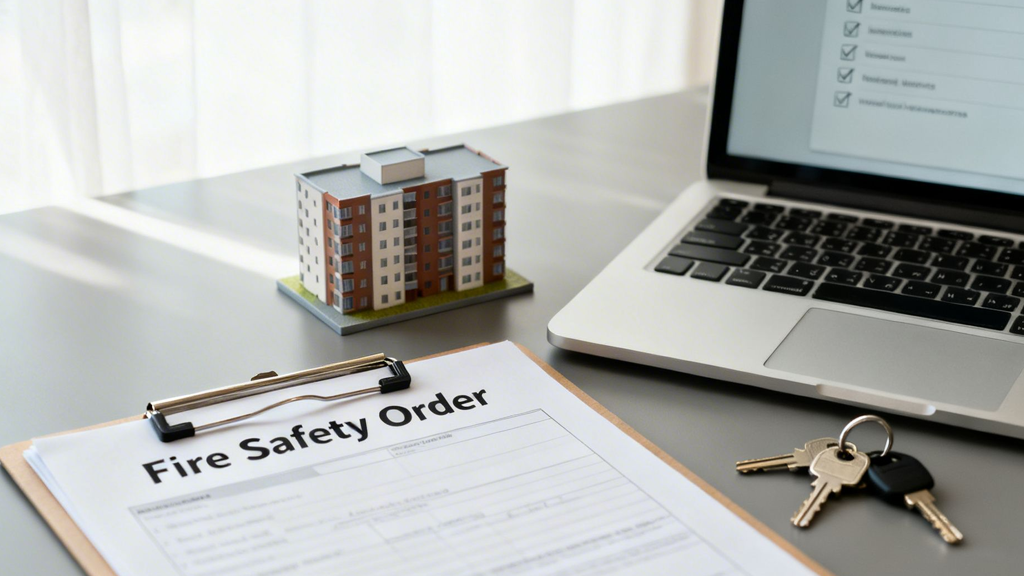
The Regulatory Reform (Fire Safety) Order 2005, often just called the ‘Fire Safety Order’ or ‘FSO’, completely changed the framework for UK fire safety. It shifted the legal burden away from the Fire and Rescue Service and placed it squarely on the shoulders of the people who own and manage buildings.
This was a major departure from the old system of fire certificates. Instead of waiting for the fire service to inspect and certify your property, the law now demands that you proactively manage fire safety yourself. This duty covers nearly all non-domestic premises, with the main exception being single private dwellings.
At the very heart of the Fire Safety Order is the concept of the ‘Responsible Person’. This is the individual or company legally accountable for fire safety in a building. If you have a degree of control over the premises, the law says you have a duty of care.
The Responsible Person is typically:
If there is more than one person in charge, such as a building owner, a managing agent, and a commercial tenant, the law is clear: you must cooperate. Everyone shares the responsibility, and clear communication is vital to ensure nothing is missed.
The biggest change introduced by the Fire Safety Order was the move to a risk-based, self-assessment model. The FSO replaced the rigid, prescriptive system of fire certificates with a framework that is more flexible but also more demanding.
The Order places the duty to assess and manage fire hazards squarely on those in control of the premises. It is not a box-ticking exercise; it is an ongoing process of risk management designed to protect life.
Simply put, you can no longer wait to be told what to do. You are legally required to assess fire risks, identify who is at risk, and implement reasonable measures to keep everyone safe.
This process revolves around your fire risk assessment. The law requires it to be “suitable and sufficient,” and this document is the foundation of your entire fire safety plan. It is the formal record of your findings and your action plan for addressing them. Without a proper fire risk assessment, you are failing your most fundamental legal duty.
The Regulatory Reform (Fire Safety) Order 2005 was not a minor update; it consolidated over 70 separate acts and regulations, including the outdated Fire Precautions Act 1971, into a single, modern set of rules for England and Wales.
This change represented a significant culture shock for many businesses and landlords. The previous system involved obtaining a fire certificate from the local fire service. The 2005 Order abolished that system. Instead, the legal duty to identify and manage fire risks was placed directly on the ‘Responsible Person’: the owner, landlord, or employer with control of the building.
This shift from third-party certificates to direct responsibility was one of the biggest changes in UK fire safety for decades. After a two-year consultation period, the Order came into force in October 2006, affecting thousands of businesses and residential blocks. You can find more detail on the order’s background and impact from O’Heap’s insights into its introduction.
For a long time, the core principles of the Fire Safety Order remained unchanged. This shifted following the Grenfell Tower tragedy, which led to two crucial new laws: the Fire Safety Act 2021 and the Building Safety Act 2022.
These new Acts do not replace the original Fire Safety Order. Instead, they add new requirements and clarify exactly where responsibilities lie, especially for those managing residential buildings.
For landlords and managing agents of blocks of flats, this has been a game-changer. Your legal duties are no longer limited to the internal common areas like hallways and stairwells.
The Fire Safety Act 2021 makes it crystal clear that the Responsible Person’s duties now cover the building’s structure, its external walls (including cladding and balconies), and all the entrance doors to individual flats.
This means your fire risk assessment must be more comprehensive. A cheap, tick-box assessment that only glances at the corridors is no longer compliant and represents a significant legal liability.
The bottom line is that your area of legal responsibility has physically expanded. Managing fire safety, particularly in multi-occupied residential buildings, has become more complex.
Here is what that looks like in practice:
These changes demand a more skilled and thorough approach to fire safety. You cannot simply dust off an old fire risk assessment. You must be certain your assessment fully covers the expanded scope of the Regulatory Reform (Fire Safety) Order.
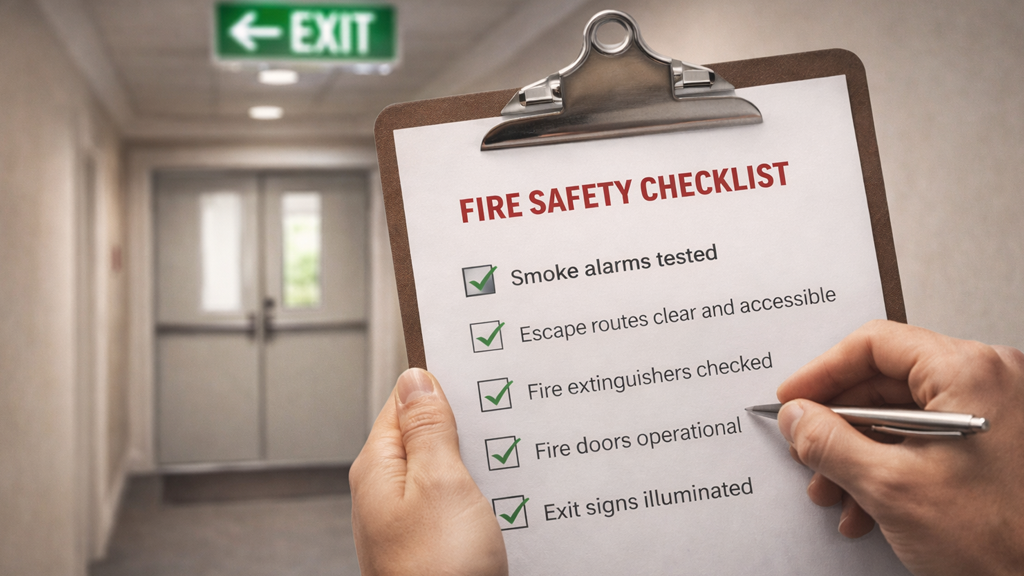
Knowing you are the ‘Responsible Person’ is one thing, but understanding what the law expects from you is another. The Regulatory Reform (Fire Safety) Order 2005 is not about ticking boxes; it lays out clear, legally binding duties to protect life.
At the heart of these responsibilities is the fire risk assessment. This is not a suggestion but a legal mandate. The Order requires you to “make a suitable and sufficient assessment of the risks,” and all other fire safety duties follow from this single document.
Your first and most fundamental duty is to carry out a fire risk assessment and, just as importantly, keep it under regular review. Think of it as the foundation of your fire safety strategy. Its purpose is to systematically identify fire hazards, determine who might be harmed, and verify that your existing safety measures are adequate.
The law states you must have a written record of your assessment if you employ five or more people, hold an HMO licence, or have an alterations notice from the Fire and Rescue Service. In practice, it is always best practice to document it. A written assessment is your proof of compliance.
For a detailed look at this core duty, you can read our article exploring whether a risk assessment is a legal requirement.
Once your fire risk assessment is complete, it will produce an action plan. You are legally required to implement the “general fire precautions” identified. This is where you turn the findings from your report into tangible, life-saving measures.
The table below outlines some of the key duties that fall under this.
| Duty | Description | Practical Example |
|---|---|---|
| Means of Escape | Ensuring escape routes are clear, correctly signed, and lead to a place of safety. | Regularly checking that final exit doors are not blocked and open easily without a key. |
| Fire Detection & Alarms | Installing and maintaining an appropriate fire alarm system to give early warning. | Testing the alarm system weekly and ensuring all detectors are clean and functional. |
| Emergency Lighting | Providing adequate lighting along escape routes for safe use during a power failure. | Monthly functional tests to ensure emergency lights illuminate correctly. |
| Firefighting Equipment | Supplying and maintaining the correct fire extinguishers for the risks present. | Ensuring a CO₂ extinguisher is available and serviced in an area with electrical equipment. |
| Fire Doors | Making sure fire doors are correctly installed, self-closing, and not wedged open. | Checking that intumescent seals are intact and the door closes firmly into its frame. |
These are not just suggestions; they are critical components for preventing the spread of fire and smoke and ensuring a safe evacuation.
You must create a clear and simple emergency plan that tells everyone in the building what to do if a fire breaks out. This plan has to be communicated clearly to all employees, tenants, and even regular visitors.
An emergency plan is not just about evacuation. It must cover arrangements for contacting the emergency services, outline the roles of any appointed fire wardens, and confirm the location of the assembly point.
In an HMO, for example, this means putting up clear fire action notices that show tenants the evacuation procedure. In a workplace, it involves training staff and running regular fire drills to ensure the plan works in practice.
Your duties also extend to protecting everyone in your building, including those who might work by themselves. Referring to a practical guide to lone worker safety can help you build robust strategies to manage these specific risks.
Finally, you must appoint one or more ‘competent persons’ to help you manage your fire safety duties. A competent person is someone with sufficient training, experience, and knowledge to assist with your fire safety measures. While you might handle this yourself in very simple premises, for most properties, it means appointing a professional to ensure your obligations under the Regulatory Reform (Fire Safety) Order are fully met.
Ignoring your duties under the Regulatory Reform (Fire Safety) Order 2005 is a risk you cannot afford to take. The consequences are severe, extending beyond a warning to serious legal and financial penalties.
Local Fire and Rescue Authorities enforce these rules, and they have the power to inspect your property and take immediate action if they find you are failing to keep people safe. If an inspector visits and discovers breaches, they will not just be offering friendly advice.
The type of notice you receive will depend entirely on how serious the risks are. These are not optional requests; they are legal orders with strict deadlines and very real consequences if you ignore them.
There are three main types you need to be aware of:
Failing to act on an Enforcement Notice or ignoring a Prohibition Notice is a criminal offence. This means you could face prosecution on top of the original fire safety failings.
The penalties for non-compliance are deliberately harsh to reflect the importance of fire safety. Breaches of the Fire Safety Order can lead to unlimited fines and, in the most serious cases, prison sentences of up to two years.
These penalties are not just for properties that have had a fire. They can be imposed for significant failures found during a routine inspection.
A flawed fire risk assessment, blocked escape routes, or faulty fire doors are not minor oversights. They are serious breaches that directly endanger lives and can lead to prosecution.
These are not empty threats. Authorities are actively investigating compliance across all non-domestic premises, including residential buildings. Research highlights that prosecutions have disproportionately targeted residential properties, with 124 cases related to HMOs, flats, and similar buildings between 2009 and 2015. This shows a clear focus on protecting tenants. You can discover more details in this enforcement analysis of the Fire Safety Order.
Ultimately, compliance is not just about avoiding fines. It is about protecting your tenants, your property, and your own freedom. The true cost of getting it wrong under the Regulatory Reform (Fire Safety) Order is far greater than the investment in getting it right from the start.
The fire risk assessment is the single most important part of your duties under the Regulatory Reform (Fire Safety) Order 2005. It should be viewed not as a document to be filed away, but as a living process that shows you have methodically checked for fire hazards and implemented the right safety measures.
For residential properties like blocks of flats and HMOs, assessments are not a one-size-fits-all task. Assessors use a ‘Type’ system to ensure the inspection is appropriate for the building and its specific risks.
For the vast majority of well-managed HMOs and blocks of flats, a Type 1 Fire Risk Assessment is what is needed. This is a non-destructive inspection of the common parts of the building, the areas you, the landlord or managing agent, are responsible for. This includes hallways, staircases, and plant rooms. The assessor will not need to enter any private flats.
The purpose of a Type 1 assessment is to ensure the shared areas are safe and that you have met your duties as the Responsible Person.
Occasionally, a situation requires a more in-depth inspection. This is where other assessment types are used:
Unless your property has known structural problems, a Type 1 assessment is almost always the correct choice to remain compliant.
A “suitable and sufficient” fire risk assessment follows a clear, five-step methodology. This ensures nothing is missed and the resulting action plan is both practical and legally robust. You can read more on the basics of this process in our guide, “what is a fire risk assessment?“.
Here are the five key steps a competent assessor will follow:
This structured approach works. Government figures show that in the decade after the Regulatory Reform (Fire Safety) Order was introduced, non-fatal fire casualties fell by 34% between 2003-04 and 2013-14. This is powerful evidence that diligent, professional risk assessments save lives.
Managing your duties under the Regulatory Reform (Fire Safety) Order 2005 is a significant undertaking. For landlords, business owners, and anyone responsible for a property, especially complex ones like HMOs, attempting it alone can be a false economy.
The law is clear: your fire risk assessment must be “suitable and sufficient,” which depends entirely on the competence of the person conducting it. While a cheap, unqualified provider or a DIY assessment might seem like a way to save money, the risks are immense. A poor assessment will inevitably miss critical fire hazards, creating a dangerous false sense of security and leaving you exposed to legal action.
Appointing a competent, accredited fire risk assessor is not just about ticking a legal box; it is a cornerstone of responsible property management. A professional does more than just identify faults; they provide a clear, structured plan for achieving full compliance and peace of mind.
A competent professional delivers:
Investing in professional fire safety management is the surest way to handle your legal duties with confidence. It protects your tenants, safeguards your property as a valuable asset, and shields you from the heavy penalties of non-compliance.
For property owners and Responsible Persons, keeping on top of the Fire Safety Order can feel overwhelming. This is where seeking external professional health and safety consultancy services can make all the difference, providing expert help to navigate complex regulations. A good partner acts as an extension of your own management team, focused entirely on upholding safety.
When you choose the right expert, you are not just buying a document. You are investing in a service that brings clarity and a robust defence against risk. This proactive approach means you are always ready for an inspection and have taken every reasonable step to protect lives. If you need support, a great place to start is learning how to find local fire safety consultants near you.
Ultimately, professional support turns a daunting legal duty into a manageable and highly effective safety strategy.
The Regulatory Reform (Fire Safety) Order 2005 can feel like a maze of legal duties. To help you navigate it with confidence, we have compiled clear answers to the most common questions from landlords, property managers, and business owners across the UK.
One of the biggest myths is that a fire risk assessment has a fixed expiry date, like a car’s MOT. This is not how it works. The law simply states you must review your assessment regularly to keep it up to date and effective.
While there is no legally defined schedule, best practice is to review it at least annually. More importantly, you must carry out a new review immediately if anything significant changes.
Common triggers for a mandatory review include:
The key is to treat your fire risk assessment as a live, working document. It is not a one-off task but an ongoing process that must adapt to stay compliant and keep people safe.
The law states the person responsible for the assessment must be ‘competent’. This means having the right combination of training, practical experience, and up-to-date knowledge to identify fire hazards and judge whether safety measures are adequate.
For an extremely simple, small workplace with virtually no risks, the Responsible Person might feel confident enough to do it themselves. However, for the vast majority of properties, especially complex buildings like HMOs or blocks of flats, the risks are far greater.
Attempting a DIY assessment for a multi-occupancy property is a huge gamble. If you miss a critical hazard or misinterpret a legal requirement, you are still 100% liable for the consequences. With penalties ranging from unlimited fines to prison sentences, the only sensible path for most is to appoint a qualified and accredited professional.
This is a common point of confusion for landlords. Although both are legal requirements, they serve different purposes.
Your HMO licence is issued by the local council and covers a broad spectrum of housing and management standards, from room sizes and amenities to preventing overcrowding. Fire safety is a significant part of it, but it is just one component among many.
The Regulatory Reform (Fire Safety) Order 2005, on the other hand, is a specific piece of national fire safety legislation. It applies to the common parts of all residential blocks, not just licensable HMOs. Its sole focus is protecting lives from fire, demanding a detailed risk assessment and all necessary precautions. The two overlap, but simply having an HMO licence does not mean you are automatically compliant with the Fire Safety Order.
Navigating your duties under the Fire Safety Order requires specialist knowledge. At HMO Fire Risk Assessment, our certified assessors provide comprehensive, compliant reports that give you a clear path to protecting your property and tenants. Book your assessment with us today to ensure you meet your legal obligations with confidence.
If you are a landlord, HMO manager, or business owner in England and Wales, there is one piece of legislation you absolutely need to know:...
As a UK landlord, property manager, or responsible person, your legal duties for fire safety are clear. You must install at least one smoke alarm...