

8 Practical Examples of Fire Risk Assessments for UK Properties
22/01/2026
Navigating fire safety obligations under UK law can feel daunting for business owners, landlords, and property managers. The Regulatory Reform (Fire Safety) Order 2005 mandates that a ‘Responsible Person’ must conduct a suitable and sufficient fire risk assessment, keeping it under regular review. But what does a compliant assessment look like in a real-world setting, and how does it translate into practical, life-saving actions? Simply knowing the law is not enough; understanding its application is crucial for protecting people and property.
This article moves beyond theory to provide clear, actionable insights. We will break down eight detailed examples of fire risk assessments, covering a wide range of premises from small businesses and Houses in Multiple Occupation (HMOs) to complex residential blocks. Each example is designed to illustrate the specific challenges, common hazards, and necessary control measures relevant to different property types. You will see how findings are documented, how recommendations are prioritised, and how a professional report provides a clear roadmap to compliance and safety.
By exploring these practical case studies, you will gain a confident understanding of what to expect from a thorough assessment. You will learn to identify key risk areas in your own properties and recognise the components of a report that not only meets legal standards but also serves as a vital tool for effective fire safety management. This guide is built to help you fulfil your duties with clarity and precision, ensuring your premises are safe for everyone who uses them.
For many small to medium-sized enterprises (SMEs) in the UK, the Health and Safety Executive (HSE) Fire Risk Assessment template is the foundational starting point for demonstrating compliance. It provides a standardised, five-step framework that directly aligns with the legal duties outlined in the Regulatory Reform (Fire Safety) Order 2005. This makes it one of the most recognised and accessible examples of fire risk assessments available.
The template’s strength lies in its simplicity and logical structure, guiding the ‘Responsible Person’ through a methodical process without requiring deep expertise. It is specifically designed for low-risk, simple premises, making it an ideal tool for business owners who manage their own fire safety.
The HSE template breaks the assessment down into five manageable stages:
This template is best suited for straightforward commercial environments like small retail shops, offices with fewer than 50 employees, or village halls. For example, a small café owner can use it to document checks on cooking equipment and extraction systems, record staff fire training, and ensure their fire exits are clear. It provides a tangible record of compliance that can be shown to a Fire and Rescue Service inspector. To understand the core principles that underpin this template, you can explore what a fire risk assessment entails and its legal context.
However, its simplicity is also its limitation. This template is not suitable for complex or high-risk premises, such as multi-occupied residential blocks, large industrial sites, or buildings with sleeping accommodation like HMOs, where a more detailed, specialist assessment is legally required.
For landlords and managing agents of purpose-built blocks of flats, the Type 1 Fire Risk Assessment is the most common and fundamental example of fire risk assessments for residential buildings. It is a non-destructive assessment that focuses exclusively on the shared or communal areas of a property, such as hallways, stairwells, and entrance lobbies. This type of assessment is designed to meet the legal duties of the ‘Responsible Person’ under the Regulatory Reform (Fire Safety) Order 2005 for simple residential blocks.
The core principle of a Type 1 assessment is that the individual flats are considered separate from the communal parts. It assumes that the structure provides adequate fire separation between flats and the escape routes, a concept known as ‘stay put’. The assessment therefore concentrates on ensuring the common escape routes are safe and protected for residents who may need to evacuate.
A Type 1 assessment involves a systematic inspection of all landlord-controlled areas:
This assessment is the standard for most purpose-built blocks of flats, from a modern six-storey apartment building in Manchester to a converted office block with self-contained flats. It provides a clear, compliant record for managing agents and freeholders, demonstrating that they have fulfilled their legal obligations for the parts of the building they control. For example, it would identify a faulty communal smoke detector or a damaged fire door closer in a shared hallway, providing a clear action plan for the Responsible Person.
However, a Type 1 assessment is not sufficient for properties where the assessor has concerns about the fire separation between the flats and the common parts. If there is reason to believe this separation is compromised, a more intrusive (Type 2, 3, or 4) assessment may be required. To get a comprehensive understanding of its scope and limitations, you can explore the specifics of a Type 1 Fire Risk Assessment and how it applies to your property.
A Type 2 Fire Risk Assessment is a non-destructive evaluation used for converted properties like Houses in Multiple Occupation (HMOs) and certain purpose-built blocks of flats. It goes beyond the scope of a Type 1 assessment by examining not only the communal areas but also the construction and separation between individual dwellings, such as flats or bedsits. The assessor will check elements like the integrity of compartmentation without causing damage.
This type of assessment is crucial for landlords and managing agents responsible for buildings where the original structure has been altered. Examples include a Victorian house converted into self-contained flats or a former office block repurposed for residential use. Its purpose is to ensure that fire can be adequately contained at its source, protecting escape routes and other residents. This makes it one of the most important examples of fire risk assessments for the private rented sector.
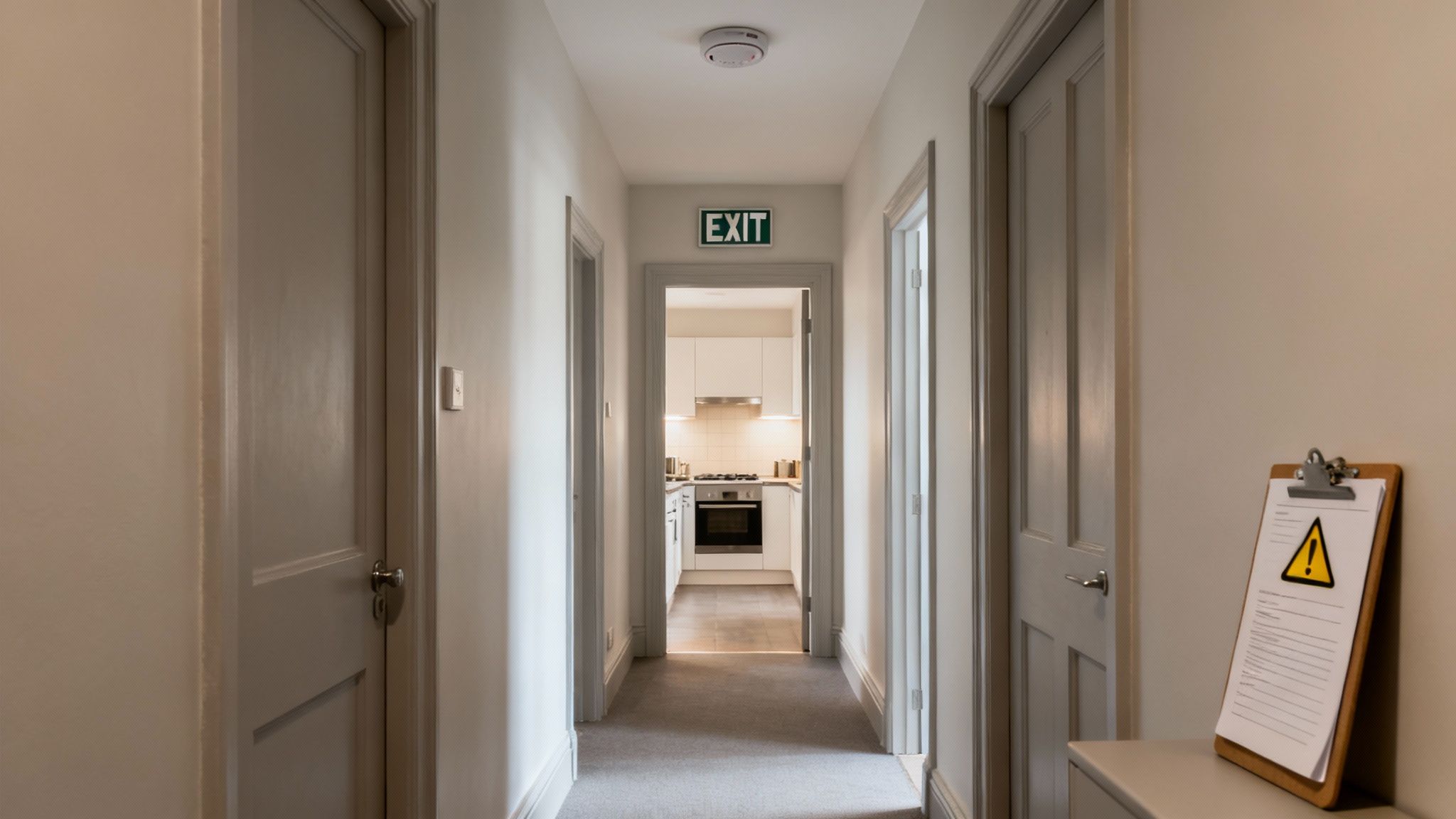
Unlike a simple common parts assessment, a Type 2 involves a more detailed look at the building’s fabric and layout. It is considered under the PAS 79 methodology and involves a professional judgement on the fire resistance between areas.
A Type 2 assessment is essential for the ‘Responsible Person’ of an HMO or a converted block of flats where there is uncertainty about the original build quality or subsequent alterations. For instance, a landlord who has just acquired a portfolio of converted terraced houses would commission a Type 2 assessment for each property to establish a baseline of compliance and identify any hidden structural fire safety weaknesses. It provides a more comprehensive overview than a Type 1 without the cost and disruption of a fully intrusive survey.
However, a Type 2 assessment is based on a visual inspection and professional judgement. If the assessor has significant doubts about structural fire protection that cannot be confirmed visually, they will recommend a more invasive Type 4 assessment to be certain.
A Type 3 Fire Risk Assessment represents a comprehensive, non-destructive evaluation for large, complex buildings, often with mixed uses or multiple tenancies. This in-depth assessment goes beyond common areas to include a detailed review of the building’s structure, compartmentation, and sophisticated fire safety systems. It is designed to provide a holistic view of fire risk in environments where hazards are significant and escape strategies are complex.
The scope of a Type 3 is extensive, covering both the common parts and the internal structures of private dwellings or commercial units, although it is not fully intrusive. It is particularly crucial for managing agents, freeholders, and facilities managers of high-risk properties like high-rise residential blocks, shopping centres, or hospitals. This assessment provides the detailed assurance needed to manage intricate fire strategies and coordinate safety across multiple stakeholders.
A Type 3 assessment is far more detailed than standard templates, involving a specialist review of key structural and systems integrity:
This is one of the most technical examples of fire risk assessments and is essential for buildings where the consequences of a fire could be catastrophic. It is the appropriate choice for large shopping centres, multi-storey office blocks, hospitals, and high-rise residential buildings. For instance, a facilities manager for a hospital would require a Type 3 to ensure that fire compartmentation between wards, operating theatres, and administrative areas is sufficient to protect vulnerable patients during an evacuation.
The primary benefit is the detailed assurance it provides regarding the building’s fundamental fire protection. However, because it is non-destructive, it has limitations. A Type 3 assessment does not involve opening up walls or ceilings. If serious concerns about hidden structural issues are identified, a fully intrusive Type 4 assessment would be the necessary next step.
A Type 4 Fire Risk Assessment represents the most comprehensive and intrusive level of inspection for residential blocks. It is reserved for high-risk buildings where the assessor has serious concerns that the structural fire protection and compartmentation between individual flats and the common areas are fundamentally inadequate. This type of assessment goes far beyond the communal parts, involving access to a sample of flats to inspect their construction and separation.
This in-depth approach is essential for buildings where the original fire safety strategy is unknown or compromised, such as older Victorian conversions or purpose-built blocks with a history of significant alterations. Unlike other types, a Type 4 assessment is destructive in nature, as it requires opening up parts of the building’s structure to verify fire-stopping and compartmentation. It is one of the most detailed examples of fire risk assessments for complex residential premises.
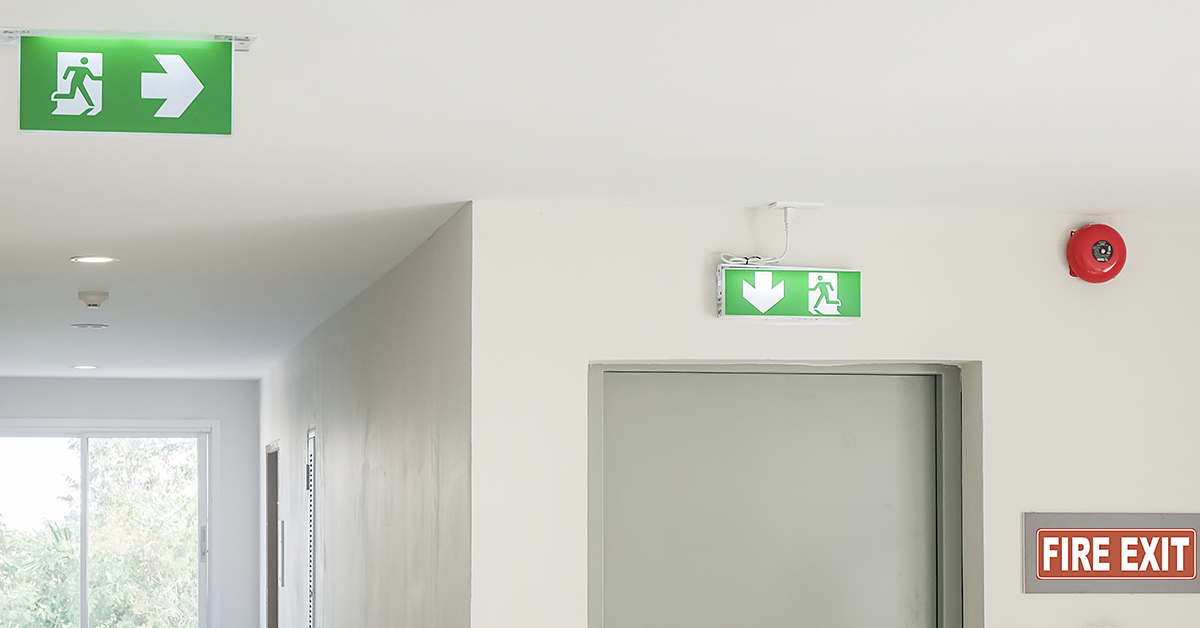
A Type 4 assessment is a specialist undertaking that goes significantly beyond a visual inspection:
A Type 4 assessment is not a routine procedure. It is commissioned only when there is substantial reason to believe that a building poses a high risk to life, often prompted by a Fire and Rescue Service enforcement notice or a previous, inconclusive assessment. For example, it would be appropriate for a 1970s purpose-built block where flat entrance doors have been replaced with non-fire-rated doors and where unchecked alterations have created breaches in fire-separating walls.
This assessment provides the definitive evidence needed to justify major and costly remedial works. It gives the Responsible Person a clear, evidence-based action plan to rectify fundamental safety failures. However, due to its cost, disruption, and destructive nature, it is a last resort and is not suitable for routine annual reviews or for buildings where there is no evidence of serious structural deficiencies.
Moving beyond simple templates, this case study examines a real-world fire risk assessment for a more complex environment: a five-storey city centre office building with multiple tenants. Such examples of fire risk assessments demonstrate how a professional assessment identifies common office hazards and translates findings into a prioritised, actionable plan, ensuring the ‘Responsible Person’ meets their legal duties. This approach is essential for managing shared spaces and coordinating safety across different businesses.
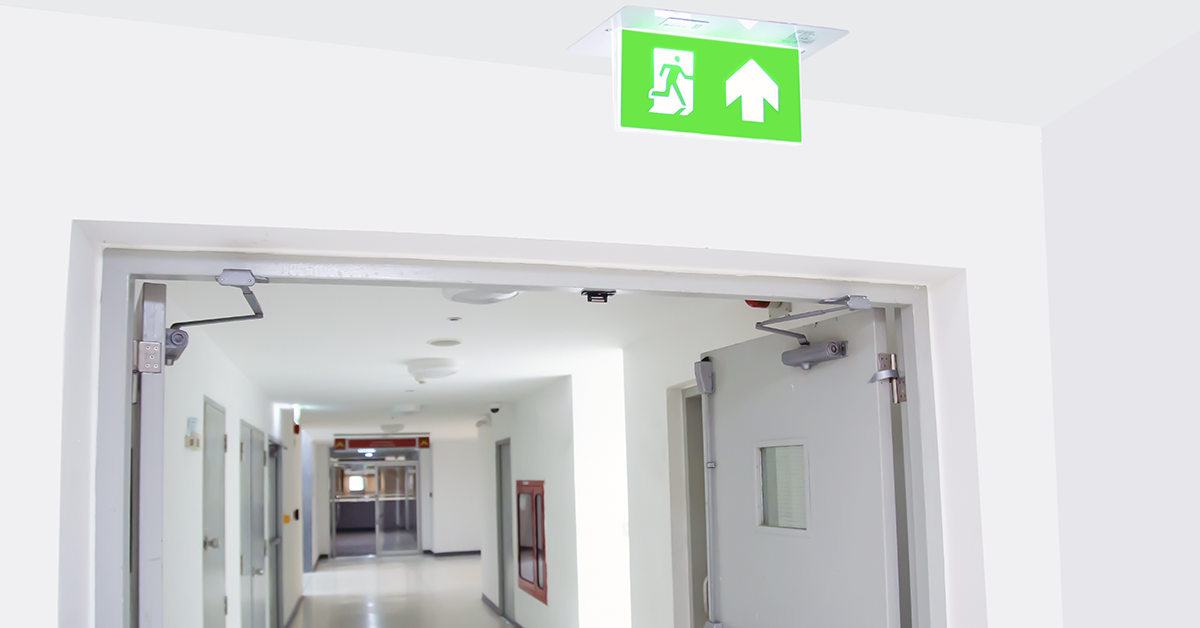
The strength of this detailed case study lies in its practical application of fire safety principles to a multi-occupancy commercial setting. It moves from hazard spotting to creating a structured remediation plan, complete with timescales, assigned responsibility, and cost considerations, which is vital for effective property management and demonstrating due diligence.
A professional assessment in a large office building goes beyond a simple checklist, involving a thorough site inspection and documentation review. The goal is to produce a report with clear, prioritised recommendations.
This comprehensive assessment approach is essential for any medium to large commercial building, especially those with multiple tenants. It is the only way to effectively manage the complex fire safety arrangements required in such premises. For instance, the assessment might reveal inadequate emergency lighting across all five floors, necessitating a significant upgrade (£3,200, within 3 months), or missing fire alarm testing records for 18 months, requiring immediate action to verify the system’s viability.
This method ensures that the building manager or landlord has a complete picture of the risks and a documented plan to manage them, which is a core requirement of commercial property fire safety regulations. It provides a robust, evidence-based strategy for protecting life and property, while ensuring legal compliance.
A large House in Multiple Occupation (HMO) presents a complex fire safety challenge, combining high occupant density with the unique risks of a domestic setting. This example of a fire risk assessment focuses on a typical three-storey Victorian terraced house converted into 12 individual letting rooms. It demonstrates how an assessment, which includes a non-destructive inspection of common areas, is applied to manage shared facilities, tenant behaviour, and the building’s structural integrity.
This type of assessment is crucial for landlords and managing agents, as it moves beyond basic checks to address the specific hazards of high-occupancy living. It is a specialised document and a key compliance tool required by local authority HMO Licensing Teams. It systematically addresses common conversion issues, from compromised fire separation to the need for robust alarm systems and clear tenant safety procedures.
The assessment for a 12-bed HMO involves a more detailed investigation than a standard single-let property. The assessor focuses on the increased risk from multiple, unrelated households sharing a single means of escape.
This detailed assessment is essential for any landlord or agent operating an HMO with more than a few tenants, particularly larger properties subject to mandatory licensing. For example, a 12-bed terraced house conversion often has inherent weaknesses. An assessment might identify that an original timber staircase lacks adequate fire protection and that emergency lighting on the middle floor is insufficient, costing £800 to remedy. It could also uncover electrical installation concerns in a kitchen extension, requiring £2,400 in urgent repairs.
This approach provides a clear action plan with prioritised recommendations, helping landlords budget for necessary upgrades like a new fire alarm maintenance contract (£600/year). It creates a defensible compliance record, demonstrating due diligence to both local authorities and insurers. However, this is a specialist task; attempting to use a generic template for a large HMO is insufficient and could lead to serious compliance failures and endangerment to life.
For managing agents, freeholders, and Resident Management Companies (RMCs) overseeing purpose-built residential blocks, a basic fire risk assessment is often insufficient. A Residential Block Fire Safety Compliance Audit and Action Plan provides a far more comprehensive framework. This approach expands on the standard Type 1 assessment by integrating systematic compliance auditing, contractor management, and resident engagement, making it one of the most robust examples of fire risk assessments for complex properties.
This detailed methodology is designed for medium to high-rise blocks (typically 6 to 20 storeys) where the responsibilities of the ‘Responsible Person’ are multifaceted. It moves beyond just identifying hazards to creating a living system of record-keeping, communication, and ongoing verification. This ensures that fire safety is managed proactively, not just reviewed annually, which is crucial for demonstrating due diligence and meeting insurance requirements.
This model organises fire safety management into a continuous, verifiable cycle:
This comprehensive audit is essential for managing agents responsible for multi-storey residential buildings with complex fire safety systems. For example, a 14-storey block with 84 flats, two stairwells, and basement storage requires this level of rigour. A managing agent can use this framework to document that all contractor test certificates are centrally logged, that quarterly inspections are recorded, and that a fire safety committee with resident representatives has been established to review performance. This creates a powerful, auditable trail of compliance.
This method provides a structured way to manage the extensive duties under the Fire Safety (England) Regulations 2022 and the Building Safety Act. However, it requires significant administrative commitment. It is not designed for small, simple blocks where a standard Type 1 assessment would suffice. Its strength lies in providing a systematic, defensible management system for properties where the stakes and legal duties are significantly higher.
| Item | Scope / Ideal use cases 💡 | Implementation complexity 🔄 | Resource & cost requirements ⚡ | Expected outcomes / Impact 📊 | Key advantages ⭐ |
|---|---|---|---|---|---|
| HSE Fire Risk Assessment Template for Small Businesses | Small commercial premises and SMEs seeking basic legal compliance | Low 🔄 — five-step structured process; assessor judgement needed | Low ⚡ — free template; minimal time for simple sites | Basic compliance, documentary evidence, annual review 📊 — ⭐⭐⭐ | Legally aligned, widely recognised, easy to adapt ⭐ |
| Type 1 Fire Risk Assessment for Purpose-Built Flats | Modern purpose-built flats with independent means of escape; landlords of straightforward blocks | Low–Medium 🔄 — communal-area focus with clear scope | Low–Medium ⚡ — faster, lower cost than complex types | Compliance for communal areas; insurer-friendly outcomes 📊 — ⭐⭐⭐ | Cost-effective, quick turnaround, clear remediation actions ⭐ |
| Type 2 Fire Risk Assessment for Converted Houses and HMOs | Converted houses, HMOs, mixed-use conversions with shared facilities | Medium 🔄 — assesses both communal and individual units | Medium ⚡ — more time and documentation; higher cost than Type 1 | Detailed hazard identification across units; supports enforcement 📊 — ⭐⭐⭐⭐ | Comprehensive for HMOs; actionable remediation and tenant guidance ⭐ |
| Type 3 Fire Risk Assessment for Large, Complex Buildings | Large mixed-use, industrial, hospitals, shopping centres, corporate portfolios | High 🔄 — multi-system, multi-occupant coordination; specialist input | High ⚡ — significant cost, longer timelines, specialist engineers | Holistic risk picture; strategic compliance and investment planning 📊 — ⭐⭐⭐⭐⭐ | Satisfies insurers/corporate governance; enables cost-benefit planning ⭐ |
| Type 4 Fire Risk Assessment for Buildings with Flats and Shared Circulation | Older conversions and blocks where escape depends on shared circulation (no independent escapes) | Very High 🔄 — flat-by-flat evaluation; multiple visits often required | Very High ⚡ — most expensive; may need subcontractors and extended access | Exhaustive risk documentation and legal evidence; prioritised life-safety actions 📊 — ⭐⭐⭐⭐⭐ | Most comprehensive; best for complex/residual risk and legal defensibility ⭐ |
| Commercial Premises Fire Risk Assessment Case Study: Office Building | Five-storey city-centre offices or similar commercial premises (practical Type 1 example) | Medium 🔄 — real-world implementation of Type 1 processes | Medium ⚡ — shows realistic cost ranges and contingency budgeting | Practical remediation roadmap, cost-benefit and training outcomes 📊 — ⭐⭐⭐⭐ | Demonstrates applied methodology and realistic budgeting/timelines ⭐ |
| HMO Fire Risk Assessment Template: 12-Bed House | HMOs and high-density shared houses (room-by-room risk and tenant management) | Medium 🔄 — detailed room-level assessment and tenant interviews | Medium ⚡ — remediation costs moderate; tenant engagement required | HMO-specific action plan, occupancy controls and monitoring 📊 — ⭐⭐⭐⭐ | Directly applicable to HMOs; includes tenant communication and lease recommendations ⭐ |
| Residential Block Fire Safety Compliance Audit and Action Plan | Purpose-built residential blocks (6–20 storeys) requiring ongoing compliance management | High 🔄 — systematic auditing, contractor and records coordination | High ⚡ — dedicated compliance resources and recurring costs | Improved ongoing compliance, contractor oversight, insurer alignment 📊 — ⭐⭐⭐⭐ | Structured, ongoing compliance framework; integrates with property management systems ⭐ |
The diverse examples of fire risk assessments detailed throughout this article, from a small business using an HSE template to a complex Type 4 assessment for a high-risk building, all share a common, critical purpose. They are not merely bureaucratic hurdles or static documents to be filed away. Instead, they represent a dynamic and essential process for identifying, evaluating, and controlling fire risks to protect lives, property, and your legal standing as a Responsible Person.
Moving beyond these examples requires a shift in perspective: from viewing the assessment as a one-time task to embracing it as the cornerstone of your ongoing fire safety management system. Each example, whether for a purpose-built block of flats or a high-occupancy HMO, demonstrates that a thorough assessment is a structured investigation tailored to the unique characteristics and uses of a specific building.
The provided templates and case studies reinforce several vital principles. Firstly, the scope of the assessment is paramount. A Type 1 assessment for a modern, purpose-built block rightly focuses on the common parts, whereas a Type 4 assessment for a building with known structural concerns demands a comprehensive, intrusive inspection. Understanding this scope prevents both dangerous oversights and unnecessary expenditure.
Secondly, the recommendations are the heart of the report. The use of prioritisation levels (e.g., High, Medium, Low) is not arbitrary; it is a strategic tool to guide your actions. High-priority findings, such as a faulty fire alarm system or a blocked escape route, demand immediate attention as they pose a direct threat to life. Lower-priority items, like updating signage, are still legally required but can be scheduled more methodically. This tiered approach, as seen in our examples, transforms a list of findings into a practical, manageable action plan.
Your primary takeaway should be the importance of turning assessment findings into completed actions. An assessment that identifies a critical flaw but is left on a shelf offers no protection. The true value lies in the diligent implementation of its recommendations.
Here are your actionable next steps:
By studying the various examples of fire risk assessments and understanding the strategic thinking behind them, you are better equipped to fulfil your obligations under the Regulatory Reform (Fire Safety) Order 2005. This proactive approach not only ensures you meet your legal duties but also fosters a culture of safety, provides peace of mind for occupants, and safeguards your property as a valuable asset. The ultimate goal is not just a compliant report, but a genuinely safer environment for everyone.
Navigating the complexities of different assessment types and legal duties can be challenging. For a comprehensive, compliant, and actionable report tailored to your specific property, consider a professional service like HMO Fire Risk Assessment. Our experienced assessors provide the clarity and expertise needed to move from understanding examples to implementing effective fire safety solutions.
Taking on a new property or opening a workplace often starts with the same problem. Keys are handed over, tenants or staff are due in,...
In fire safety, there is one simple acronym everyone should know: PASS. It stands for Pull, Aim, Squeeze, and Sweep, and it is the universally...