

A Complete Example Of A Fire Risk Assessment For UK Properties
29/12/2025
As the ‘Responsible Person’ under the Regulatory Reform (Fire Safety) Order 2005, you are legally accountable for fire safety. When handed a fire risk assessment report, it can be a dense and intimidating document, but understanding it is essential. This guide is for UK business owners, landlords, and property managers who need a practical breakdown of what a report contains, what it means, and how to act on its findings with confidence.
Understanding your report is not just about ticking a compliance box. It is a fundamental part of protecting lives, your property, and ensuring business continuity. We will walk through a real-world example, section by section, to explain the findings, your legal duties, and what a competent and sufficient assessment looks like.
For a deeper dive into the basics, you can check out our full guide on what a fire risk assessment involves in our full guide.
By the end of this guide, you will be able to:
The importance of this cannot be overstated. Recent statistics paint a stark picture: in the year ending March 2025, fire-related fatalities in England increased by 8%, and fire and rescue services attended more than 142,000 fires. Even more concerning, over 40% of fire safety audits found serious compliance issues, highlighting a significant gap in fire safety management across the country.
These are not just statistics; they represent real incidents where a thorough assessment could have helped prevent tragedy. You can find more of this data on UK fire incidents from Red Box Fire Control.

A professional fire risk assessment report is not just a collection of notes; it is a structured document designed to be clear, logical, and actionable. As the Responsible Person, understanding its layout is crucial. It enables you to find information quickly and, more importantly, to understand and prioritise your legal duties.
A competent assessor will organise their report into distinct sections. This structure provides a clear, auditable trail of due diligence, demonstrating to the Fire and Rescue Service or your insurer that you have followed a robust process to manage fire risks.
Each part of the report follows logically, starting with a broad overview before detailing specific, actionable points. The executive summary provides a snapshot of the overall risk, the main body explains what the assessor found, and the action plan tells you what to do about it.
A good report leaves no room for ambiguity. It must clearly state the issues, explain why they pose a risk, and outline the exact steps required to remedy them. This clarity is essential for you to manage your responsibilities effectively and prove compliance.
To help you become familiar with the format, the table below breaks down the typical sections of a professional fire risk assessment report. It explains the purpose of each part and highlights what you, as the duty holder, need to focus on.
Here is a breakdown of the standard sections you will find in a compliant UK fire risk assessment report, explaining what each part is for and what information you should look for.
| Report Section | Purpose And Content | Key Information For The Responsible Person |
|---|---|---|
| Executive Summary | A high-level overview of the premises, the assessor’s details, the overall risk rating (e.g., Tolerable, Moderate, Substantial), and a summary of the most urgent findings. | This is your at-a-glance view of the property’s fire safety status. It immediately tells you if there are any high-risk issues that require your urgent attention. |
| Introduction & Scope | Details the property address, date of assessment, areas covered (e.g., common parts only), and any limitations of the inspection. It confirms the legal framework being applied. | Confirms that the assessment covers the correct areas of your responsibility and was conducted recently enough to be considered current. |
| Building Information | Describes the property’s construction, age, size, number of floors, and its use (e.g., residential block, office, warehouse). This context is vital for risk evaluation. | Provides the baseline information from which the entire risk assessment is developed. Check this section for accuracy. |
| Hazard Identification | Lists all potential sources of ignition (e.g., faulty electrics), sources of fuel (e.g., stored waste), and sources of oxygen. | This is where you will find the specific fire risks identified on your premises, forming the basis for the action plan. |
| Findings & Observations | The main body of the report. A detailed breakdown of the assessor’s observations on existing fire safety measures like escape routes, fire doors, alarms, and signage. | Each finding here corresponds to a potential compliance failure or safety deficiency. This section provides the evidence for the required actions. |
| Action Plan | A prioritised list of all required actions, with risk ratings (e.g., High, Medium, Low) and suggested timescales for completion. This is the most critical part of the document. | Your legal to-do list. This section dictates your next steps, deadlines, and priorities for spending and resources to achieve compliance. |
This table acts as a simple guide to help you digest the information in your report. By understanding what each section is for, you can focus on the parts that matter most: the findings and the action plan.
This section of the report moves from general observations to pinpointing the actual fire hazards found on-site. This is the core of the example of a fire risk assessment, as it directly connects what was seen during the inspection to the specific actions you, the Responsible Person, need to take.
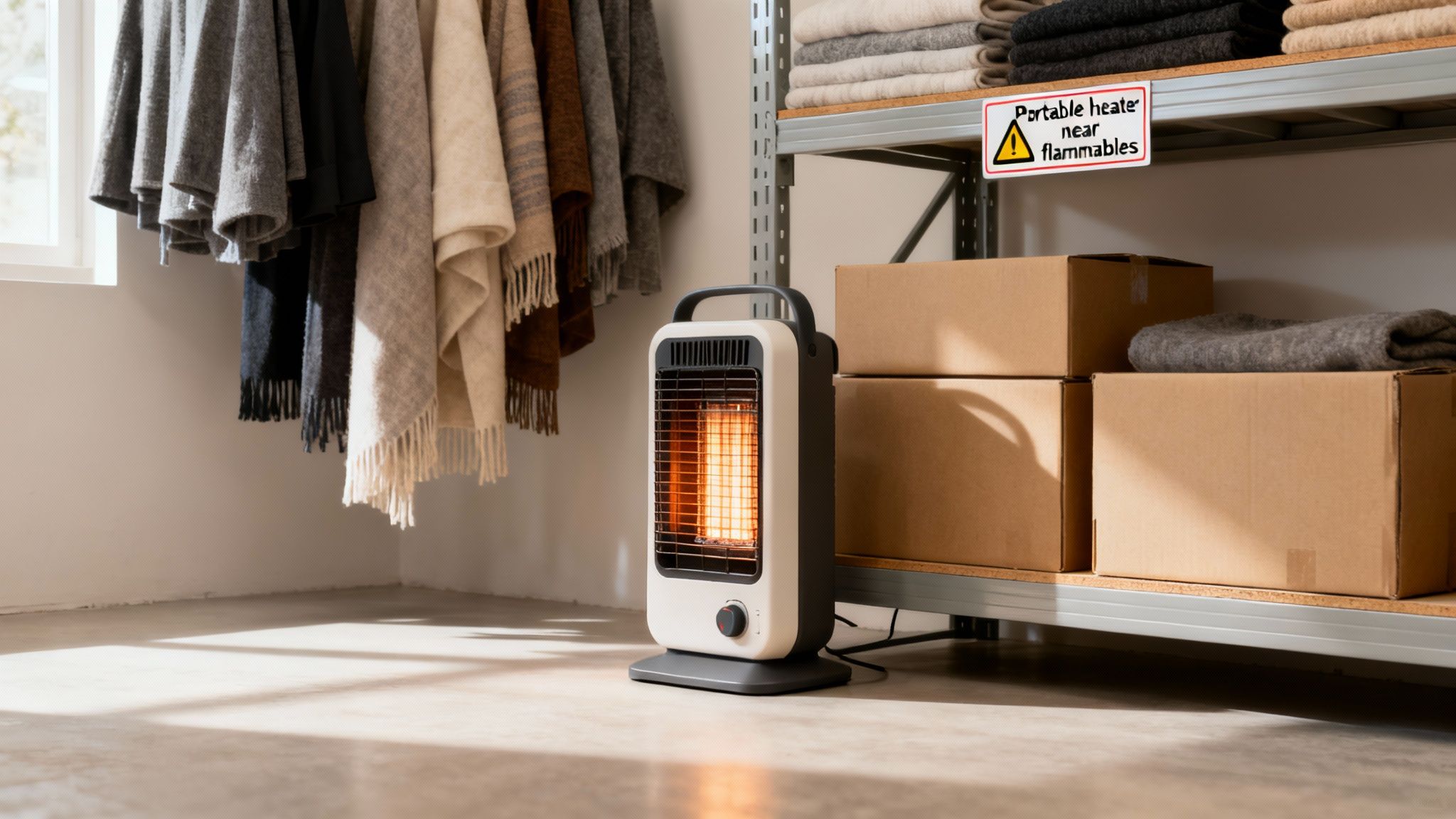
A hazard is anything with the potential to start or sustain a fire. The assessor’s job is to methodically identify ignition sources (things that get hot), fuel sources (things that can burn), and oxygen, often referred to as the fire triangle. Common hazards in UK properties are often mundane, which is why a trained eye is crucial. Examples include overloaded plug sockets, flammable cleaning supplies stored in a boiler cupboard, or a portable heater used incorrectly.
Every finding listed here must be clear and linked to a tangible risk. It is not enough to write “electrical risk.” A good report will specify the problem and its precise location. This detail provides a clear roadmap for remediation and compliance.
To show how this looks in a real report, here are some annotated examples. These are typical findings an assessor might record, followed by the direct, actionable control measure that should be recommended.
Example 1: Ignition Sources
This goes beyond just pointing out a problem. It provides a non-negotiable action that tackles both the immediate danger (the heater) and the underlying electrical issue (the overloaded extension lead).
A key principle of fire safety is simple: keep things that get hot away from things that can burn. Many significant findings in an assessment report boil down to a failure to maintain this basic separation.
The management of combustible materials is another area that frequently raises issues. This includes not just obvious items like chemicals or fuel, but also everyday materials like paper, packaging, and general waste.
Example 2: Fuel Sources
By translating these observations into such clear actions, the fire risk assessment becomes a practical, step-by-step guide to reducing risk and meeting your legal duties.
A proper fire risk assessment must focus intensely on the people inside the building. Under the Regulatory Reform (Fire Safety) Order 2005, the Responsible Person has a clear legal duty to identify anyone who might be at particular risk and implement specific measures to keep them safe. This is a critical, non-negotiable part of any competent assessment.
These are individuals who, for any reason, might struggle to respond to an alarm or escape a fire without assistance. This includes people with mobility impairments, sensory disabilities like hearing or sight loss, cognitive impairments, or even temporary conditions such as pregnancy or injury. A standard evacuation plan is insufficient for them.
The assessment must actively consider and document who these individuals are, where they are located, and what specific arrangements are needed. Without this, an assessment is not “suitable and sufficient” in the eyes of the law.
An assessor will look for evidence that you have considered the needs of all occupants. This is a proactive process of understanding the real-world challenges people could face in an emergency.
Here are some real-world examples of how this might be flagged in a report:
Identifying these risks is only the first step. The action plan must then detail the precise control measures needed to protect these individuals, which often means creating a Personal Emergency Evacuation Plan (PEEP).
A PEEP is a bespoke escape plan for a specific person. It outlines exactly how they will be alerted to a fire and assisted to a place of ultimate safety.
A PEEP is not optional. For individuals who cannot self-evacuate, it is an essential and legally expected control measure. Failing to provide one for a known vulnerable person is a serious compliance failure.
The action plan might then recommend the following:
This focus on vulnerable people is rightly gaining more attention. In the year ending March 2025, fire and rescue services in England carried out 588,855 Home Fire Safety Visits, with a record 85% of these targeted at vulnerable households. You can learn more about these fire prevention statistics on the UK Government website. This shows how vital it is that any example of a fire risk assessment prioritises protecting everyone, especially those most in need.
After identifying hazards, a competent assessor evaluates your existing fire safety provisions. This involves assessing the active and passive measures you have in place, such as systems designed to detect a fire, alert people, and help them evacuate safely. This part of the process determines whether your current systems are ‘suitable and sufficient’ to protect life.
This is not a simple checklist exercise. It is a detailed inspection of key safety systems, measured against established British Standards and legal requirements. The assessor will record any shortcomings, explaining not just what is wrong, but why it poses a risk. Each observation is then assigned a risk level to help you, as the Responsible Person, prioritise remedial action.
A building’s means of escape, including all corridors, stairways, and final exit doors, are the most critical life safety provisions. The assessor checks that these routes are adequate, properly protected, and clear for use at all times.
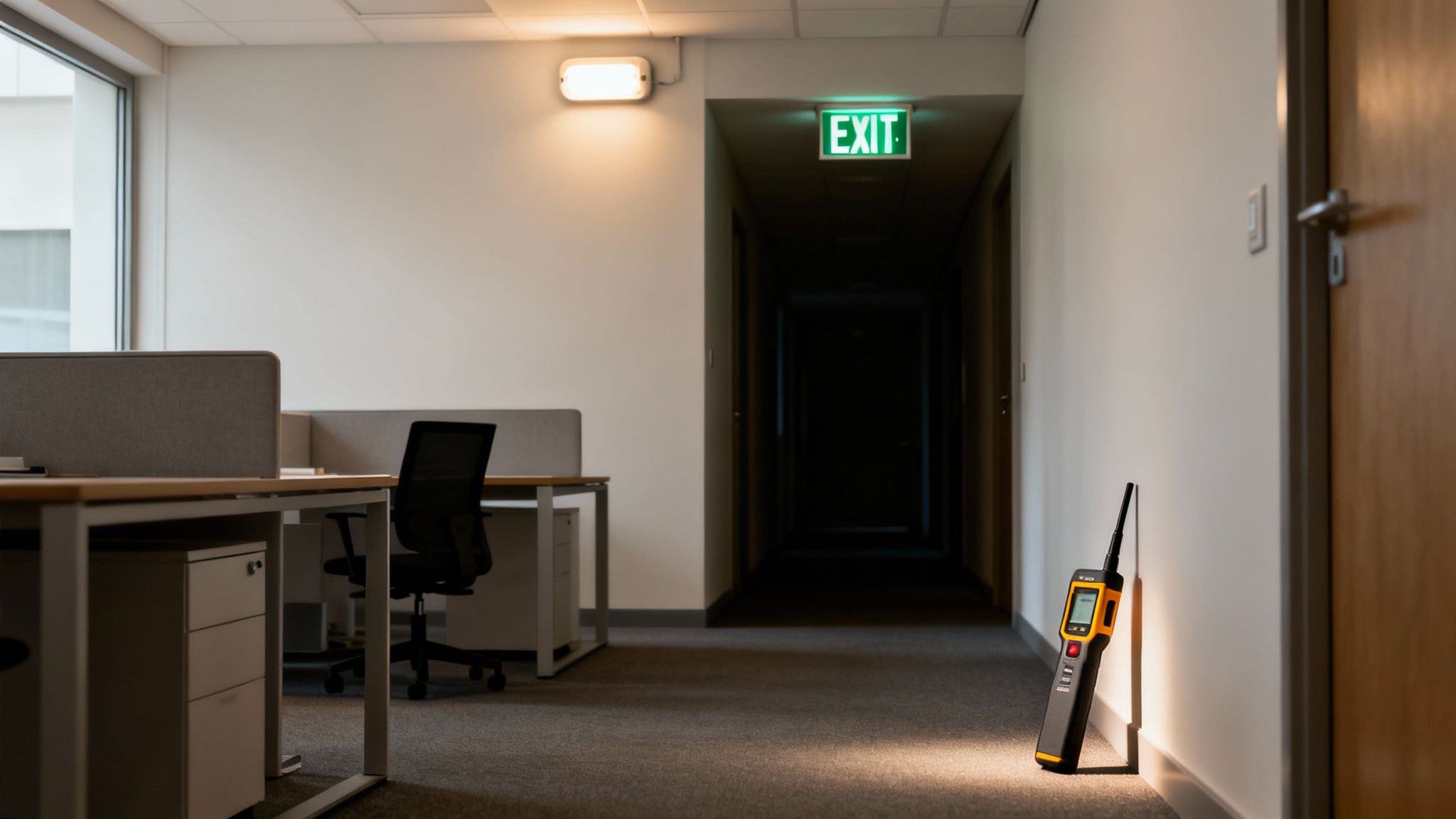
A crucial component is emergency lighting. If the mains power fails during a fire, which is highly likely, escape routes must remain illuminated to prevent panic and guide occupants to safety.
Sample Finding: Medium Risk
Note the specificity. The finding names the standard (BS 5266), details the failure, and explains the consequence: a dark escape route. The recommendation is equally clear, stating who to call and what needs to be done.
A suitable fire alarm system provides the earliest possible warning of a fire, buying valuable time for evacuation. The assessor will examine the type of system, its condition, and whether its coverage is appropriate for the building’s size, use, and risk profile.
Checks include ensuring detectors are correctly sited, manual call points are accessible, and the control panel is functioning correctly. Your testing and maintenance records will also be inspected.
A fire alarm system is only effective if it is correctly maintained and regularly tested. Your logbook provides the fire authority with essential evidence that you are managing your safety systems responsibly. Gaps in these records are a common compliance issue.
Sample Finding: High Risk
This finding is flagged as high risk because it represents a complete failure of a critical safety device. A deliberately covered detector defeats the purpose of an early warning system, placing everyone in the building in serious danger. The required action is immediate and involves both a physical fix and a new management procedure to prevent recurrence.
The action plan is the most important part of the fire risk assessment report. It translates all the assessor’s observations into a clear, prioritised set of instructions for you, the Responsible Person. It is your legal to-do list.
Working through this list methodically demonstrates compliance and actively reduces the fire risk in your property. It transforms the report from a document into a practical safety tool.
A competent assessor will not just provide a long list of problems. They will apply a risk rating to each finding, usually categorised as High, Medium, or Low. This prioritisation is critical, as it tells you where to focus your resources, time, and budget first.
You must tackle the most serious issues immediately, those that pose a direct and immediate threat to life. Understanding the logic behind these ratings enables you to manage the process effectively.
It is crucial to create an organised record of how and when you address each point. This creates an auditable trail of action, providing proof of due diligence if the Fire and Rescue Service inspects your premises. For a structured way to keep track, our fire risk assessment checklist can help you monitor your progress.
Here is a straightforward example of a fire risk assessment action plan. This sample for a hypothetical property shows how different findings are prioritised, with clear, time-bound actions assigned to each one.
Sample Fire Risk Assessment Action Plan
| Finding Reference | Identified Hazard or Deficiency | Risk Level (High/Medium/Low) | Recommended Action | Suggested Timescale |
|---|---|---|---|---|
| A.01 | The final fire exit door in the warehouse is obstructed by pallets and stored goods, preventing it from opening fully. | High | Clear the obstruction immediately. Implement and record daily checks to ensure the exit remains clear at all times. | Within 24 Hours |
| B.01 | A smoke detector head in the first-floor office has been deliberately covered with a plastic bag. | High | Remove the bag immediately. Issue a formal written notice to all staff on the severe danger and prohibition of tampering with fire safety equipment. | Within 24 Hours |
| C.01 | The fire door separating the kitchen from the main corridor fails to self-close fully, leaving a 10cm gap. | Medium | Adjust or replace the self-closing device to ensure the door closes firmly into its frame from any angle. Appoint a competent person to carry out the repair. | Within 14 Days |
| C.02 | Logbook records show that the weekly fire alarm test has not been completed or documented for the past four weeks. | Medium | Reinstate the weekly fire alarm test immediately. Ensure all future tests are recorded in the fire safety logbook without fail. | Within 7 Days |
| D.01 | The ‘Fire Action’ notice in the reception area displays an incorrect assembly point location following recent site changes. | Low | Replace the outdated notice with a new one showing the correct, current fire assembly point. | Within 3 Months |
| D.02 | The intumescent paint finish on a ground-floor fire door is scuffed, exposing the timber beneath. | Low | Repaint the door with a certified intumescent paint during the next scheduled maintenance cycle to restore its fire-resisting properties. | Within 6 Months |
As you can see, the plan provides a simple but powerful roadmap. It tells you what is wrong, how serious it is, what you need to do, and by when. Following this structure is key to managing your fire safety responsibilities efficiently and effectively.
A fire risk assessment is not a one-off task to be filed and forgotten. The law is very clear: it must be a **living document**. As the Responsible Person, you have an ongoing duty to keep it under review, ensuring it always reflects the current reality of your building and its risks.
The ‘review date’ on your report is a safety net, not a target. It is the maximum time that should pass before a formal review. The law demands a review much sooner if any significant changes occur at your property.
Certain events should automatically trigger an immediate review of your fire risk assessment. Failure to act could render your existing assessment invalid, leaving you non-compliant and putting people at risk.
These triggers include:
This decision tree gives a great overview of how to prioritise your actions based on the level of risk you find during a review.
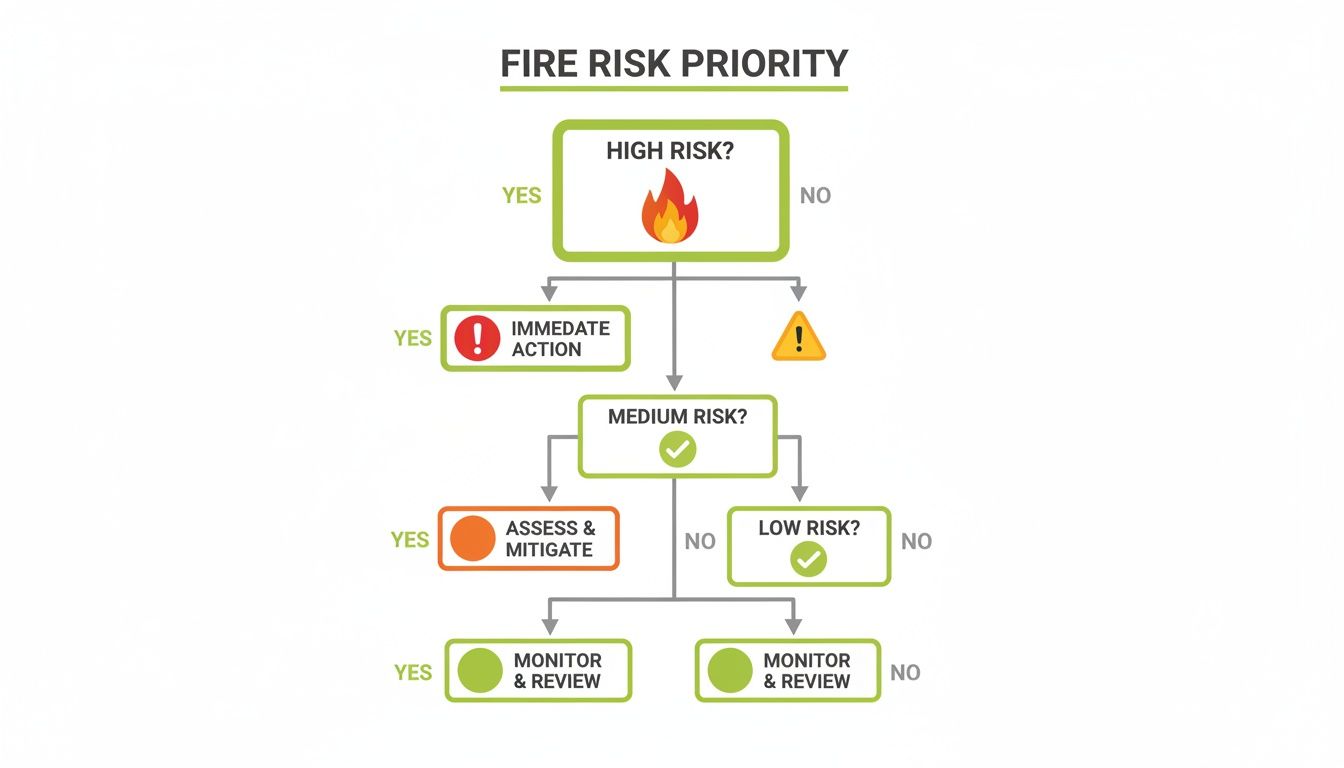
The key takeaway is clear: any high-risk issue you identify requires immediate action. This underlines the importance of a continuous review cycle.
The legal landscape for fire safety is continually evolving. Recent reforms, largely driven by the Grenfell Tower Inquiry, have placed a much heavier emphasis on assessor competency and detailed risk management, especially in higher-risk buildings.
A major change is coming. From April 2025, new legislation will mandate that fire risk assessors must have their skills independently verified by a UKAS-accredited body. This is a significant step forward, designed to ensure every example of a fire risk assessment is produced by a genuinely qualified professional, raising accountability and safety standards. Staying informed is vital for maintaining compliance. You can discover more about these essential fire risk assessment updates on 1stopfire.co.uk-recent-changes-and-essential-updates).
Documenting your reviews is as important as conducting them. It creates a clear, auditable trail proving that you are actively managing your fire safety duties. Partnering with a competent assessor helps you navigate these responsibilities, ensuring your approach remains robust and compliant. You can learn more about your duties by exploring the key fire risk assessment legal requirements.
Once you have your fire risk assessment report, it is natural to have questions. As the Responsible Person, you need to understand the practicalities of what comes next to meet your legal duties under UK fire safety law. Here, we address some of the most common queries from landlords, business owners, and property managers.
This is one of the most frequently asked questions. Under the Regulatory Reform (Fire Safety) Order 2005, there is no strict, legally mandated timescale for a new assessment. The key phrase in the legislation is that your assessment must be kept “under review” to ensure it remains fit for purpose.
In practice, best practice strongly recommended by the Fire and Rescue Service is to carry out an internal review at least annually. A completely new, professional assessment is generally advised:
However, the law is clear: an immediate review is required after any “significant change”. This could be anything from building alterations or a change in property use to a fire incident, no matter how small.
Ignoring the significant findings in your fire risk assessment report is a serious breach of your legal duties and can have severe consequences. Your local Fire and Rescue Authority has the power to take formal enforcement action.
This can begin with an informal notification but may escalate to a formal Enforcement Notice, which is a legal demand to complete specific actions by a strict deadline.
If inspectors find a serious and imminent risk to life, they can issue a Prohibition Notice. This can restrict access to parts of your premises or shut it down entirely until the danger is resolved. Failure to comply can lead to prosecution, unlimited fines, and in the most serious cases, a prison sentence.
The law states that the assessment must be carried out by a ‘competent person’. This means someone with the necessary training, experience, and knowledge to conduct a “suitable and sufficient” evaluation of the fire risks.
For a very small, simple, low-risk business, such as a small office with a few staff, the owner might be considered competent. However, for most commercial properties, HMOs, or blocks of flats, the complexity and potential risks are much greater. In these cases, appointing a qualified and experienced external fire risk assessor is the most reliable way to meet your legal obligations and obtain a robust, defensible document that will withstand scrutiny.
These terms are used for fire risk assessments in residential blocks of flats. The “type” defines the scope of the inspection.
A Type 1 fire risk assessment is the most common. It is a non-destructive assessment limited to the building’s common parts controlled by the landlord, such as corridors, stairwells, and plant rooms. The assessor does not inspect inside individual flats.
A Type 3 fire risk assessment is much more comprehensive. It covers all the common areas like a Type 1, but also includes a sample inspection inside the private flats. This deeper assessment is usually only necessary when there are serious concerns about the building’s fire separation (compartmentation) between flats and escape routes.
Understanding and acting on your fire risk assessment is one of your most critical responsibilities. If you need a professional, compliant assessment to protect your property and everyone within it, contact HMO Fire Risk Assessment to discuss your requirements. You can book your certified assessment at our website today.
In fire safety, there is one simple acronym everyone should know: PASS. It stands for Pull, Aim, Squeeze, and Sweep, and it is the universally...
As a landlord in the UK, you are legally responsible for ensuring your rental property is safe from fire. This is not just about fitting...