
Fire Risk Assessment for Flats: An Essential Guide for Landlords
03/02/2026
A fire risk assessment for flats is not just good practice; it is a mandatory legal requirement for any residential block with shared common areas such as hallways, stairs, or plant rooms. Think of it as a professional MOT for your building’s fire safety—an expert evaluation designed to identify fire hazards, understand the risks to residents, and map out the exact safety measures needed to keep everyone safe and the building compliant with UK law.
This guide is for landlords, property managers, and anyone designated as the ‘Responsible Person’ for a block of flats. By the end, you will understand your legal duties, what a compliant assessment involves, and how to act on its findings to protect your residents and property.
For landlords, freeholders, and managing agents, understanding fire safety is not optional. It is a fundamental legal duty. The key legislation is the Regulatory Reform (Fire Safety) Order 2005, which places the legal responsibility squarely on the shoulders of a designated ‘Responsible Person’. This is not just a job title; it is the individual or company legally accountable for fire safety in the building’s common parts.
At its core, this duty means you must commission a “suitable and sufficient” fire risk assessment and, just as importantly, keep it under regular review. This document becomes the blueprint for your entire fire safety strategy.
The law is straightforward: if you have control over the shared parts of a residential building, you are almost certainly the Responsible Person. This usually means you are the:
This role involves more than just ticking boxes. It is an active, ongoing responsibility to protect lives and property. Getting it wrong can lead to severe consequences, including unlimited fines and, in the worst-case scenarios, a prison sentence.
A fire in a block of flats can spread frighteningly fast, which is why proactive management is critical. Statistics paint a stark picture: UK fire and rescue services attend around 34,000 dwelling fires annually. That is an average of about 93 incidents every single day. Multi-occupancy buildings such as flats naturally come with higher risks, which is precisely why the law is so strict. You can read more about these concerning trends on UK house fire statistics.
The Fire Safety Act 2021 tightened regulations even further. It clarified that the Responsible Person’s duties now explicitly cover the building’s structure, external walls, and flat entrance doors. This change makes a professional fire risk assessment for flats more vital than ever. It is the only way to get a clear, documented snapshot of your building’s fire safety status and a practical action plan to stay compliant. You can learn more by exploring the details of fire risk assessment legal requirements.
Not all fire risk assessments are the same. A fire risk assessor must select the right type of inspection for your block of flats. Getting this choice right from the start ensures you are compliant, your residents are safe, and you are not spending money on inspections you do not need.
The industry standard, guided by Local Government Association guidance, breaks assessments down into four distinct types. Each one involves a different level of intrusion, carefully matched to the age, complexity, and known history of the building. Making an informed choice is the first step towards managing your property’s fire safety effectively.
The Type 1 fire risk assessment is by far the most common. It is the default, non-intrusive inspection for most purpose-built blocks of flats and focuses only on the shared, communal areas of the building.
A professional carrying out a Type 1 assessment will take a thorough look at:
The inspection stops at the front door of each private flat. The assessor will check the door from the corridor side to ensure it appears to be a suitable fire door, but they will not go inside. This approach works on the reasonable assumption that the original fire protection measures within the flats (such as wall construction and smoke alarms) are still performing correctly.
For a deeper dive into what is involved, have a read of our detailed guide on the Type 1 fire risk assessment.
This decision tree gives you a simple way to work out if your block of flats needs an assessment in the first place.
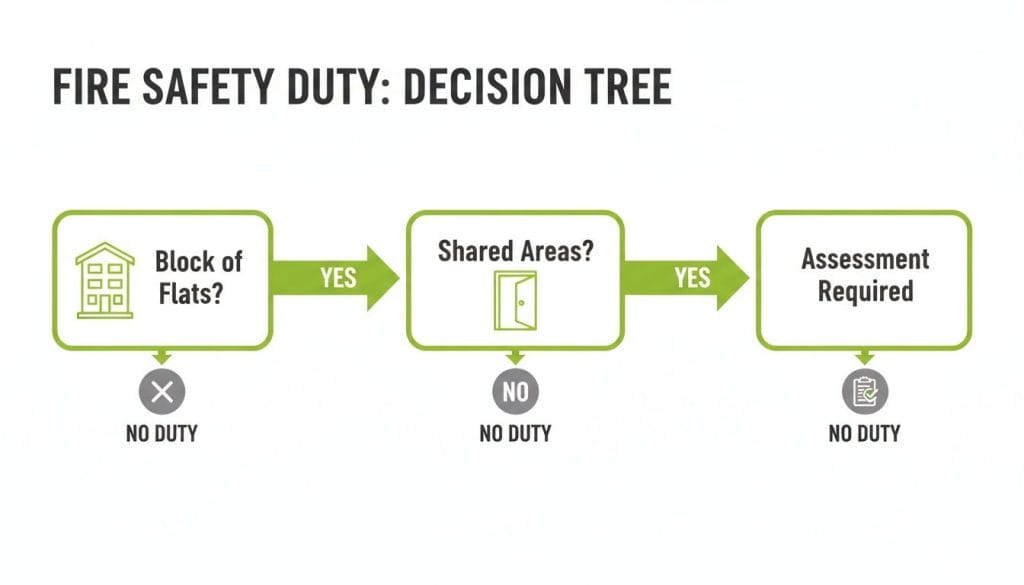
The key takeaway is simple: if your building has any shared or common parts, the legal duty to have a fire risk assessment is automatically triggered.
Choosing the right assessment type can feel confusing, but it is all about matching the level of inspection to the level of risk. A modern, well-documented building will have very different needs from an older conversion with a history of alterations. This table breaks down the four types to help you see which one fits your property.
| Assessment Type | Scope of Inspection | Best Suited For | Level of Intrusion |
|---|---|---|---|
| Type 1 | Non-destructive inspection of communal areas only. Checks escape routes, fire doors (from the outside), alarms, and signage. | Most purpose-built blocks of flats with a clear fire strategy and no known structural issues. The default annual check. | Low – No entry into flats. |
| Type 2 | Includes all of Type 1, plus destructive sampling in communal areas. Involves opening up walls/ceilings to check compartmentation. | Buildings where there is a serious concern about the quality of construction or hidden fire-stopping in shared spaces. | Medium – Disruptive work in hallways and risers. |
| Type 3 | A non-destructive inspection of both communal areas and a sample of individual flats. | Older buildings, conversions, or properties where the fire separation between flats and common areas is uncertain. | Medium – Requires pre-arranged access to flats. |
| Type 4 | The most comprehensive. Combines destructive sampling in communal areas AND inside a sample of individual flats. | High-risk buildings with significant doubts about both structural integrity and internal flat layouts. | High – Disruptive work in both shared and private areas. |
Ultimately, a Type 1 is the starting point for most. You would only move to a Type 2, 3, or 4 if the initial assessment (or other evidence) gives you a compelling reason to dig deeper.
A Type 2 fire risk assessment covers everything in a Type 1, but it adds a “destructive” element. This means a contractor will strategically open up small, representative sections of the building’s structure in the common areas. The goal is to check for proper fire-stopping and compartmentation between flats.
This type of assessment is not ordered on a whim. It is usually only recommended if there is a strong reason to believe the building’s structural fire protection is flawed. This might be because a previous, less detailed assessment raised serious flags, or perhaps the building has a history of poorly documented alterations. It is more expensive and disruptive, so it is not undertaken lightly.
The Type 3 fire risk assessment takes the inspection beyond the shared spaces. It covers all the common areas from a Type 1, but it also includes an inspection of the fire safety measures inside a sample of the flats themselves.
This is often necessary for older buildings or conversions where the original fire strategy is uncertain. An assessor would need pre-arranged, agreed access with residents to check things such as:
A Type 3 assessment helps to verify that the fire protection measures within individual flats integrate properly with the safety systems in the common parts, creating a cohesive building-wide safety strategy.
Finally, the Type 4 fire risk assessment is the most detailed and intrusive of them all. It combines the common area checks of a Type 1, the destructive sampling of a Type 2, and the internal flat inspections of a Type 3.
This top-level assessment is reserved for buildings where there are significant, widespread doubts about both structural fire integrity and the arrangements inside the flats. A Type 4 is a major undertaking that requires extensive planning, full cooperation from residents, and a significant budget. It is only specified when there is substantial evidence pointing to high risks throughout the property.
When a competent fire risk assessor arrives at your property, their job is to see the building through a different lens. They analyse a complex system of fire safety measures that must work together in an emergency. They will carry out a methodical, hands-on inspection of the building’s common areas to pinpoint potential fire hazards and check if existing safety precautions are adequate.
This is far more than a simple box-ticking exercise. It is a deep dive into the details, designed to identify the small failures that could cascade into a major incident. An assessor’s trained eye often picks up on critical issues that a busy Responsible Person might understandably overlook during day-to-day management.
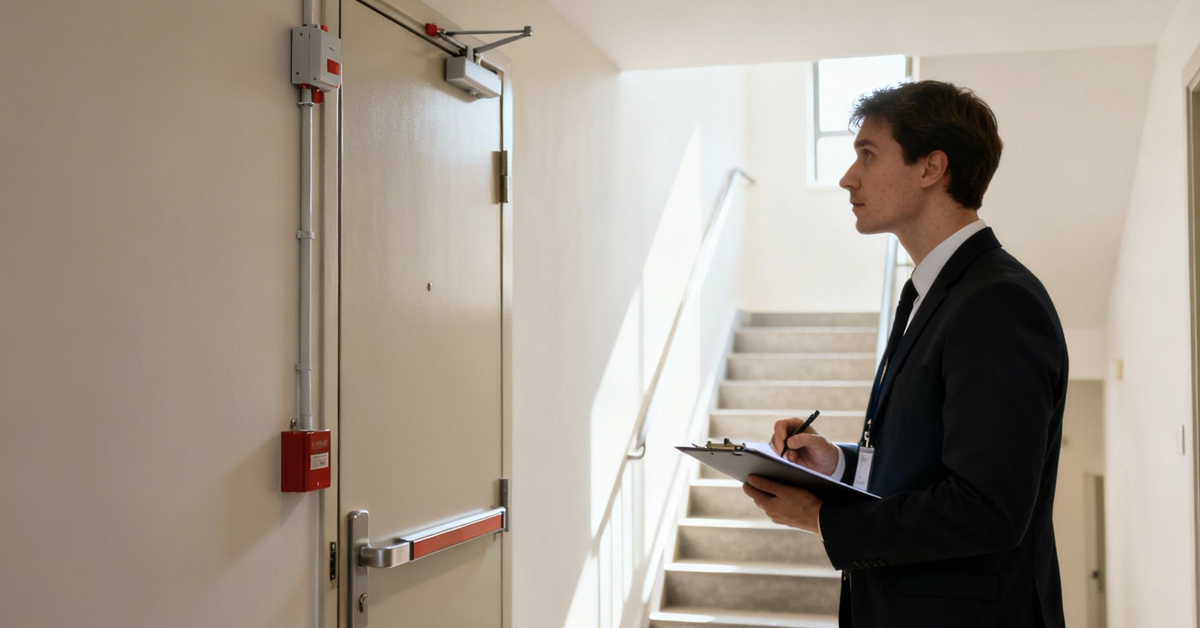
The single most important part of fire safety in a block of flats is ensuring residents can get out quickly and safely. Our assessors physically walk every escape route, from the door of the top-floor flat right down to the final exit, looking for anything that could slow people down or block their path.
Here are a few common problems we always look for:
A clear, protected escape route is the bedrock of a building’s fire safety strategy. Any compromise puts residents at immediate and avoidable risk.
Fire doors are one of the most critical and frequently misunderstood pieces of fire safety equipment. Their job is to hold back fire and smoke, creating protected corridors and stairwells that buy precious time for residents to escape. A properly working fire door can contain a blaze for 30 or even 60 minutes.
During a fire risk assessment for flats, our assessors inspect every fire door in the common areas. This includes the communal side of flat entrance doors, where we check for crucial features:
This all links to the vital concept of compartmentation. This is the principle of dividing the building into a series of sealed boxes. Each flat is a box, and the hallway is another. Fire doors are what keep these boxes sealed during a fire, stopping it from spreading from one area to another.
An early warning can be the difference between a minor incident and a tragedy. Our assessors will identify the type of fire alarm system installed in the common parts and check that it appears to be in good working order. While we do not carry out a full electrical test, we will note any obvious faults or if the system seems unsuitable for the building’s size and layout.
In England in the year ending March 2023, there were 25,933 dwelling fires. While this represents a long-term decrease, risks in multi-occupancy buildings such as compromised fire doors remain a key focus for fire and rescue services.
Just as important is the emergency lighting. If the mains power fails during a fire, these lights must activate to illuminate the escape routes. We check that these units are positioned correctly and visually inspect them for any signs of damage or malfunction, recommending a full test by a qualified engineer if we have any concerns.
Clear, simple signage is crucial for guiding people in a stressful situation. We verify that fire exit signs are correctly placed, easy to see, and meet current UK standards. Other vital signs, such as “Fire Door Keep Shut” notices, also need to be present and easy to read.
Assessors also look at the firefighting equipment provided, such as fire extinguishers. We check:
During an on-site visit, assessors meticulously examine various fire safety features, including the proper functioning and placement of essential smoke and CO2 detectors. A comprehensive review of these checks can be found by looking at an example of a fire risk assessment. These hands-on checks provide a clear, real-world picture of how ready the building is to handle a fire.
Knowing what happens during a professional fire risk assessment helps to demystify the process. It gives you the confidence that you are meeting your legal obligations and making your property safer. We have refined our process to be as clear and non-disruptive as possible, giving you the detailed insights you need.
The journey is broken down into a few distinct stages, from your first call to us, right through to receiving and understanding your final report. This structured approach ensures nothing is missed and gives you a clear, documented trail of due diligence. It is exactly what the authorities expect to see from a responsible landlord or property manager.
It all starts with your first contact. We will have a quick chat about your property—its size, age, number of floors, and so on. This helps us work out the right scope for the assessment, which for most blocks of flats will be a Type 1. This initial conversation is key to providing you with a fixed, transparent quote with no hidden surprises.
Before our assessor visits, we will ask you to gather a few key documents. Having this information ready makes the on-site visit more efficient and helps us build a complete picture from the start.
Here is what is really helpful to have on hand:
On the scheduled day, one of our qualified assessors will visit your property to carry out the physical inspection. They work methodically through all the communal areas, using a detailed checklist to ensure every aspect of fire safety is examined properly. This is the heart of the fire risk assessment for flats—where the theory meets the real world.
Our assessor will systematically review all the critical elements, from the integrity of fire doors to the placement of fire exit signs. It is a non-disruptive process, and they will liaise with your site contact to ensure everything runs smoothly for you and the residents.
A professional assessor does more than just tick boxes. They are there to evaluate the building’s entire fire safety strategy, understanding how all the different features work together to protect residents.
Once the on-site visit is complete, the work continues back at our office. This is where the assessor compiles all their notes, photos, and observations into a comprehensive written report. They analyse every finding against the strict requirements of the Regulatory Reform (Fire Safety) Order 2005 and other relevant guidance.
The goal is to translate these technical findings into a clear, actionable document that you can use. It will detail any issues found, explain the risks they pose, and give you prioritised recommendations for what to do next.
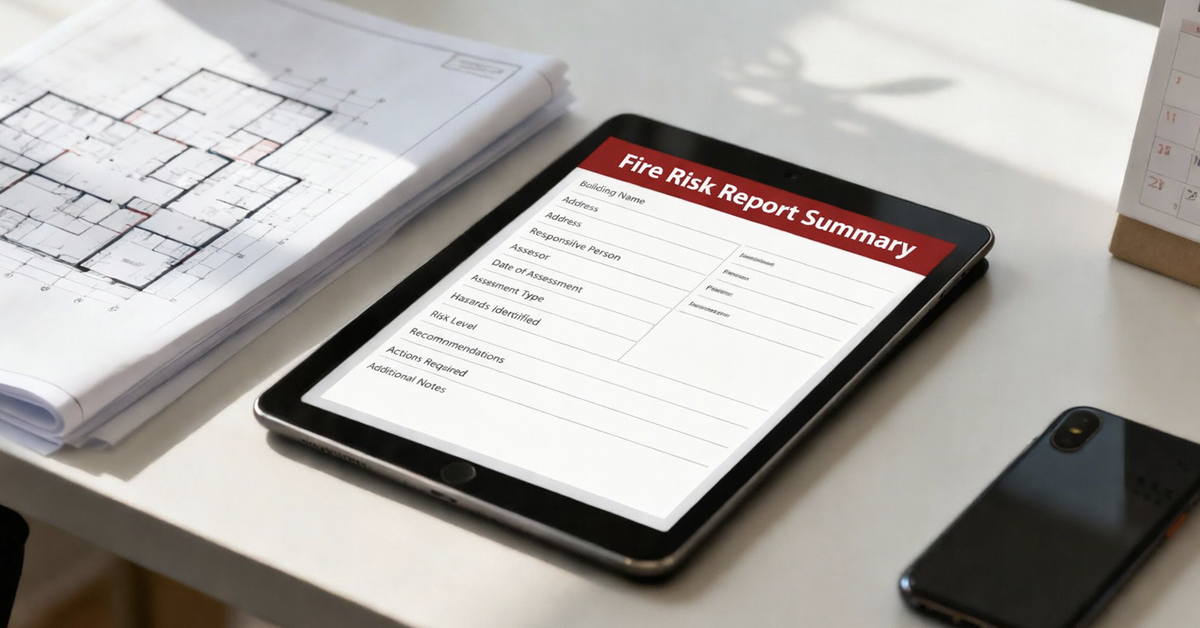
Within a few working days of the assessment, you will receive your final report in a digital format. Think of this document as your roadmap to compliance. It is written in plain English, avoids confusing jargon, and is structured to be easy to follow.
Your report will clearly outline:
This final document empowers you to manage risks effectively, prove your compliance, and most importantly, create a safer home for everyone in the building.
Receiving your fire risk assessment report is not the end of the process—it is the beginning. This document is your blueprint for keeping residents safe and staying on the right side of the law. Its real value comes from turning those findings into action.
The report translates complex fire safety rules into a clear, prioritised to-do list. As the Responsible Person, your job is to understand this plan and ensure everything gets done promptly. This is about more than just compliance; it is about actively preventing a fire and protecting lives.

A good report will categorise its findings with a simple risk rating system. This is designed to help you focus on the most dangerous issues first. The exact wording might differ between assessors, but it usually looks something like this:
This prioritised list helps you use your time and budget wisely, dealing with the biggest problems first while you plan for the smaller jobs.
The findings in a fire risk assessment for flats often highlight common, everyday issues that are easy to miss. Knowing what to expect can help you prepare for the work that might be needed.
Example 1: A High-Priority Finding
Example 2: A Medium-Priority Finding
Your assessment must be a living document that accurately reflects the current state of your building’s fire safety measures. An out-of-date report that lists unaddressed faults offers no legal protection and fails to protect your residents.
Your legal duty does not stop at getting the assessment; you must also be able to prove you have acted on it. The best way to do this is by keeping a detailed fire safety file. This is your proof of due diligence.
For every recommendation in your report, you should log:
This paper trail is invaluable. If the fire and rescue service inspects your property, this file is the first thing they will ask for. It demonstrates that you are a proactive and responsible manager who takes fire safety seriously.
While total fire-related fatalities in England have been trending downwards, preventable causes are still a significant problem. Acting on your report is critical, as fires started by cigarettes, cooking appliances, or faulty electrics can often be contained or their impact reduced by the very measures identified in an assessment. You can read more about recent UK fire and rescue service statistics to get the full picture.
Even with a good grasp of the basics, landlords and property managers often have specific questions about their duties. Navigating the legal side of fire safety can be complex, but getting clear answers is the best way to ensure you are managing your properties correctly.
Here, we tackle the most common queries about fire risk assessments for flats. The goal is to give you straightforward, practical knowledge so you can meet your responsibilities without confusion.
This is easily the most frequent question we hear. While there is no strict legal “expiry date” for a fire risk assessment, the law is clear that it must be kept under regular review.
As a rule of thumb, industry best practice is to have the assessment reviewed at least annually. This is a check to see if anything significant has changed. A full new assessment, completed from scratch by a competent professional, is typically advised every 3 to 5 years, depending on the complexity, age, or risk level of your building.
However, you must not wait for the anniversary date. A review or a completely new assessment is needed immediately if any of these events occur:
The key takeaway is that your assessment must always be a “live” document that reflects the real-world risks in your building at any given moment.
Failing to have a suitable and sufficient fire risk assessment is a criminal offence under the Regulatory Reform (Fire Safety) Order 2005. The consequences for the Responsible Person can be severe.
The local Fire and Rescue Service is responsible for enforcement and has significant powers.
Beyond these notices, a prosecution can lead to unlimited fines (£). In the worst cases, especially where a major breach of duty leads to injury or death, individuals can face a prison sentence. Furthermore, not having a valid assessment can invalidate your building’s insurance, leaving you personally liable for catastrophic financial losses after a fire.
This depends on the type of assessment. The vast majority of assessments for purpose-built blocks of flats are a Type 1, which is a non-intrusive inspection of the shared common areas only.
A Type 1 assessment covers places such as:
Crucially, the assessor will inspect the front doors of the individual flats from the hallway side to check they appear to be proper fire doors. They will not enter any private dwellings. This approach works on the assumption that the original fire protection measures inside each flat are still in place and functioning as intended.
The next level up is a Type 3 assessment. This covers everything in a Type 1 but also includes a non-destructive check of the fire safety measures inside a sample of individual flats. This is usually only needed for older conversions or if there are specific concerns about the internal fire separation.
The law states the assessment must be carried out by a ‘competent person’. This is defined as someone with the necessary training, experience, and knowledge to do the job properly.
For a small, simple workplace, the business owner might feel competent to handle it. However, for a building as complex as a block of flats, the Responsible Person is almost always expected to appoint an accredited, third-party professional.
A competent assessor for a residential block should be able to show you:
Hiring a qualified professional is not just about compliance. It is about getting an accurate, unbiased, and genuinely useful report on your building’s safety. It ensures the findings are credible and gives you the solid proof you need to show you have exercised due diligence.
Managing fire safety in a block of flats is a major responsibility, but you do not have to do it alone. At HMO Fire Risk Assessment, our certified assessors have the expertise and provide the support you need to ensure your property is safe, compliant, and well-managed. Contact us today to book your professional fire risk assessment.
Most HMO landlords I talk to can rattle off their fire door requirements, their alarm grade, and their emergency lighting checks without missing a beat....

Most of the fire safety advice on this site assumes you already have a working HMO. This one is for the stage before that: the...