
A Complete UK Guide to Your Fire Alarm Test Procedures
12/01/2026
A regular fire alarm test isn’t just a drill; it’s a vital, legally required check to make sure your system’s sounders and control panel are working exactly as they should. The process is simple: you activate a manual call point to confirm the alarm sounds, but it forms a cornerstone of fire safety compliance for any non-domestic property in the UK. This guide is for business owners, landlords, and anyone designated as the ‘Responsible Person’ for a building’s fire safety. By the end, you will understand your legal duties and know how to conduct and record these essential checks.
Getting your fire alarm testing right is far more than a box-ticking exercise. It’s a fundamental legal duty, and the consequences of getting it wrong are serious. For landlords, business owners, and managing agents across the UK, these responsibilities are laid out in the Regulatory Reform (Fire Safety) Order 2005.
This legislation puts the duty squarely on the shoulders of a designated ‘Responsible Person’. This could be the employer, the building owner, a landlord, or a managing agent. In short, if you have control over a building, you are likely the Responsible Person. Your core duty is to ensure the safety of everyone on your premises, which makes regular fire alarm testing non-negotiable.
Your entire fire safety strategy, including your testing schedule, has to be built on a solid foundation: a professional fire risk assessment. This document does more than just list potential hazards. It determines the specific type of fire alarm system your building needs and dictates the frequency and nature of the tests required to maintain it.
A thorough assessment will look at factors unique to your property, such as:
Without an up-to-date and suitable fire risk assessment, your testing routine is just guesswork. It lacks the evidence-based logic needed to prove you have taken all reasonable steps to keep people safe.
Ignoring your legal obligations for fire alarm testing can lead to severe penalties. The Fire and Rescue Service has the authority to inspect your building and your records at any time. If they find you have failed in your duties, the fallout can be significant.
The consequences of non-compliance are not abstract legal threats. They are real-world outcomes that can include enforcement notices demanding immediate action, unlimited fines, and in the worst cases, prosecution and even prison sentences.
Imagine a facilities manager who neglects to carry out and record weekly tests. They could easily be served with an enforcement notice. If a fire then occurred and the alarm failed because of that neglect, the business owner could be prosecuted under the Fire Safety Order. These penalties reflect just how serious the risk to life is when an alarm system is faulty or untested.
Beyond the legal action, the damage to your reputation and the potential for business interruption can be devastating. Ultimately, a consistent fire alarm test routine is one of the most critical parts of responsible property management.
For a deeper dive into your duties, you can explore the broader scope of UK fire safety regulations.
A fire alarm test is useless if it is done randomly. A slapdash approach will not give you reliable safety information and, worse, it leaves you non-compliant with UK fire safety law. To properly fulfil your duties as the Responsible Person, you need to create and stick to a structured testing schedule, guided by the recommendations in British Standard BS 5839.
This standard is the definitive framework for fire detection and alarm systems in the UK. It outlines a routine of weekly, monthly, six-monthly, and annual checks, with each one serving a very specific purpose. This is not just ‘best practice’; it is the benchmark that your local Fire and Rescue Service will expect you to meet. Following this schedule is the clearest way to show you are taking your responsibilities seriously.
The whole landscape of UK fire safety legislation has been tightening up for years, placing a much bigger emphasis on proactive, provable safety routines. You can see the progression clearly.
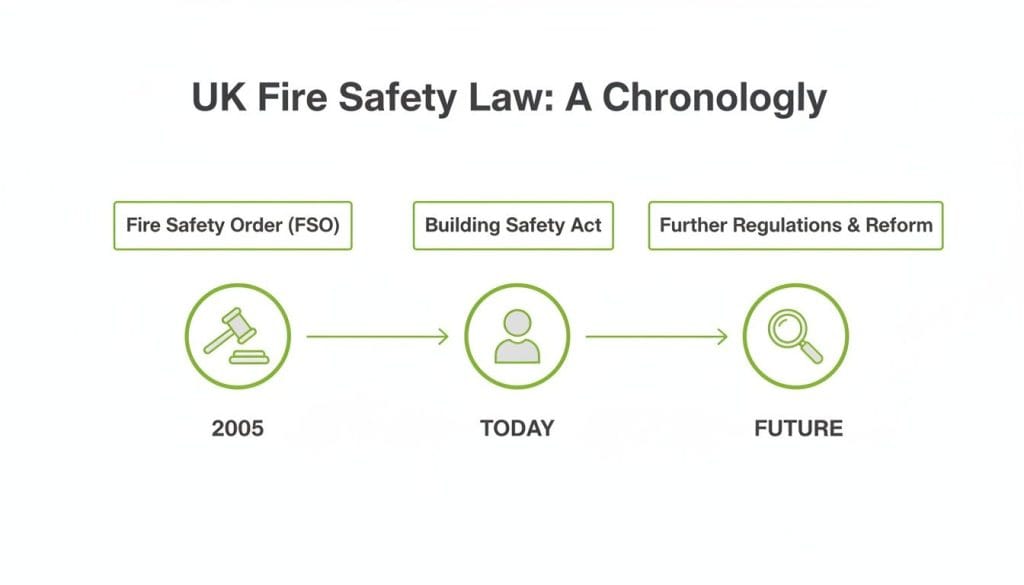
From the foundational Fire Safety Order in 2005 right through to the latest acts, the message is clear: compliance today is all about having a continuous and well-managed approach to safety.
To make this easier to manage, here is a quick overview of the minimum testing frequencies you should be following.
| Test Type | Frequency | Who Typically Performs It | Primary Purpose |
|---|---|---|---|
| Weekly Bell Test | Weekly | Responsible Person or trained staff | Confirms the control panel and sounders work. |
| Monthly Checks | Monthly | Responsible Person or trained staff | Visual inspection of backup power and linked systems. |
| Six-Monthly Service | Every 6 Months | Qualified Fire Alarm Engineer | In-depth service and inspection of system components. |
| Annual Inspection | Annually | Qualified Fire Alarm Engineer | Comprehensive test of detectors, devices, and batteries. |
This table gives you a solid foundation for your testing schedule, ensuring all key components are checked at the right intervals by the right people.
The most frequent check, and one of the most important, is the weekly test, often just called the ‘bell test’. It is a simple but vital check designed to confirm two things: that the control panel can get a signal from a manual call point and that it can activate the sounders. Think of it as a fundamental health check of your system’s most basic job.
As the Responsible Person, this task will usually be down to you or a member of staff you have properly trained. The process involves activating a different manual call point (one of the red ‘break glass’ boxes) each week. This ensures that, over time, every single call point in the building gets tested.
The point of the weekly test is not just to hear a noise. You are confirming the entire system responds as it should. That means checking the control panel for any new fault lights that appear after the test and making sure the alarms are loud and clear in all the areas they need to be.
Beyond the weekly test, a few other checks are needed to keep the system in good shape. These are a bit more detailed and look at different parts of your fire safety setup.
These periodic checks are designed to catch problems that a simple bell test would never reveal. It is also a good moment to remember that other life safety systems run on their own schedules. For example, understanding emergency lighting testing requirements is just as important for ensuring escape routes are properly lit if the power goes out.
The annual inspection is the most thorough MOT your fire alarm system will get all year. Again, this is a job for a qualified engineer. It includes everything from the six-monthly service, plus several more detailed tests.
Engineers will typically test a proportion of all detectors and devices on the system to make sure they are working correctly. They will also carry out battery load tests to confirm the backup power supply can actually last for the required time during a mains failure. This detailed annual service gives you a complete health report for your system, providing documented proof that it is fit for purpose and fully compliant with British Standards.
Getting hands-on with the weekly fire alarm test can feel a bit intimidating at first, but it is actually a straightforward process once you get the hang of it. As the designated Responsible Person, this is one of your core tasks, and doing it right ensures the system will do its job when it matters most. Let us walk through how to carry it out safely and effectively.
Before you even think about touching the fire alarm panel, a couple of quick checks will save you a world of disruption and potential costs. Rushing in is a classic mistake that often leads to false alarms and unnecessary panic.
First, let everyone in the building know what is happening. The easiest way is to pick a consistent time each week for the test, so people learn to expect it. A simple notice in a common area or a quick email to staff or tenants does the job perfectly. This stops anyone from panicking and making a 999 call, which wastes the valuable time of our emergency services.
Second, and this is crucial, you must inform your Alarm Receiving Centre (ARC) if your system is monitored. A monitored system automatically signals an external company that will call the Fire and Rescue Service if the alarm goes off. Forgetting this step guarantees a false alarm call-out, which can come with hefty charges and puts a strain on emergency resources. Make sure you have your account details handy when you telephone them.
The Fire Alarm Control Panel (FACP) is the brain of your system. You will usually find it in a low-risk, easy-to-access spot like a reception area, entrance lobby, or caretaker’s office.
The panel’s display screen tells you the system’s status. Before starting your test, give it a quick look to check for any pre-existing fault or disablement lights.
If the panel is already showing a fault, stop right there. Do not proceed with the test. Make a note of the fault message on the display and call a qualified fire alarm engineer. Testing a system that’s already flagging an issue could make things worse or give you a false sense of security. You are looking for a clear panel showing a healthy “Normal” status.
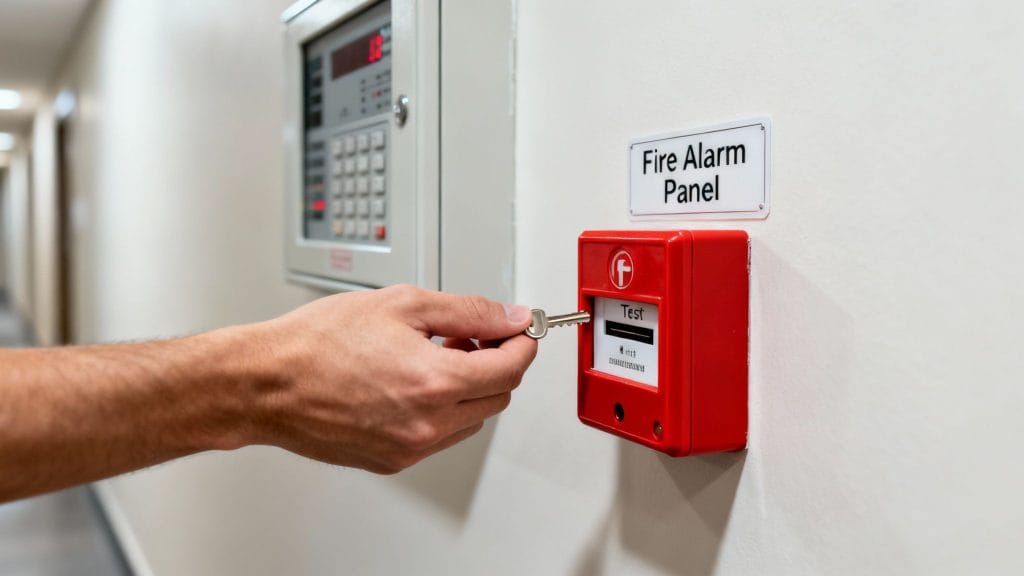
With your pre-test checks done, it is time for the hands-on part of the fire alarm test. The idea is to trigger a single manual call point (MCP) to confirm the sounders activate as they should.
The alarm sounders should kick in almost instantly. Let them ring for no more than a minute, just long enough to confirm they are working and can be heard clearly across the building. Any longer just causes unnecessary disruption.
A great real-world tip for a multi-floor office block is to have a colleague on another floor listen out. A quick call to them confirms the sounders are audible everywhere, ensuring there are no ‘dead spots’ where the alarm might go unheard.
Once you have confirmed the sounders are working, the final job is to silence the alarm and reset the system. This is just as important as the activation itself. Head back to the fire alarm control panel.
First, press the ‘Silence Sounders’ or ‘Silence Alarms’ button. The bells or sirens will stop, but the alarm light on the panel will keep flashing to show it still needs resetting. Next, hit the ‘Reset’ button. This should clear the alarm condition completely, and the panel ought to return to its normal, healthy green light status.
Finally, give the panel one last check. Make sure no new fault lights have appeared. If a fault light is now on, it suggests the test has flagged an underlying issue. You will need to log it and call an engineer. The system must be left in a fully operational state before you walk away, that is the mark of a successful weekly test.
In the eyes of a Fire and Rescue Service inspector, if a fire alarm test is not written down, it simply never happened. This simple truth highlights just how critical meticulous record-keeping is. Your fire safety log book is the single most important piece of evidence you have to prove you are meeting your legal duties.
Think of your log book as more than just a compliance chore; it is your system’s complete health record. It gives you undeniable proof of due diligence and helps you, or an engineer, spot recurring issues before they escalate into something far more serious. When it comes to an inspection, it is your primary defence.
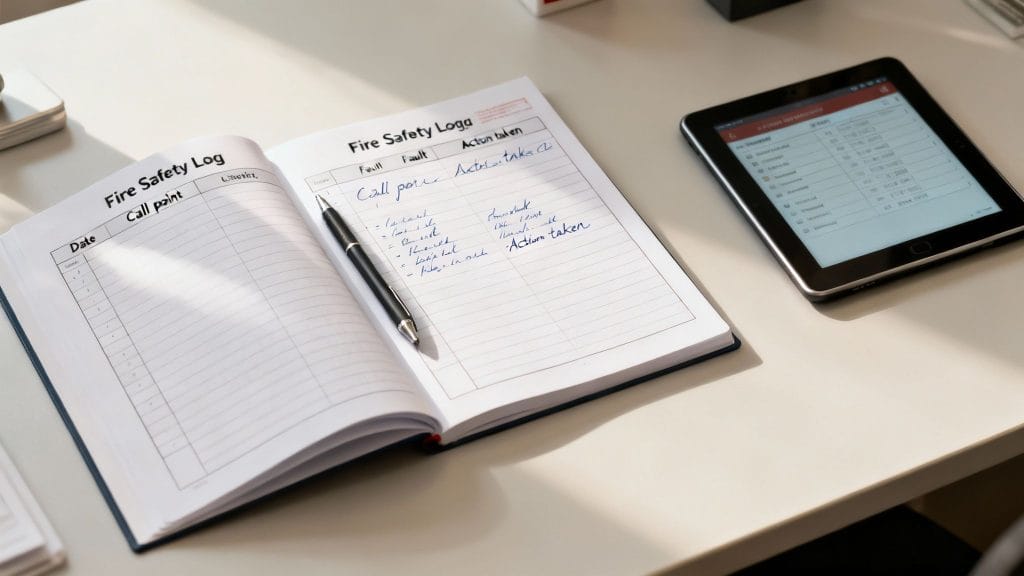
Every single time you carry out a weekly bell test, you need to make an entry. Sloppy or incomplete records are a massive red flag for inspectors. Each entry should be clear, concise, and contain all the crucial details of that specific test.
For each weekly entry, you must include:
Keeping a detailed log book is also vital for other key equipment, like carrying out a regular fire extinguisher inspection.
Whether you opt for a traditional paper log book kept securely on-site or a more modern digital system, the principles remain the same. A physical book is simple and does the job well, but you have to make sure it is stored somewhere it will not get lost or damaged, usually near the main fire alarm panel is best.
Digital log books are becoming much more common, and for good reason. They can offer handy features like automated reminders and easy access for off-site managers. Whichever route you choose, consistency is what truly matters. The system must be accessible for an inspector and, most importantly, reliably updated after every single fire alarm test and maintenance activity.
A well-maintained log book is a powerful risk management tool. It not only demonstrates compliance but also provides a clear, chronological history of your fire alarm system, making it easier to diagnose faults and plan for future maintenance or upgrades.
This record-keeping is the final, crucial step of every test. It closes the loop, turning a momentary action into a permanent, verifiable record of your commitment to fire safety and the law.
Even with the most disciplined routine, a weekly fire alarm test can sometimes throw a curveball. When a test does not go to plan, the last thing you should do is panic. Knowing how to react calmly and what basic checks you can safely perform is a huge part of your role as the Responsible Person.
Your first job is to figure out if you are dealing with a simple reset glitch or a genuine system fault that needs a professional eye. Let us walk through some of the most common hiccups and the first steps you should take.
This is probably the most common issue we see. You have silenced the alarms, hit the reset button, but that amber or yellow fault light just stays lit on the control panel.
First things first, do not ignore it. A fault light is the system’s way of telling you something is wrong, whether it is a wiring issue or a problem with a specific component. Take a close look at the panel’s display, it might give you a message or a code that points you in the right direction. Jot down exactly what it says in your fire safety log book.
Next, give it one more reset. Sometimes a panel just needs a moment to clear its memory after an alarm. Wait a good 30 seconds, then press the ‘Reset’ button again, firmly. If the light goes out and the panel returns to its happy green ‘Normal’ state, it was likely just a temporary glitch. But if it stays on, you have what is known as a standing fault.
This is where your responsibility ends and the expert’s begins. A persistent fault light needs to be diagnosed by a qualified fire alarm engineer. Make sure you log the fault and the fact you have called an engineer, it is crucial for demonstrating due diligence.
You are doing your walk-around and notice an alarm sounder in a specific corridor or office is completely silent, while all the others are blaring away. This is a serious problem. It means you have a dangerous “dead spot” where people might not be alerted to a fire.
This is almost always a job for a professional. The cause could be anything from a faulty sounder unit to a wiring problem on that circuit or even a programming error in the main panel. There are no simple user-level fixes for this one.
Here is what you need to do immediately:
This one can be frustrating. You have hit ‘Silence’, but every time you press ‘Reset’, the alarms just start up again. Nine times out of ten, this points to one specific cause: the manual call point you tested has not been properly reset itself.
The system is stuck because it is still receiving an ‘activate’ signal from that call point, so it cannot go back to its normal standby state. Head back to the call point you tested. You will need your test key again, but this time to reset the device. The exact method depends on the model, but it usually involves inserting the key and either pulling a switch down or giving it a turn. The little plastic flag or element inside should click back into its original position.
Once that is done, go back to the control panel and try the reset sequence again. This almost always clears the problem.
Knowing these basic troubleshooting steps empowers you to manage minor hitches confidently. However, the most critical skill is recognising when an issue is beyond your scope. A fault that cannot be cleared with a simple reset is a clear sign to call a professional.
This formal testing regime is vital. A YouGov survey revealed that only 7% of Britons test their domestic smoke alarms as often as recommended. This matters because Home Office data shows that alarms in homes failed to operate in 26% of house fires, highlighting why professional landlords and business owners cannot rely on informal habits and must maintain a documented fire alarm test routine. Discover more insights from the YouGov research about this topic.
While your weekly fire alarm test is a non-negotiable part of your duties, it is crucial to recognise its limitations. As the Responsible Person, you are expected to handle these routine checks, but there is a clear and legally defined line where your responsibility ends and the expertise of a competent professional must take over.
Knowing when to make that call is just as important as the weekly test itself.
Certain tasks related to your fire alarm system legally require the skills of a qualified and experienced fire alarm engineer. Attempting this work yourself not only risks damaging the system but also exposes you to significant legal and safety liabilities.
The most significant trigger for calling in an expert is the six-monthly periodic inspection and service. This is not optional; it is a core requirement under BS 5839, the British Standard that underpins UK fire alarm compliance.
This service is far more than a simple bell test.
An engineer will perform a series of in-depth diagnostic checks that are impossible for a layperson to conduct. This includes:
This six-monthly service provides a vital health check, identifying underlying issues before they become critical failures. It is your proof that the system is being professionally maintained.
Beyond the scheduled six-monthly service, several other situations demand immediate professional attention. Ignoring these can compromise your entire fire protection strategy and leave you non-compliant.
You must call a qualified engineer when you encounter:
A common mistake is to repeatedly reset a fault without investigating its cause. This is a dangerous practice. A recurring fault is a clear warning sign from your system that something is wrong, and it requires a professional response.
UK fire and rescue statistics show just how often alarms are triggered. Official Fire and Rescue Incident Statistics report tens of thousands of fire false alarms in England annually. In a recent year, services carried out over 51,000 fire safety audits in non-domestic premises, with only 58% achieving a satisfactory outcome. These audits often find problems with alarm maintenance and testing, proving that competent servicing is essential to satisfy enforcing authorities. You can learn more about the UK’s fire safety statistics on FireSafe.org.uk.
The term ‘competent person’ has a specific meaning in fire safety law. It refers to someone with the necessary training, experience, and knowledge to perform the required work safely and correctly.
For fire alarms, this typically means looking for engineers or companies with third-party certification from bodies like BAFE or the FIA. When you engage a professional, you are entrusting them with a life-saving system. Proper vetting is essential for fulfilling your legal duties and ensuring the safety of everyone in your building. Organising a professional fire safety inspection can also help verify that your maintenance and testing regime meets the required standards.
A robust fire alarm system, correctly tested and professionally maintained, is the bedrock of your building’s safety. At HMO Fire Risk Assessment, we provide comprehensive fire risk assessments that ensure your testing schedules and maintenance plans are fully compliant with UK law.
Book Your Certified Fire Risk Assessment Today
For a plain-English rundown of the systems themselves, see our guide to the types of fire alarm systems used in the UK.
Most HMO landlords I talk to can rattle off their fire door requirements, their alarm grade, and their emergency lighting checks without missing a beat....

Most of the fire safety advice on this site assumes you already have a working HMO. This one is for the stage before that: the...