
A Landlord’s Guide to Self-Closing Doors and UK Fire Safety Law
08/01/2026
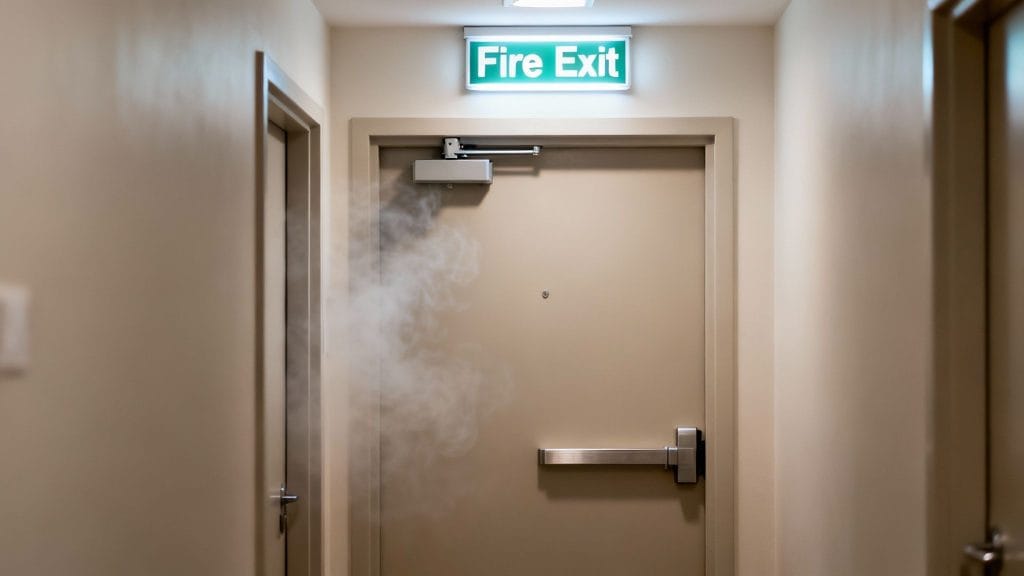
In the world of fire safety, some things are non-negotiable. Self-closing doors fall firmly into that category. They are not just a convenient feature; in most UK commercial and multi-occupied residential buildings, they are a legal requirement and a critical part of your fire protection strategy. Their job is simple but vital: to ensure a fire door is always closed, creating a barrier that contains smoke and fire, keeps escape routes clear, and ultimately, saves lives.
This guide is for anyone legally designated as the ‘Responsible Person’ for a building’s fire safety. This includes landlords, business owners, and property managers who have a duty to comply with fire safety law. Our goal is to provide a clear, practical understanding of your duties when it comes to these essential devices.
We will explain the crucial role self-closing doors play in what is known as passive fire protection. You will understand the legal requirements, the different types of closers available, and the non-negotiable standards for fitting, checking, and maintaining them.
A fire door only works if it is shut. A self-closing device is the mechanism that guarantees this happens automatically, every single time, without anyone needing to think about it. This simple function is the bedrock of a fire safety principle called compartmentation. Think of it like a submarine’s watertight hatches; compartmentation divides a building into fire-resistant zones to slow the spread of a fire.
When a fire does break out, a closed fire door with a working self-closer provides three layers of defence:
A fire door propped open is no longer a fire door. Its ability to protect life and property is completely nullified, creating an immediate and serious risk. This is why functioning self-closing mechanisms are a focus for Fire and Rescue Service inspectors.
UK law is clear on this. Under the Regulatory Reform (Fire Safety) Order 2005, the Responsible Person has a legal duty to ensure all fire safety equipment, including fire doors and their self-closers, is kept “in an efficient state, in efficient working order, and in good repair.”
Ignoring this duty is a serious compliance failure. Fire and Rescue Authorities have the power to issue enforcement notices and, in serious cases, prosecute. This can lead to significant fines and, for the most severe breaches, even imprisonment. Understanding your obligations regarding self-closing doors is not just good practice; it is a fundamental part of your legal duties.
Understanding your legal duties for fire doors and their self-closers is a fundamental part of managing property in the UK. The primary legislation is the Regulatory Reform (Fire Safety) Order 2005, which places the responsibility for fire safety squarely on the shoulders of a designated ‘Responsible Person’.
In simple terms, this law requires that all fire safety measures, including self-closing fire doors, are kept in good working order. However, in recent years, the rules have become stricter, demanding a more proactive and documented approach from landlords and property managers.
The tragic Grenfell Tower fire in 2017 was a watershed moment for UK fire safety, highlighting the critical importance of self-closing doors. The event triggered major legal reforms, starting with the Fire Safety Act 2021, which expanded the scope of the original Fire Safety Order.
Crucially, the Act clarified that the structure, external walls, and all common parts of a multi-occupied residential building fall under the Responsible Person’s duties. This includes the flat entrance doors between individual homes and the communal areas.
This was a significant change. Previously, responsibility for flat entrance doors was often a legal grey area. Now, it is clear: landlords and managing agents are legally accountable for ensuring these doors, and their self-closing devices, are fit for purpose. A single faulty closer on a flat door can compromise an entire building’s fire safety strategy by allowing deadly smoke to pour into shared escape routes.
Building on this foundation, the Fire Safety (England) Regulations 2022 introduced specific, non-negotiable inspection schedules. These rules apply to multi-occupied residential buildings over 11 metres high and turn what was once best practice into a legal duty.
The regulations require Responsible Persons to:
This is not a small task. For example, a 20-storey block of flats with 10 flats on each floor has over 200 flat entrance doors plus dozens of communal doors. Every single self-closer must now be physically checked and its condition documented several times a year to comply with the law.
To help Responsible Persons understand their duties, this table summarises the key legal requirements for self-closing devices in residential buildings over 11 metres in England.
| Requirement | Applicable Doors | Frequency | Relevant Legislation |
|---|---|---|---|
| Check for correct self-closing functionality | All fire doors in common areas (e.g., corridors, stairwells) | At least every 3 months | Fire Safety (England) Regulations 2022 |
| Check for correct self-closing functionality | All flat entrance doors that open onto common parts | At least annually | Fire Safety (England) Regulations 2022 |
| Maintain in efficient state and good repair | All fire doorsets, including self-closing devices | Ongoing | Regulatory Reform (Fire Safety) Order 2005 |
| Ensure doors are fit for purpose | Flat entrance doors in multi-occupied residential buildings | Ongoing | Fire Safety Act 2021 |
This table is a simplified guide; your fire risk assessment will detail the specific needs of your building. The core principle remains: a fire door is only a fire door if it is closed.
The entire point of this legislation is to ensure that a building’s compartmentation, its ability to contain a fire in one area, is never defeated by a propped-open or faulty fire door. A reliable self-closing device is the only thing that guarantees this protection works as intended.
Following the Grenfell Inquiry, the government fully accepted that every residential building with separate flats needs regular checks to ensure every fire door has a working self-closer. As a direct result, the Fire Safety (England) Regulations 2022 made these checks mandatory from 23 January 2023. For more detail, the UK government has an official factsheet on these fire door safety regulations.
These legal changes have also transformed how fire risk assessments are conducted. Assessors must now rigorously inspect and report on the condition of all relevant fire doorsets, including flat entrances, with a laser focus on the performance of their self-closers. Any failure here will be flagged as a significant risk that requires immediate action. To learn more about what this means for you, see our detailed guide on the current fire door legislation in the UK.
To manage your property’s fire safety properly, you need to know what hardware you are responsible for. Self-closing mechanisms are not a one-size-fits-all solution; they come in several forms, each designed for different doors, buildings, and aesthetic needs. Understanding the types you have installed is the first step towards effective inspection and maintenance.
The most common types you will find in UK properties are overhead closers, but you might also come across more discreet options like concealed closers and floor springs. Each has its own benefits and maintenance considerations. Being able to distinguish between them will help you spot potential problems during routine checks and communicate effectively with your fire risk assessor or maintenance contractor.
By far the most prevalent type, overhead closers are the workhorses of the self-closing world. These are the visible metal boxes with an articulated arm, mounted either at the top of the door frame or on the door leaf itself.
Their popularity comes from their reliability, being relatively easy to install, and straightforward to adjust. Think of them as a controlled spring and piston. When you open the door, the spring is loaded with energy. When you let go, a hydraulic system manages that energy release, ensuring the door closes at a steady, controlled pace without slamming shut.
This mechanism is highly effective, and because it is visible, it makes inspection simple. The downside is that it is also the most likely to be damaged or tampered with.
For a cleaner aesthetic, especially in modern blocks of flats or high-end commercial spaces, a more discreet solution is often preferred. Concealed closers are hidden away inside the door leaf or the frame (the jamb), making them invisible when the door is closed.
They work on a similar principle to their overhead counterparts but use a chain or a slide arm mechanism that runs in a hidden channel. While they look good, their hidden nature creates an inspection challenge.
A concealed closer offers superior aesthetics but demands more diligent inspection. Because the mechanism is hidden, a fault might not be immediately obvious, making routine operational checks even more critical to ensure compliance.
To inspect one, you have to open the door fully just to see the mechanism. Adjusting or replacing these units is more complex and costly than surface-mounted ones, often requiring the entire door to be taken off its hinges.
Floor springs are another type of hidden closer, but as the name suggests, the mechanism sits in a box recessed into the floor right under the door’s pivot point. A small cover plate is usually the only visible part when the door is closed.
These are heavy-duty units built for high-traffic doors or very large, heavy doors, like the main entrance doors to a large office building or a hotel lobby. They offer superb control and durability while remaining almost completely out of sight.
Their location in the floor, however, makes them vulnerable to dirt and water ingress, which can cause the mechanism to fail over time. Servicing a floor spring is a specialist job, often requiring the door to be lifted off its pivots entirely, making repairs a significant undertaking. Anyone responsible for a building should ensure these are checked carefully during any scheduled fire door inspection.
A self-closing device is only effective if it works perfectly, every single time. It is a simple concept, but its crucial role in fire safety is often undermined by two fundamental problems: poor installation and a lack of routine maintenance. If either of these is wrong, the entire fire doorset becomes useless in an emergency.
This is not a DIY job. Installation must be carried out by a competent person who understands the specific demands of both the door and the closing device. That means meticulously following the manufacturer’s instructions and adhering to the code of practice in BS 8214. A poorly fitted closer can damage the door, prevent it from latching, or fail prematurely, creating a serious compliance issue.
Unfortunately, despite strict UK legal requirements, inspection data reveals a shocking level of failure. The Fire Door Inspection Scheme (FDIS) has reported that around 75% of fire doors fail to meet required safety standards, with a staggering 31% of these failures linked directly to improper installation. Many of these defects relate to self-closing performance, including disconnected arms or poorly adjusted closers.
Given that an estimated 3 million new fire doors are installed annually in the UK, these figures paint a grim picture of compromised safety systems.
This data shows the most common self-closing mechanisms found in UK properties, each with its own inspection and maintenance needs.
The infographic highlights that while overhead closers are the most common and easiest to visually inspect, a significant portion of devices are concealed. This means they demand much more thorough operational checks, as you cannot rely on a quick glance.
A correctly adjusted self-closing door must perform one specific action without fail. It has to close the door from any open position, power through the resistance of any smoke seals and the latch, and click shut securely. Critically, it must do this without slamming, which can injure people and damage the door frame over time.
Think of it as a controlled, confident closing action. The final few inches of travel, known as the ‘latching speed’, need enough force to engage the latch bolt fully into the keep. If the door is left even slightly ajar, the fire compartment is breached.
The gold standard for a self-closer test is simple: open the door to just 75mm (about three inches) and let it go. If it cannot reliably close and latch from that tiny angle, it is not correctly adjusted and fails to meet its life-saving purpose.
As the Responsible Person, you are legally required to ensure these devices are maintained. Regular, simple checks can spot problems long before they become serious compliance breaches. When inspecting your self-closing doors, you or your appointed competent person should be looking for several key warning signs.
Here is what to look for during routine inspections:
These quick visual and physical checks are vital. Documenting your findings provides an essential record for fire authorities and forms a key part of your fire safety management system. For a more structured approach, you can refer to our comprehensive fire door inspection checklist to guide your checks.
Even the most perfectly installed self-closing device is useless if someone props the door open. It sounds simple, but this one action, usually done for convenience, is one of the biggest and most persistent challenges a Responsible Person will face. It completely dismantles a building’s fire safety strategy, creating an immediate and serious risk for everyone inside.
Dealing with this requires a mix of clear communication, regular checks, and practical, compliant solutions. Often, residents wedge doors open for ventilation or to make carrying shopping in easier, completely unaware they are breaking the law and putting their neighbours in danger. The first job is always to bridge that knowledge gap.
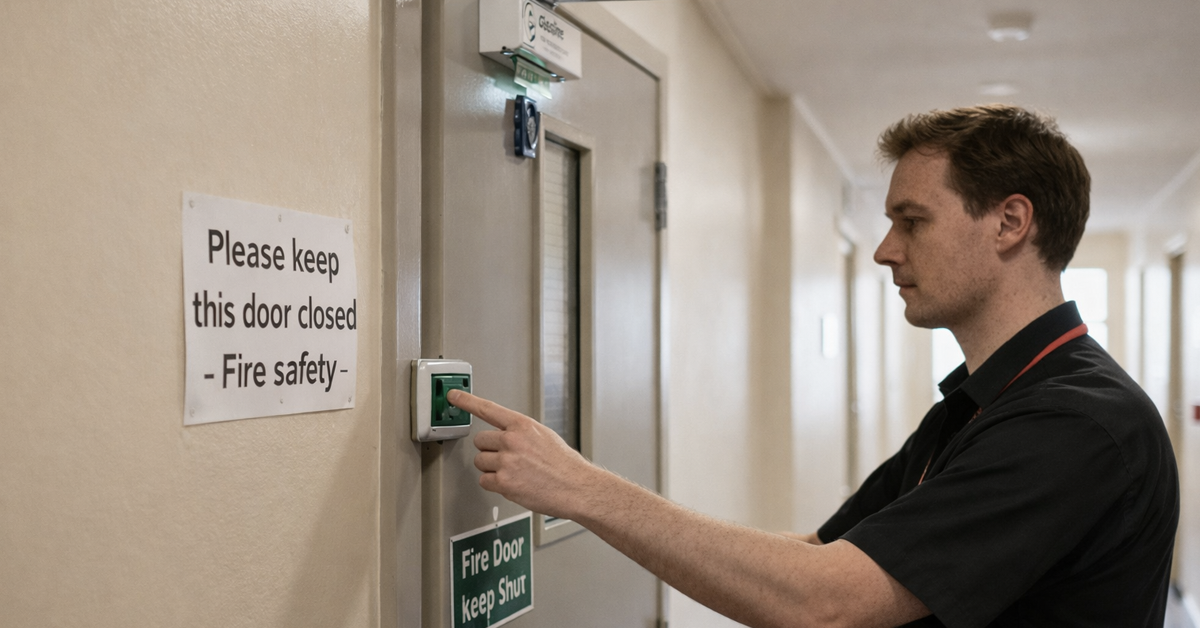
Educating residents on the life-saving role of self-closing doors is critical. These are not just heavy doors; they are active fire protection systems. A proactive, non-confrontational approach almost always works best to get people on board.
Your communication strategy should include a few key elements:
Research shows a worrying lack of awareness among UK residents. A government-commissioned survey revealed that only 16% of people realised they had self-closing devices on their doors. Digging deeper, investigators found many devices were either removed or disabled, showing a major disconnect between the hardware and residents’ understanding of its purpose.
Combine that with more recent findings that 44% of UK residents would not do anything if they saw a fire door propped open, and the scale of the challenge becomes clear. You can read more about the research into resident behaviour with door closers to understand the full picture.
For doors in busy corridors where being held open is a genuine convenience, there is a compliant solution. You can install legally approved hold-open devices, such as electromagnetic or acoustically activated units. These are not just wedges; they are intelligent systems wired directly into the building’s fire alarm.
When the fire alarm activates, the hold-open device automatically releases the door, allowing the self-closer to shut it securely. This provides day-to-day convenience without ever compromising fire safety.
These systems are a sensible investment for high-traffic hallways or communal lounges. They remove the temptation for residents to use unsafe wedges or doorstops, all while ensuring the building’s compartmentation stays intact when it matters most. By offering a safe alternative, you remove the excuse for misuse and make your overall fire safety management much stronger.
Your fire risk assessment is the cornerstone of your building’s safety strategy, and self-closing doors will be a major focus. A competent fire risk assessor does not just tick a box to say a closer is present. They will physically and methodically test its performance to ensure it can do its life-saving job.
This is not just a quick visual glance. The assessment involves a practical evaluation of every single fire doorset that is meant to have a self-closer. It is the only real way to check that the protection you have on paper works in reality. A faulty closer is not a minor issue; it is a significant finding that undermines the principle of fire compartmentation.
During the on-site inspection, the assessor will put each self-closing device through a series of key operational tests. Their aim is simple: to confirm that the door can reliably shut and lock itself against the forces it would face in a real fire, like air pressure changes or the resistance from expanding intumescent seals.
The core checks always include:
A finding of “faulty self-closing device” on your fire risk assessment is a direct instruction to the Responsible Person. It signals an unacceptable breach in your fire precautions that requires immediate remedial action.
The fire risk assessment is not the end of the process; it is the start of your action plan. Any failures identified with your self-closing doors must be treated with urgency. The report will give you a prioritised list of actions, and it is your legal duty to create a clear, documented trail showing how and when you have rectified these faults.
Proactive management is the only way forward. This means not just reacting to your assessment findings but also implementing your own regular inspection schedule. For landlords and managers of multi-occupied properties, understanding the specifics is essential. A detailed guide on the fire risk assessment for HMO can offer much-needed clarity on these legal duties.
Ultimately, maintaining your self-closing doors properly is fundamental to protecting lives, your property, and fulfilling your legal obligations under UK fire safety law.
As a Responsible Person, you will inevitably have questions about your legal duties around self-closing doors. We see the same queries come up time and again from UK landlords and property managers, so let’s get them answered with some clear, compliance-focused advice.
Not every single one, but the vast majority in crucial locations do. In the UK, any fire door that is part of a protected escape route, such as corridors and stairwells, must have a correctly functioning self-closing device. The same goes for doors separating high-risk areas like boiler rooms or bin stores from the rest of the building.
The final decision on which doors require them comes down to your building’s fire risk assessment. A competent assessor will analyse the property’s layout, its use, and the overall fire strategy to pinpoint precisely where self-closers are legally required.
No. Rising butt hinges are widely considered unsuitable and non-compliant for fire doors in the UK. They do not have the controlled, consistent power needed to reliably overcome the resistance from latches, smoke seals, or the air pressure changes that occur during a fire.
For a fire door to do its job, it must close firmly from any angle and click securely into its latch, every single time. Only a controlled door closing device, properly certified to BS EN 1154, can guarantee that essential level of performance.
You must act immediately. As the Responsible Person, you are legally obligated to maintain all fire safety measures in your building. When a tenant removes a self-closer from their flat entrance door, they compromise the fire protection for the entire building, putting everyone inside at risk.
Your first step should be to formally notify the tenant in writing. Explain that the device is a mandatory life-safety feature and must be reinstated. Be clear about the serious risk their actions have created. If they do not cooperate, you must arrange for a competent person to refit or replace the device without delay and meticulously document every action you have taken.
The law is very specific here, especially for multi-occupied residential buildings over 11 metres in England. You are required to keep a clear, accessible record of all your fire door checks, and this must explicitly include the self-closing devices.
Your records need to tell a clear story. They should document the date of each check, the specific location of the door, the condition of the self-closer, any faults you found, and the date any repair work was completed. This creates a solid audit trail for the Fire and Rescue Service and forms a critical part of your fire safety management file.
Ensuring every self-closing device in your property is correctly installed, maintained, and documented is a significant legal responsibility. If you need professional verification, HMO Fire Risk Assessment provides certified fire risk assessments across the UK to help you meet your duties and protect your property. Book your assessment with our expert team today at https://hmofireriskassessment.com.
For more detail on the compliance side, see our guide to self-closing fire doors and UK compliance.
Most HMO landlords I talk to can rattle off their fire door requirements, their alarm grade, and their emergency lighting checks without missing a beat....

Most of the fire safety advice on this site assumes you already have a working HMO. This one is for the stage before that: the...