
What Does PASS Stand For In Fire Safety and UK Compliance?
01/04/2026
In fire safety, there is one simple acronym everyone should know: PASS. It stands for Pull, Aim, Squeeze, and Sweep, and it is the universally recognised method for using a fire extinguisher correctly. For any UK business or property, this is not just a helpful tip—it is a vital part of basic fire safety.
This article is for business owners, landlords, facilities managers, and anyone designated as the ‘Responsible Person’ under UK fire safety law. By the end, you will understand what the PASS method is, why it matters for legal compliance, and how to integrate it into your property’s fire safety plan.
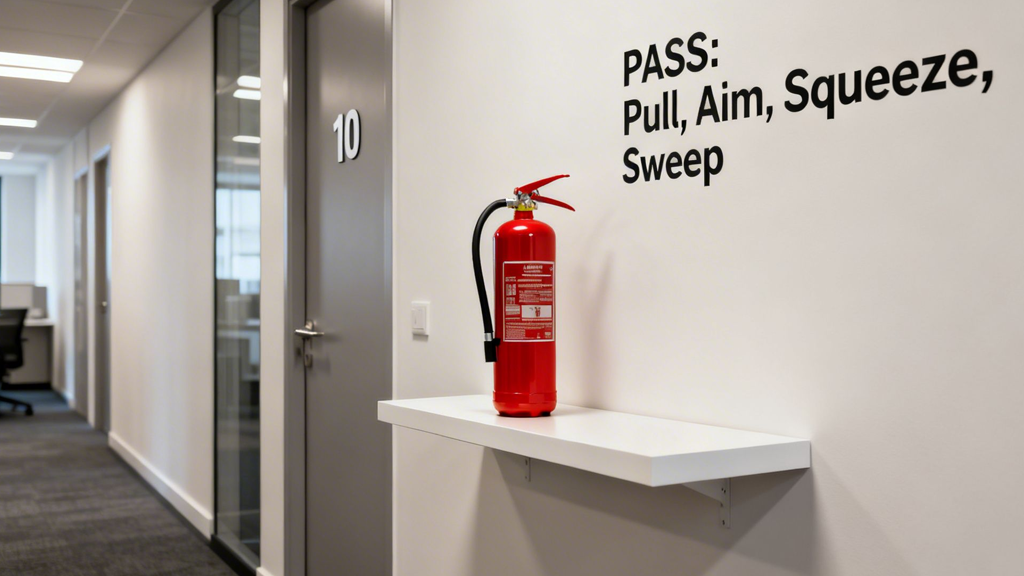
If you are a landlord, facilities manager, or business owner in the UK, understanding PASS is more than memorising four words. It is a core part of your legal responsibilities under the Regulatory Reform (Fire Safety) Order 2005. This legislation demands that the designated ‘Responsible Person’ provides the right firefighting equipment and ensures enough people are trained to use it competently.
The PASS method is the foundation of that training. It gives your nominated staff a clear, memorable procedure to follow if a small, manageable fire breaks out. Without this knowledge, the fire extinguishers you are legally required to provide are little more than red decorations on the wall.
The effectiveness of this simple technique is undeniable. The percentage of fires in UK workplaces put out with portable extinguishers jumped from 80% in 2003 to an impressive 93% in 2021. This shows how proper training directly helps save lives and minimise property damage. You can read more about the impact of extinguisher training on the Human Focus blog.
Think of PASS as the basic instructions for operating critical safety equipment. It bridges the gap between having the gear and having the skills to protect people and ensure business continuity. This is especially crucial in higher-risk environments like:
Ultimately, providing equipment without the knowledge to use it means you are failing in your duty of care. Integrating PASS training into your fire safety plan is a non-negotiable step towards meeting your compliance obligations and, most importantly, protecting the people in your property from harm.
Knowing the PASS acronym is an excellent start, but for property owners, landlords, and business managers, the real work begins with your legal duties under the Regulatory Reform (Fire Safety) Order 2005. This law names a ‘Responsible Person’—usually the landlord, owner, or managing agent—who is legally accountable for fire safety on the premises.
It is a common and dangerous assumption that simply buying and mounting a few fire extinguishers is enough to be compliant. Your legal responsibilities go far deeper than that. It is not just about having the equipment; it is about having the right equipment, ensuring it is professionally maintained, and making sure people are competent to use it when it matters most.
As the Responsible Person, your duties extend well beyond the initial purchase. You are legally required to ensure that:
These duties are not optional suggestions. Failing to meet them is a breach of UK law and, more importantly, it puts lives at serious risk. Non-compliance can lead to enforcement action, unlimited fines, and even prosecution.
The cornerstone of all your fire safety duties is your fire risk assessment. This is the professional evaluation that identifies every specific fire hazard in your property and dictates the precise measures needed to control them—from the type of extinguishers required to the staff training protocols you must follow.
Neglecting these responsibilities carries severe consequences. It is not just about the risk of enforcement action or hefty fines from the Fire and Rescue Authority. The ultimate failure is being unable to protect the people who live in, work at, or visit your property. Integrating PASS training is a fundamental part of upholding both your legal and moral duty of care.
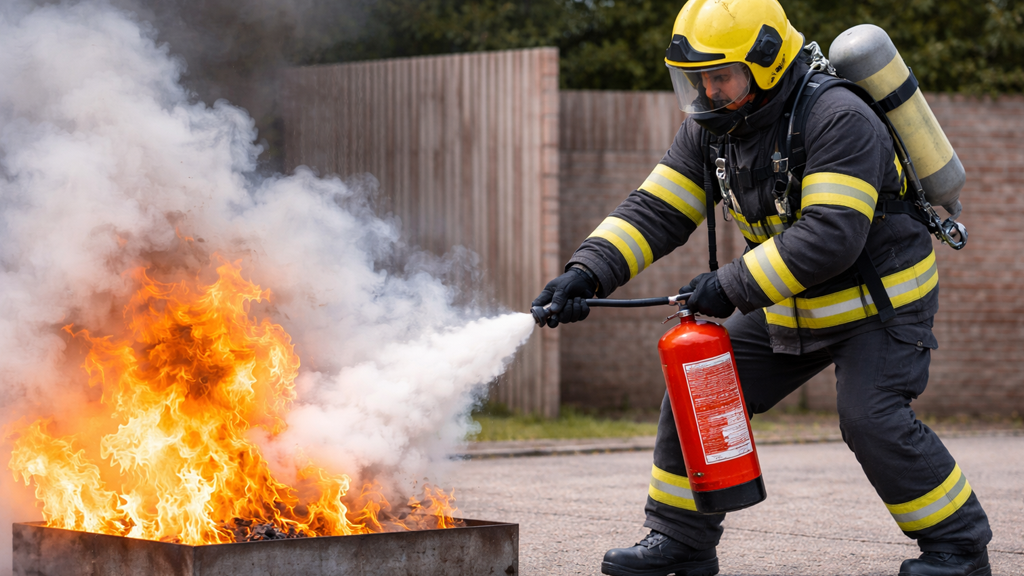
In a real fire, panic can set in quickly. Knowing the PASS acronym is one thing, but being able to apply it correctly under pressure is what really counts. This simple, four-step method is designed to be memorable, giving trained individuals a clear sequence to follow.
Let’s move beyond just the acronym and look at how to put these steps into action. Getting the details right is what makes the difference between controlling a small fire and a situation getting out of hand.
Knowing what does PASS stand for in fire safety is the first step; mastering its application is the goal. Here is a practical guide to each action.
1. Pull the Pin
The first job is to break the extinguisher’s locking mechanism. On nearly all UK extinguishers, you will find a small plastic tamper seal over the pin. This seal is your visual confirmation that the unit has not been fired or tampered with since its last service. Break it and pull the pin out with a firm, decisive twisting motion.
2. Aim at the Base
This is the single most important part of the technique and where most untrained people go wrong. Do not aim at the flames themselves. Spraying into the flames just wastes the extinguishing agent and does very little to put out the fire. You must direct the nozzle or hose right at the very bottom of the fire—the source of the fuel that is actually burning.
3. Squeeze the Lever
Once you are aimed at the base of the fire, squeeze the operating lever slowly and evenly. A sudden, panicked squeeze can be less effective and harder to control. A smooth, controlled action releases the agent in a steady, predictable stream, which is exactly what you need for accurate targeting.
4. Sweep from Side to Side
As the agent discharges, sweep the nozzle back and forth across the base of the fire. Think of it like using a hosepipe to wash a patio. This sweeping motion ensures you cover the entire fuel source, smothering the fire and preventing it from re-igniting from any glowing embers you might have missed.
Before you even think about tackling a fire, your first priority is always your own safety. Make sure you have a clear, unobstructed escape route directly behind you. This means if the fire suddenly grows or the extinguisher runs out, you can back away immediately without ever turning your back on the danger.
Always start from a safe distance, which is typically 2 to 3 metres away. This keeps you clear of the immediate heat and flames while still being close enough for the extinguishing agent to work properly.
As the fire starts to die down, you can then cautiously move a little closer to ensure it is completely extinguished.
This practical knowledge is a core part of any robust fire safety strategy. For more detailed training and compliance information, our complete guide on the safe use of fire extinguishers is an essential read for any Responsible Person.
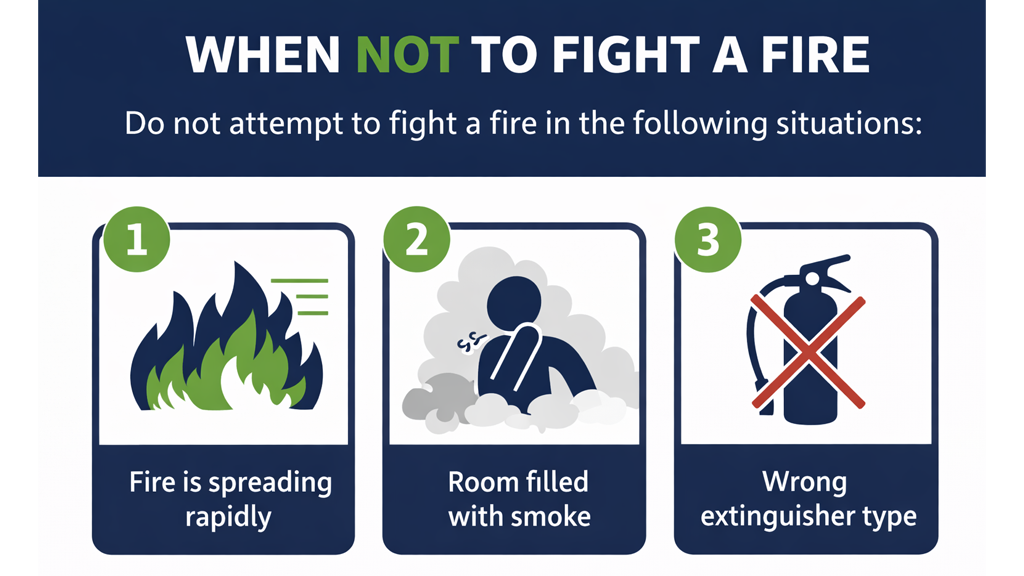
One of the most critical lessons in fire safety is understanding that a portable extinguisher is a tool for small, contained fires—and nothing more. As the Responsible Person, your number one duty is to protect life, and that almost always means getting people out, not fighting the fire yourself.
Knowing when to walk away is just as important as knowing how to use the PASS technique. Trying to tackle a fire that is already out of control is a fast track to tragedy, and your fire safety training must be crystal clear about the point of no return.
If you encounter any of these red flags, the only safe and correct action is to get out, close the doors behind you, and call 999. Do not hesitate.
A fire extinguisher is a first-aid tool for property, whereas a safe evacuation is first aid for people. Never risk your own safety to save fixtures or fittings. The priority is always getting everyone out unharmed.
Once a fire gets to a point where an extinguisher is no longer a safe option, the focus shifts to evacuation and calling the emergency services. The aftermath of such an event almost always requires professional fire and smoke damage restoration to make the property safe and habitable again.
Knowing the PASS technique is a great start, but it is only half the battle. Using it perfectly with the wrong type of fire extinguisher can turn a small, controllable fire into a full-blown disaster. As a business owner or HMO landlord, it is not just good sense to provide the right equipment—it is a legal duty.
Using the wrong agent on a fire is not just ineffective; it can be incredibly dangerous. For example, grabbing a water extinguisher to tackle a fire on live electrical equipment could lead to electrocution. Even worse, using that same water extinguisher on a burning pan of cooking oil will cause a violent, explosive reaction that splashes burning fat across the entire room. Your professional fire risk assessment is the document that takes the guesswork out of this, specifying exactly which extinguishers you need and where.
Every fire extinguisher is engineered for specific classes of fire, which are identified by letters (A, B, C, D, and F). Picking the right one is not a random choice; it is a critical safety decision. Thankfully, the colour-coded system used on all UK extinguishers gives you a quick visual guide to make sure you are grabbing the right tool for the job.
Here is a quick rundown of the most common types you will find in UK properties.
| Extinguisher Type | Colour Code (BS EN 3) | Suitable For Fire Classes | Common UK Property Use |
|---|---|---|---|
| Water | Bright Red | Class A (solids like wood, paper, textiles) | Offices, retail spaces, general communal areas. |
| Foam | Cream | Class A & B (flammable liquids like petrol, paint) | Workshops, garages, storage areas. |
| CO2 (Carbon Dioxide) | Black | Electrical fires and Class B | Server rooms, near electrical switchgear, offices. |
| Wet Chemical | Yellow | Class F (cooking oils and fats) | Legally essential for commercial kitchens. |
| Powder (ABC) | Blue | Class A, B, & C (gases) | Often found outdoors; use indoors is discouraged. |
This table helps you see at a glance which extinguisher belongs where. It is vital information for any Responsible Person.
The key takeaway is that having the wrong extinguisher is just as dangerous as facing a fire that is spreading too fast or a room that is filled with smoke. In all three situations, a safe intervention becomes impossible.
To get into the specifics, you can explore our detailed guide on which fire extinguishers are needed for different scenarios in your property. It is a crucial read, especially when you consider that Home Office data shows 1 in 5 commercial fires start in the kitchen, where having the right extinguisher and knowing how to use it is everything.
Knowing the theory behind the PASS method is a good start, but it is not enough. For any Responsible Person, the real job is to turn that knowledge into a practical, life-saving skill within your organisation. This is not about ticking boxes; it is about making sure your team can respond safely and confidently if a small fire breaks out.
Simply knowing what does PASS stand for in fire safety will not be enough in an emergency. Your nominated staff need professional, structured training to build the muscle memory and confidence required to act decisively under pressure. This means going far beyond watching a video—it requires getting hands-on with the equipment.
The goal here is to move from passive knowledge to active skill. A robust training plan should always cover these key areas:
The starting point for all your fire safety and training obligations is a professional fire risk assessment. A thorough assessment does more than just identify hazards; it provides clear, actionable recommendations on your legal training requirements, ensuring you are both safe and compliant.
A comprehensive assessment will specify exactly which types of extinguishers are needed for your building and clarify how many staff members must be competently trained to use them. This takes away all the guesswork, giving you a clear roadmap for meeting your legal duties and, most importantly, protecting the people in your building.
As a landlord, business owner, or managing agent, you will naturally have questions about fire extinguisher training. Here are some straightforward answers to the most common queries we hear.
While UK law does not give a strict timetable, industry best practice and HSE guidance are clear. Nominated staff should receive initial hands-on training when they are appointed.
After that, they need refresher training at least annually. It is vital that you document every training session as part of your fire safety records. This is the proof you will need to show an inspector you are meeting your legal duties.
No, not even close. A video can be a helpful addition, but it is not a substitute for practical, hands-on training.
For anyone expected to use an extinguisher, proper training must involve physically handling a unit. This is the only way to build the muscle memory needed to understand its weight, feel the force required to pull the pin, and practise the sweeping motion. In a real fire, there is no time to think.
Not necessarily. As the ‘Responsible Person’, your legal duty is to make sure you have enough competent people trained to tackle a small fire. Your fire risk assessment is what decides this number, based on your building’s size, layout, and specific risks.
However, it is a legal requirement that all staff are trained on your general fire safety procedures. This includes how to raise the alarm, who to contact, and how to evacuate the building safely and quickly. Their primary responsibility is to get out safely.
This approach ensures that while a few trained individuals can assess and potentially deal with a minor fire, everyone knows their absolute priority is to evacuate and call for help.
Most HMO landlords I talk to can rattle off their fire door requirements, their alarm grade, and their emergency lighting checks without missing a beat....
Most of the fire safety advice on this site assumes you already have a working HMO. This one is for the stage before that: the...