
Smoke Alarms UK: A Landlord’s Compliance Guide
09/03/2026
As a landlord or property manager in the UK, getting smoke alarm compliance right is not a box-ticking exercise – it is a non-negotiable legal duty. This guide cuts through the jargon to give you a clear, practical roadmap for meeting your obligations. We will cover the specific types of smoke alarms UK properties need, where to install them, and how to manage the ongoing testing and maintenance that keeps your tenants safe and your property compliant.
For landlords and property managers across the UK, smoke alarms are far more than a simple safety feature; they are a legal necessity. Getting it wrong can lead to crippling fines, void your insurance policy, and, most critically, place your tenants’ lives in danger. Understanding your responsibilities is the first step to protecting both your investment and the people who call it home.
Think of this guide as a practical handbook for navigating UK smoke alarm laws with confidence. It is written for landlords, property managers, business owners, and anyone acting as the ‘Responsible Person’ for a property. By the time you have finished, you will know exactly what is needed to keep your properties safe, compliant, and legally sound.
It is almost impossible to overstate how important a working smoke alarm is. Yet, a shocking UK survey has thrown a spotlight on just how widespread neglect has become, creating a huge fire safety compliance gap. The poll revealed that 7% of adults—around four million people—admit they never test their smoke alarms. You can read more about these UK smoke alarm testing findings to see the scale of the problem for yourself.
This complacency has devastating consequences. When government data from over 24,000 accidental house fires was analysed, it showed that in 19% of incidents, there was no smoke alarm at all. Even more tragically, people living in homes without a working alarm are at an 11 times higher risk of dying in a fire.
This article will break down your responsibilities into plain English, focusing on actionable steps you can take right away. We will explore:
By following this guidance, you can turn a complex legal burden into a manageable and effective safety strategy. It is the key to ensuring business continuity and, above all, protecting lives.
For landlords and property managers, getting to grips with fire safety law can feel like a minefield. The rules for smoke alarms in UK rental properties, however, are crystal clear and there is no room for negotiation. Knowing them is not just about ticking a box for compliance; it is a fundamental part of your duty of care to your tenants.
The main piece of legislation you need to know is The Smoke and Carbon Monoxide Alarm (Amendment) Regulations 2022. This updated the original 2015 rules, making landlords’ responsibilities even clearer. These regulations do not exist in a vacuum—they sit alongside your broader duties as the ‘Responsible Person’ under the Regulatory Reform (Fire Safety) Order 2005.
The law sets a firm baseline for all rented properties. It all started with the Smoke and Carbon Monoxide Alarm (England) Regulations 2015, which forced private landlords to fit at least one smoke alarm on every storey of a property used as living accommodation. This was then updated in 2022, bringing social housing into line from 1 October 2022. These rules are built on the foundations of the Fire Safety Order 2005, which moved fire safety towards a risk-based approach. You can learn more about the mandatory alarm changes for social housing by reviewing the guidance issued to the sector.
Your key duties as a landlord under the current regulations are:
This duty to repair is a crucial change brought in by the 2022 amendments. It makes it explicit that a landlord’s responsibility for smoke alarms UK does not just stop once the tenant has checked in. It is an ongoing obligation for the entire tenancy.
While the Alarm Regulations give you specific instructions, you need to see them as part of the bigger picture painted by the Regulatory Reform (Fire Safety) Order 2005. This Order makes you, the landlord or managing agent, the designated Responsible Person for the building’s overall fire safety.
What this means in practice is that simply sticking one alarm on each floor might not be good enough. Your fire risk assessment could easily flag that a higher level of protection is needed to keep people safe.
For instance, a large house with a complicated layout might need extra alarms in hallways outside bedrooms, even if they are on the same floor. For Houses in Multiple Occupation (HMOs), the requirements are almost always much stricter, often demanding an interconnected, mains-powered system that your local council will specify.
Ignoring these duties comes with serious legal and financial penalties. Local councils are in charge of enforcement and have the power to act fast if they find a property that is not up to scratch.
The enforcement process usually follows these steps:
That is a hefty fine, but it is nothing compared to the potential fallout from a fire in a property that was not compliant. Beyond the devastating risk to life, you could be prosecuted under the Fire Safety Order, face unlimited fines, and even a prison sentence—especially if it is proven your neglect contributed to the fire’s outcome. Making sure your smoke alarms are correctly installed and working is a cornerstone of responsible property management.
Picking the right smoke alarm and putting it in the right place is just as important as having one at all. A poorly chosen or badly positioned alarm can fail to give that crucial early warning, while also causing nuisance false alarms. As a landlord or property manager, getting to grips with the different types and grades of alarms is fundamental to both legal compliance and genuine fire safety.
Not all smoke alarms are created equal. They use different technologies to spot a fire, which makes them suited to specific areas within a property. This is not just about personal preference; it is about matching the technology to the environment to get reliable detection and cut down on frustrating nuisance activations.
The most common alarms you will come across are optical, heat, and multi-sensor units. Each one is built to react to different signs of a fire, making them specialists for certain rooms.
To make it easier, here is a quick breakdown of which alarm works best where.
| Alarm Type | Detection Method | Best For (Location) | Avoid Placing In |
|---|---|---|---|
| Optical (Photoelectric) | Senses visible smoke particles from slow, smouldering fires. | Hallways, landings, living rooms, and bedrooms. | Kitchens, garages, or dusty/steamy areas where false alarms are likely. |
| Heat | Detects a rapid increase in temperature to a set point (e.g., 58°C). | Kitchens and garages. | Corridors or escape routes, as they are slower to react than smoke alarms. |
| Multi-Sensor | Combines both optical and heat sensors in a single unit. | Anywhere an optical alarm is suitable, but offers enhanced reliability. | Not recommended for kitchens unless specifically designed for that environment. |
As you can see, fitting the right device in the right place is a core part of your fire risk management. Sticking an optical alarm in the kitchen is a classic mistake. It will go off every time someone burns toast, leading to frustrated tenants who will eventually just disable it, leaving the property dangerously unprotected.
Beyond the detection method, alarms are also sorted into ‘Grades’. This system defines how they are powered and, crucially, whether they are interconnected. The type of property you manage—especially if it is a House in Multiple Occupation (HMO)—will dictate the grade you are legally required to install.
For landlords, understanding your duties is not optional. This decision tree cuts through the noise and shows you the core obligations for smoke alarms in UK rental properties.
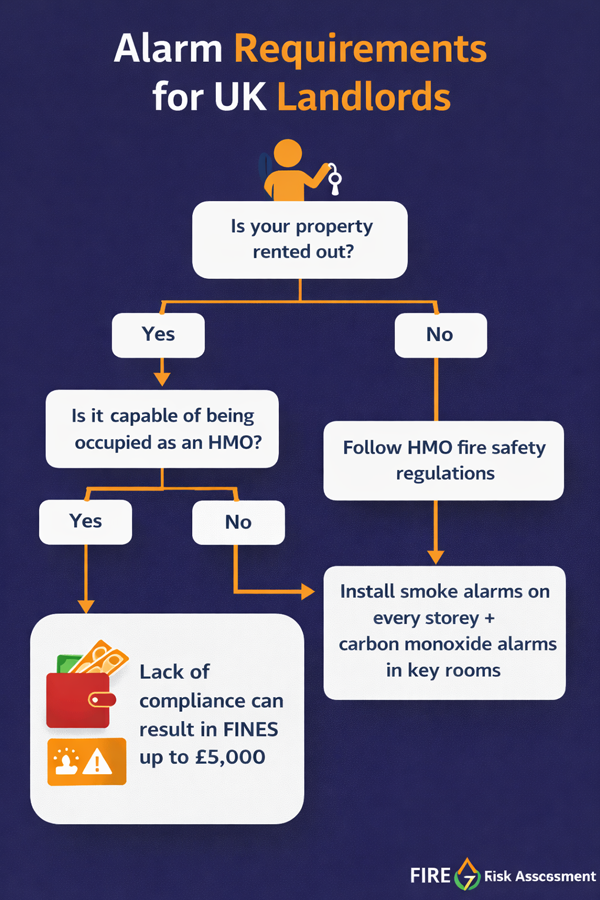
As the flowchart makes clear, the responsibility to install compliant smoke alarms sits firmly with the landlord. Get it wrong, and you face direct legal and financial consequences.
Correct placement is governed by British Standard BS 5839-6. Getting this wrong can make an expensive, compliant alarm completely useless.
As a rule, alarms should be installed on the ceiling, as centrally as possible within a room or circulation space. This ensures they are in the optimal position to detect smoke, which rises and spreads across the ceiling.
There are also places you should absolutely avoid:
By carefully selecting the right type, grade, and location for your alarms, you create a fire detection system that is not only compliant but genuinely effective. For properties with tricky layouts or higher-risk tenants, you might even look beyond standard detectors. Advanced technologies like Aspiration Smoke Detection systems can offer an even greater level of protection by actively sampling the air for tiny smoke particles, providing the earliest possible warning in critical environments.
Fitting compliant smoke alarms is a vital start, but your legal duties as a landlord or property manager do not stop there. The law requires ongoing testing and maintenance to ensure these life-saving devices work perfectly throughout a tenancy. This is not just about ticking boxes; it is about creating a solid, provable record of due diligence and turning fire safety from a one-off task into a robust, ongoing system.
Not sure how many you actually need? Our guide on how many smoke alarms you need in a UK rental covers it room by room.
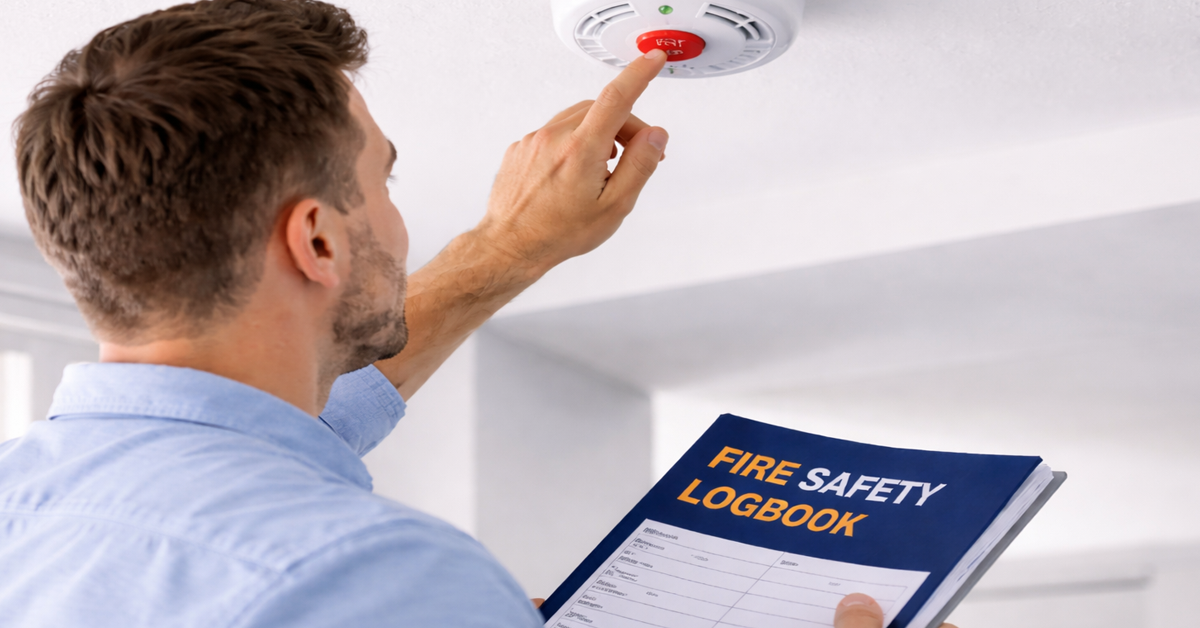
The regulations are perfectly clear: you must ensure every smoke alarm is in proper working order on the first day of any new tenancy. This is a non-negotiable check that must be performed and, just as importantly, documented. Beyond this initial check, a regular testing schedule is essential to show you are meeting your ongoing responsibilities.
The simplest and most effective way to manage this is with a dedicated fire safety logbook. This document provides clear, dated proof that you are fulfilling your duties as the ‘Responsible Person’. Your logbook should record:
This straightforward record-keeping process is invaluable. If a fire ever occurs or a local authority inspector pays a visit, your logbook serves as definitive evidence that you have taken your fire safety duties seriously. For a more detailed look at building a compliant routine, see our complete guide on fire alarm testing for landlords.
Smoke alarms do not last forever. Over time, the internal sensors that detect smoke degrade, becoming less sensitive and therefore less reliable. Because of this, most smoke alarms in the UK have a designated lifespan of 10 years, after which they must be replaced.
This 10-year replacement rule is not just a manufacturer’s guideline; it is a critical safety requirement. An out-of-date alarm is a gamble you cannot afford to take—it might not function in an emergency, putting both lives and your property at risk.
The expiry or replacement date is clearly printed on the body of every alarm. As part of your property management routine, you need to be checking these dates and scheduling replacements well in advance. This is a fundamental part of professional fire risk management.
Even with regular testing, things can go wrong. The Smoke and Carbon Monoxide Alarm (Amendment) Regulations 2022 introduced a clear duty for landlords: you must repair or replace a faulty alarm ‘as soon as reasonably practical’ after a tenant lets you know about it. This means you need a clear process for tenants to report issues and for you to respond quickly.
While the ultimate responsibility is yours, you can and should encourage tenants to carry out their own monthly tests by simply pressing the test button. Good communication is key here. At the start of their tenancy, give them simple instructions explaining:
This collaborative approach helps catch problems early. While alarm ownership is high, reliability is another story. In the UK, 92% of households reported having a working smoke alarm in 2024, a huge jump from just 8% in 1988. However, historical data shows that mains-powered alarms can have failure rates of around 20%, with battery models failing closer to 40%. This only reinforces why your professional checks and prompt repairs are so essential. You can find more of these fire prevention statistics on GOV.UK.
So you have fitted smoke alarms throughout your property. How can you be certain the system is genuinely compliant with UK law? The only definitive way is with a professional fire risk assessment. It is the process that turns your legal duties from a vague checklist into a clear, manageable plan.
A proper assessment is far more than just a headcount of alarms. It is a formal, structured review of your property’s entire fire detection system, carried out by an independent expert. They are there to confirm that your safety measures are truly suitable and sufficient for the specific risks your property presents. For any landlord or property manager, this is fundamental to demonstrating due diligence and protecting both your tenants and your investment.
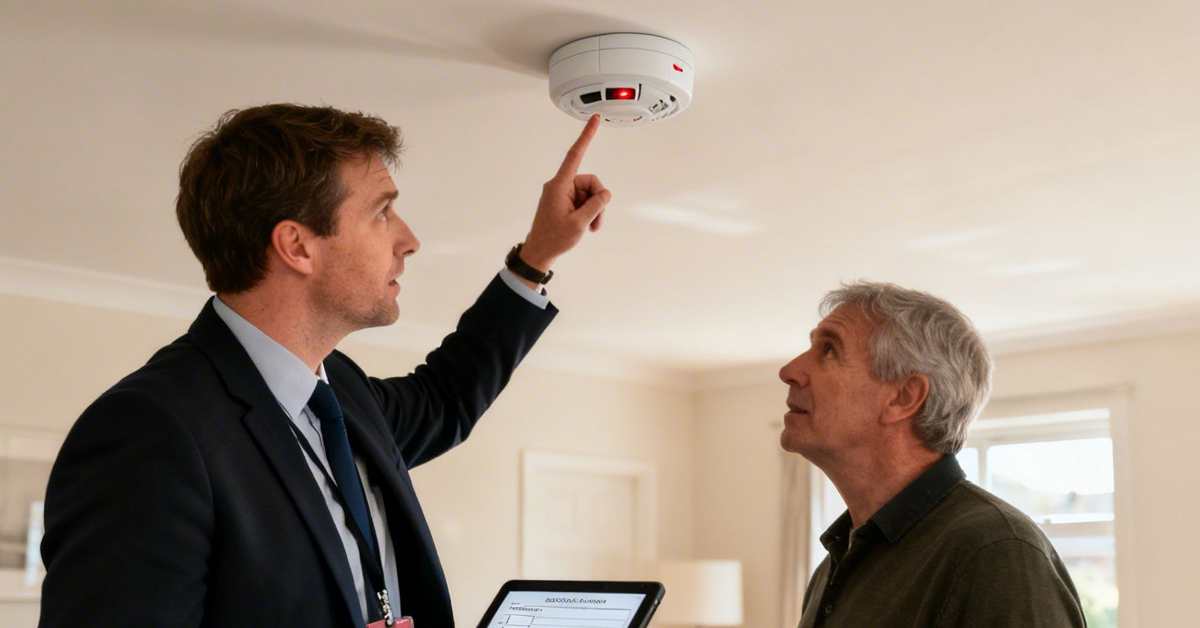
One of the first things an assessor will look at is whether the grade of your alarm system matches your property type. Think of it like using the right tool for the job – what works for a small flat will not cut it for a large shared house.
Getting this right is critical. Installing the wrong grade of alarm is one of the most common compliance failures we see, and it leaves landlords exposed to huge legal and financial risks. The assessment makes sure your system is not just present, but actually appropriate for the property.
The assessor’s job is also to confirm that every alarm is positioned for maximum effectiveness, following the guidance in British Standard BS 5839-6. It is not enough to just have an alarm on each storey; it has to be in the right place to detect a fire in time.
A fire risk assessment is the most reliable way to confirm that your property meets all fire safety legislation. It provides documented proof that you, as the ‘Responsible Person’, have taken appropriate steps to manage fire risk.
An experienced assessor will spot common installation mistakes that can render an alarm useless, like placing them:
They will also check the physical condition, looking for damage or signs of neglect, and will verify the expiry date on every single unit. Any alarm that is past its 10-year replacement date is no longer considered compliant and must be replaced.
At the end of the process, the fire risk assessment gives you an actionable, prioritised plan. The report will highlight any areas of non-compliance and provide clear, practical recommendations for the upgrades needed to put things right.
This document is your roadmap to full compliance and, crucially, your recorded proof of due diligence. It transforms a complex web of legal duties into a structured, manageable task. For a deeper dive into how this process protects you and your portfolio, have a look at our detailed guidance in our fire risk assessment for landlords article.
Knowing the rules is one thing, but putting them into action is what keeps your tenants safe and keeps you on the right side of the law. As a landlord or property manager, your duties are clear. The task is to turn those duties into a simple, repeatable process that protects both your tenants and your investment.
This section lays out a straightforward action plan to get you there. Think of it as moving from theory to practice. These steps will help you check what you currently have, fix any problems, and build a solid system for managing your smoke alarms UK requirements, so nothing gets missed.
To get fully compliant and prove you are taking your duties seriously, let’s break it down into four key tasks. This turns dense legal requirements into a manageable checklist.
Audit Your Alarms
The first job is to get a complete picture of every alarm in your properties. Go through room by room and compare what you find against the legal standards we have covered. Check the type, grade, and—crucially—the expiry date of every single unit. Are they in the right places? Is the grade correct for the property, whether it is a standard rental or an HMO? This simple audit will instantly show you where the gaps are.
Establish a Testing Schedule
Once your alarms are up to scratch, you need a strict testing schedule. This is not optional. You must test alarms at the start of every new tenancy and keep a record. Your fire safety logbook is your evidence. Use it to log every test, every fault, and every repair. This creates a clear paper trail that will be invaluable if you are ever inspected.
Inform Your Tenants Clearly
Good communication with your tenants is essential. Give them simple, clear instructions on their role, which is to report any faults to you immediately. While the legal responsibility for fixing alarms is yours, an informed tenant is your first line of defence for spotting a problem early.
Schedule a Professional Assessment
If you are in any doubt—especially if you manage HMOs, older buildings, or multiple properties—the safest bet is to book a professional fire risk assessment. A qualified assessor will check your entire system, from alarm grading to positioning, and give you a formal report. This report acts as documented proof of your commitment to safety. For more general guidance, exploring wider resources for landlords can also be a huge help.
By working through these steps methodically, you turn what can feel like a source of anxiety into a professional, manageable system. It is the best way to protect your tenants, your investment, and your reputation from the serious consequences of getting it wrong.
As a landlord or property manager, you will have questions about your exact duties. This section tackles some of the most common queries we hear, reinforcing the key compliance points and offering practical advice.
Most smoke alarms are designed to last for 10 years. You will find the expiry date printed on the unit itself. Think of this as a non-negotiable deadline, not a suggestion.
Over time, the internal sensors that detect smoke degrade and become less reliable. An out-of-date alarm is a huge liability. It is vital to keep a record of these dates for every alarm in your property portfolio and schedule replacements proactively to ensure there are no gaps in protection.
While you, the landlord, are legally responsible for making sure every alarm works on day one of a new tenancy, you can—and should—ask your tenants to carry out monthly tests. This is as simple as pressing the test button to check the sounder is working.
However, it is critical to remember that the ultimate legal duty for ensuring the entire system is properly maintained rests with you as the property’s ‘Responsible Person’. You cannot simply delegate this responsibility away.
Local authorities have the power to enforce smoke alarm regulations. If they find a property does not meet the required standards, they can issue a remedial notice. This gives you a set timeframe, usually 28 days, to fit and test the necessary alarms.
Ignoring this formal notice can lead to a hefty penalty charge of up to £5,000. This makes full compliance not just a safety imperative, but a serious financial one, too.
A heat alarm is the recommended choice for kitchens. It is designed to detect a rapid and significant rise in temperature, which is a clear indicator of a real fire.
This is a much better solution than a standard smoke alarm in a kitchen. A heat alarm will not be triggered by cooking fumes, steam, or burnt toast, which prevents the frustrating false alarms that often lead to tenants disabling them. Using the right device in the right location is fundamental to effective fire safety.
Ensuring your property’s smoke alarm system is fully compliant is a legal necessity. For professional verification and peace of mind, contact HMO Fire Risk Assessment to schedule a certified fire risk assessment. Book your assessment today.
Most HMO landlords I talk to can rattle off their fire door requirements, their alarm grade, and their emergency lighting checks without missing a beat....

Most of the fire safety advice on this site assumes you already have a working HMO. This one is for the stage before that: the...