
A Complete Guide to Fire Door Inspection in the UK
18/02/2026
A fire door inspection is a systematic, detailed check to verify that a fire doorset is functioning correctly and meets all legal UK standards. It is a critical part of a building’s fire safety strategy, making sure these life-saving devices will perform as designed during a fire by holding back smoke and flames.
This is not just a quick look; it is a professional assessment of a vital piece of safety equipment.
Understanding your legal responsibilities for fire doors is not just good practice—it is a mandatory requirement under UK law. Failure to comply can lead to severe consequences, including unlimited fines and even prosecution. These duties are placed on a specific individual to ensure there is clear accountability for protecting the lives of everyone in the building.
At the heart of this legislation is the Regulatory Reform (Fire Safety) Order 2005, which applies to almost all non-domestic premises in England and Wales. This order establishes the crucial role of the ‘Responsible Person’.
The Responsible Person is the individual or entity with control over the premises. This is usually:
Crucially, this is a duty you cannot simply delegate. While you can (and should) hire a competent person to carry out tasks like a fire risk assessment or a fire door inspection, the ultimate legal responsibility stops with you. You are responsible for ensuring it is done, and done correctly.
The legal landscape has shifted significantly with the introduction of the Fire Safety (England) Regulations 2022, which came into force in January 2023. These regulations place specific, non-negotiable duties on the Responsible Person for multi-occupied residential buildings.
For buildings over 11 metres in height, the regulations now mandate:
These new rules were introduced to tackle known risks in residential blocks, ensuring doors that protect escape routes and individual flats are consistently maintained. The industry’s response was immediate; FDIS inspectors reported a remarkable 77% increase in demand for professional inspections right after these regulations came into effect. This shows just how seriously property managers are taking these new legal duties.
Ignoring your duties is not an option. The local Fire and Rescue Authority has the power to enforce the law and will take action against those who put lives at risk. The penalties are designed to be a serious deterrent.
They can include:
This robust legal framework underscores a simple truth: a fire door inspection is not a bureaucratic box-ticking exercise. It is a fundamental part of managing risk, protecting lives, and ensuring your business or property can continue to operate. By understanding and fulfilling your obligations, you are upholding a critical legal and moral responsibility. For a deeper dive into the specifics, you can check out our guide on fire door legislation.
While your own regular visual checks are a good start, a professional fire door inspection is a completely different level of scrutiny. Think of it less as a quick look-over and more as a forensic examination of a critical life-saving device. A competent inspector does not just see a door; they analyse an entire engineered system designed to perform under the most extreme pressure.
This formal inspection is a systematic, methodical process, not a casual walk-through. Qualified professionals follow a precise framework guided by British Standards, most notably BS 8214:2016 (Code of practice for fire door assemblies). This standard sets out exactly how to scrutinise every single component of a timber-based fire door.
The process below highlights the core duties of a Responsible Person, which ultimately lead to the need for a formal, professional inspection.

This shows that inspection is not just a standalone task. It is the final, crucial step in a cycle of identifying who is responsible, assessing the risks, and then verifying that the protection in place actually works. Without this final check, the entire safety process is left unproven.
The very first thing a professional will look for is proof of certification. Every fire door, frame, and essential piece of hardware must have a label or marking to show it has been tested and approved by a recognised third-party scheme, such as Certifire or BM TRADA.
An inspector will confirm that:
A fire door’s performance comes down to millimetres. Gaps that are too large will let smoke and hot gases pour through, compromising escape routes and helping the fire spread.
An inspector uses a specialised gap gauge to meticulously measure the space between the door leaf and the frame. The gap should consistently be around 3mm, and it should never exceed 4mm. Any deviation beyond this is one of the most common reasons for a door to fail its inspection.
Just as important are the intumescent and smoke seals. An inspector will check that:
The hardware on a fire door is not just there to open and close it; it is a critical part of the door’s integrity. A professional inspection involves physically testing every component to make sure it operates exactly as it was designed to.
This includes checking the self-closing device to confirm the door shuts fully and engages the latch from any angle, without slamming shut or getting stuck. The hinges are checked for wear and tear, ensuring all screws are present and that they are the right type—fire doors must have a minimum of three certified hinges. The latch itself must hold the door securely within the frame.
A fire door that does not latch is not a fire door. The latch is what holds the door in place against the immense pressure of a fire, preventing it from being blown open by the heat and gases.
Finally, the inspector will assess the overall condition of the doorset. This means looking for any physical damage, like holes, deep cracks, or warping in the door leaf or frame, which could compromise its structural integrity when exposed to fire.
If the door has a vision panel (a glass window), the glazing is closely examined. The inspector will verify it is the correct type of fire-rated glass and is held securely in place with the proper glazing beads. Any cracks, loose fittings, or signs that the wrong type of glass has been installed would mean an immediate fail. This deep, component-by-component analysis is exactly why a professional fire door inspection is so essential for genuine safety and compliance.
While professional inspections are a legal necessity, the Responsible Person should also be conducting their own regular visual checks. Think of these checks as your first line of defence, helping you spot obvious problems early and stay on top of your building’s safety.
Knowing what to look for can stop small issues from turning into serious compliance breaches. You do not need to be a certified expert to spot clear signs of damage or wear and tear, and getting familiar with common failure points helps keep your doors in good working order between professional assessments.
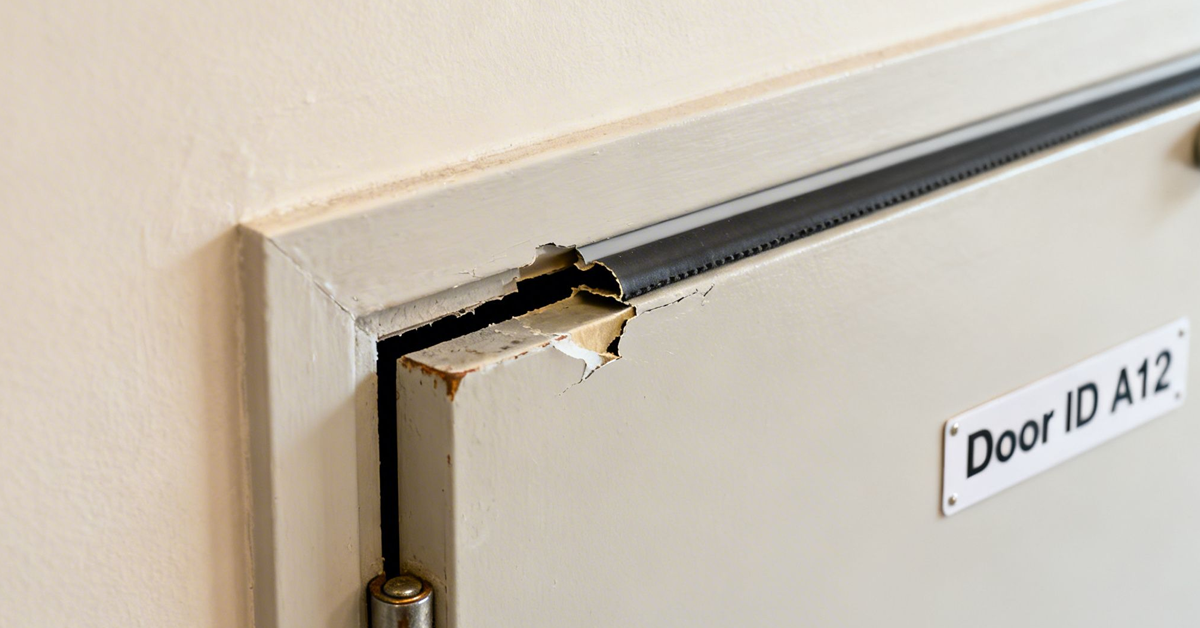
Unfortunately, failing fire doors are a significant problem across UK properties. A major 2021 survey by the Fire Door Inspection Scheme (FDIS), which looked at over 100,000 inspections, found that a shocking 75% of fire doors failed to meet the required standards.
The biggest culprits were excessive gaps around the door, poor maintenance, and faulty smoke seals. It is a nationwide issue that regular, simple checks can help tackle.
Here is a simple, five-step check you can carry out every month. This quick routine will help you catch the most common—and most dangerous—faults before they become serious.
Check the Gaps: Look at the gap between the door and the frame. It should be consistently around 3mm—about the thickness of a £1 coin. If you can see light streaming through or the gap is clearly bigger than 4mm anywhere, it is a major red flag that needs a professional to look at it immediately.
Inspect the Seals: Take a close look at the intumescent and smoke seals, which are usually fitted into the frame or the edge of the door. Are they all there, and are they in one piece? There should not be any parts peeling away, painted over, or missing. These seals are what stop smoke and expand to block fire, so they have to be perfect.
Test the Closer: Open the door about halfway and just let it go. It must close firmly on its own and click securely into the latch every single time. A door that slams shut, closes too slowly, or does not latch properly will not do its job in a fire.
Examine the Hardware: Check the hinges, handle, and latch. A fire door needs at least three hinges, and all the screws must be tight. Even minor hardware issues can cause problems; knowing how to fix a sticky door lock is useful for general maintenance, but for compliance, any faults found during an inspection must be addressed by a competent person.
Look for Damage: Do a quick visual scan of the whole door set. Are there any holes, cracks, or serious chunks missing from the door leaf or the frame? Always pay extra attention to the bottom of the door, as this area often gets damaged by trolleys, equipment, and foot traffic.
Remember: A fire door wedged open is one of the most dangerous failures of all. It offers zero protection. Make sure everyone in the building understands that propping open fire doors is strictly forbidden.
To give you a better idea, here are a few classic examples of what these failures look like in a real-world setting:
Scenario A: The Corridor Door: A main corridor fire door in an office swings closed but does not quite latch unless you give it a final push. This is a classic self-closer failure, and it makes the door useless against smoke.
Scenario B: The Rented Flat Entrance: The intumescent seals on a tenant’s front door have been painted over multiple times. The thick paint can stop the seals from expanding when they get hot, completely compromising the door’s fire resistance.
Scenario C: The Warehouse Door: A fire door leading to a stockroom has a large chip out of its bottom edge from being hit by pallet trucks. This physical damage weakens the door’s structure and means it can no longer hold back a fire for its rated time.
Identifying these common issues is a crucial part of your role as the Responsible Person. It bridges the gap between formal inspections, shows you are taking your duties seriously, and ultimately creates a safer building for everyone.
Carrying out a fire door inspection is one thing, but proving you did it is what really counts, especially during an official audit or after an incident. Keeping robust, detailed records is not just good practice; it is a non-negotiable legal requirement. These records are your proof, showing the Fire and Rescue Service that you are taking your duties as the Responsible Person seriously.
Without that paper trail, your hard work is invisible. In the eyes of the law, if it is not written down, it might as well have never happened. Think of it as a continuous loop: inspect the door, fix any issues, and meticulously document every single step. This creates an unbreakable chain of evidence that proves your due diligence.
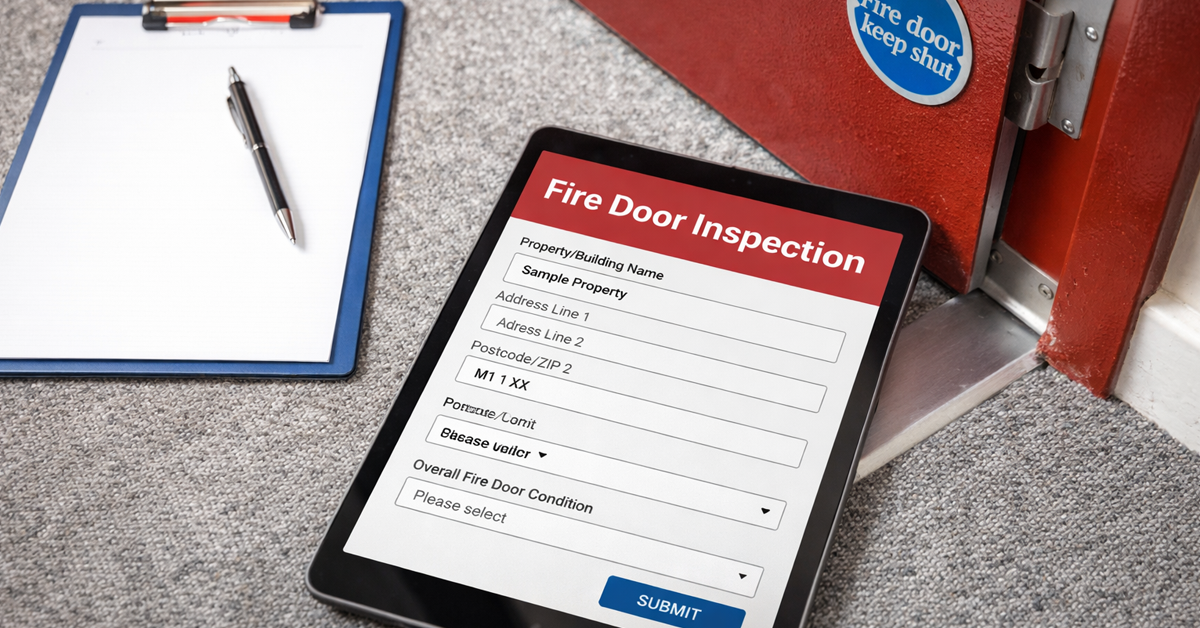
A proper fire door register, sometimes called an asset list, is a living document and a crucial part of your building’s overall fire safety logbook. It is not enough to just have a pile of ticked checklists in a folder. For every single fire door on your premises, your records need to be specific and detailed.
To get this right, it helps to think like an asset manager. A fire door is a critical safety asset, and it needs to be tracked like one.
Your register should capture the following key details for each door:
Your fire door register does not exist in isolation. It slots into your main fire safety logbook, which is the central hub for all your fire safety records. When an inspector from the Fire and Rescue Service visits, this logbook is almost always the first thing they will ask to see.
An organised, up-to-date fire safety logbook makes a powerful first impression. It immediately tells an enforcing authority that you are a diligent and responsible duty holder who takes fire safety seriously. A messy or incomplete logbook, on the other hand, will invite them to dig deeper.
Keeping your records in good order makes it easy to track maintenance schedules, spot recurring problems with certain doors, and plan for future repairs or replacements. It shifts fire safety from being a reactive headache to a proactive management strategy. To help you stay on top of things, we have put together a comprehensive resource you can use. Learn more by downloading our free fire door inspection checklist to guide your documentation. It will help ensure you capture every detail needed to prove your compliance.
Choosing the right inspector is one of the most important fire safety decisions you will make as a Responsible Person. While your own quick visual checks are a good habit, the formal inspection absolutely must be carried out by a ‘competent person’. This is not vague jargon; UK law defines it as someone with the right training, qualifications, experience, and knowledge to do the job properly.
Appointing a competent inspector is not about ticking a box. It is about getting a true, reliable assessment of your building’s life-saving equipment. A poor inspection gives you a false sense of security and leaves you legally exposed. A professional one, on the other hand, gives you the documented proof you need to show you have fulfilled your duties.
So, how do you find someone who is genuinely ‘competent’? The simplest and most reliable way is to look for third-party accreditation from a recognised UK body. These schemes act as independent verifiers, auditing an inspector’s skills and knowledge so you do not have to take their word for it.
The two main accreditation schemes you should be looking for are:
Choosing an inspector with one of these qualifications is the surest way to meet your legal duty to appoint a competent person.
Before you hire anyone, it is smart to do your own vetting. A true professional will expect these questions and should be able to give you clear, confident answers. Never feel awkward about asking for proof.
Here are a few good questions to start with:
If you need more guidance on finding qualified professionals in your area, our article on selecting fire safety consultants near me has some extra advice.
To help you with the vetting process, we have put together a simple checklist. A competent provider should have no trouble answering these questions and providing the evidence you need.
| Area of Enquiry | Essential Question to Ask | What a Compliant Answer Looks Like |
|---|---|---|
| Accreditation | “Can I see a copy of your FDIS or BM TRADA certificate?” | A clear, in-date certificate with the inspector’s name. They should be happy to provide this without hesitation. |
| Experience | “Can you provide references or case studies for similar buildings to mine?” | Examples of work in HMOs, offices, or other relevant properties, demonstrating their understanding of your specific risks. |
| Insurance | “What level of professional indemnity and public liability insurance do you hold?” | A policy document showing adequate cover (typically £1 million or more) for both types of insurance. |
| Reporting | “Could you show me a sample report so I can see the level of detail provided?” | A detailed, easy-to-understand report with unique door IDs, clear photos of defects, and specific, actionable recommendations. |
| Impartiality | “How do you ensure your inspection findings are impartial, especially if you also offer repairs?” | A clear explanation of their process, showing that inspections are conducted independently from any potential remedial work contracts. |
Using this table as a guide will help you filter out the unqualified and focus on finding a true professional who can help you meet your legal duties.
Just as there are signs of a great inspector, there are definite warning signs of an incompetent or untrustworthy one. Spotting these red flags can save you from wasting money and, more importantly, from getting a dangerously inaccurate report.
Be extremely wary of anyone offering an unusually cheap fire door inspection. A proper, door-by-door assessment takes time and expertise. A price that seems too good to be true often means corners are being cut, leaving you with a worthless report and unresolved risks.
Keep an eye out for these warning signals:
Making a confident, compliant choice all comes down to due diligence. By focusing on verifiable accreditation and asking the right questions, you can make sure your fire doors are inspected by a genuine expert.
Even when you have a good handle on the process, practical questions always come up. Here, we tackle the most common queries we hear from UK landlords, business owners, and property managers. The answers are straightforward and designed to help you stay compliant and confident.
The cost of a professional fire door inspection in the UK usually falls somewhere between £7 to £15 per door. The final price can vary depending on the number of doors, your property’s location, and the complexity of the building’s layout. You will also find most providers have a minimum call-out charge to cover their travel and time on site.
While everyone has a budget, cost should never be the deciding factor. An inspector’s competence, their qualifications, and the quality of their report are far more important. A cheap inspection that misses a critical fault is a false economy, leaving you non-compliant and dangerously exposed.
Yes, you can. In fact, as the Responsible Person, you are encouraged to do regular visual checks—perhaps once a month. This is about spotting obvious problems early, such as visible damage, a faulty closer, or finding a door wedged open. These quick checks are a vital part of good fire safety management.
However, the formal, periodic inspections required by law must be done by a ‘competent person’. The law is very clear on this: a competent person is someone with the right training, qualifications, experience, and deep knowledge of fire door standards. Unless you hold a recognised accreditation like an FDIS diploma, you will need to hire a certified professional. Their detailed report is the proof you need to show an enforcing authority that you have fulfilled your duties.
If a fire door fails, the inspector’s report will give you a full breakdown of every fault, often with photos to show you exactly what is wrong. At that point, you are legally obligated to get the issues fixed—promptly—by another competent person.
Ignoring a failed inspection report is a serious breach of the Fire Safety Order. It knowingly leaves occupants at risk and makes the Responsible Person liable for enforcement action, which can include unlimited fines and even prosecution.
The fix could be anything from a minor adjustment to replacing faulty hardware. In some cases, the entire doorset might need to be replaced. Whatever work is done, it must be documented in your fire safety logbook to prove the problem has been resolved.
Think of your fire door inspection and maintenance records as a permanent part of your building’s history. Best practice is to keep them for the entire life of the building.
These documents create a running history of each door’s condition and provide a clear timeline of the care and attention you have paid to them. As a minimum, your records must be kept up-to-date and be ready for the Fire and Rescue Service to review at any time. Consistent and thorough record-keeping is your best evidence of ongoing compliance.
We have covered a lot of ground, establishing just how vital fire doors are for life safety and outlining the legal duties that fall on you as the Responsible Person. The good news is that the path to compliance is not complicated. It is about taking clear, manageable steps to protect people and property from the devastation of fire.
Your focus should now shift from learning to doing. The first logical step is to review your most recent fire risk assessment and check that it still accurately reflects the state of your fire doors. From there, you can create a formal inspection schedule that makes sense for your building and its use.
It is time to be methodical. Document everything.
Proactive management is always the best strategy. Waiting for an enforcement notice from the fire service or, far worse, a real fire, is not an option. Taking control of your fire door safety now shows you are taking your responsibilities seriously.
These steps are the most direct way to lower your risk, meet your obligations under the Fire Safety Order, and ensure everyone in your building is kept safe.
At HMO Fire Risk Assessment, we provide certified and comprehensive fire safety services, helping you meet your legal duties with confidence. Our expert assessors deliver clear, actionable reports to get your property compliant and safe. Learn more about our professional fire risk assessments and take the next step towards total compliance.
Most HMO landlords I talk to can rattle off their fire door requirements, their alarm grade, and their emergency lighting checks without missing a beat....

Most of the fire safety advice on this site assumes you already have a working HMO. This one is for the stage before that: the...