
Finding Fire Safety Consultants Near Me: A UK Guide
16/02/2026
As a business owner, landlord, or property manager in the UK, the legal duties under the Regulatory Reform (Fire Safety) Order 2005 rest firmly with you. Appointing a qualified local fire safety consultant is not just an administrative task; it is a critical decision to protect lives, your premises, and your business continuity.
This guide explains your responsibilities, how to find a competent professional, and what to expect from a high-quality fire risk assessment.
Under UK fire safety law, if you own, manage, or have control over commercial or multi-occupied residential premises, you are designated the ‘Responsible Person’. This role carries significant legal accountability for fire safety. It is a common misunderstanding that hiring a consultant transfers this responsibility. In reality, the legal duty always remains with you.
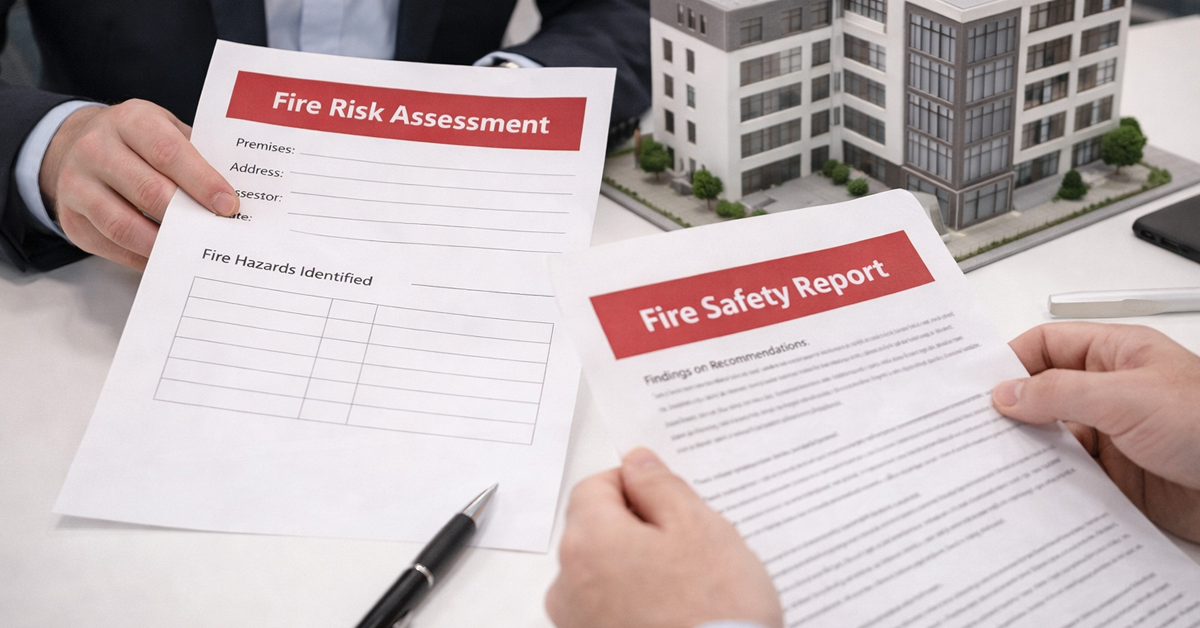
At the core of your obligations is ensuring a suitable and sufficient fire risk assessment is completed and regularly reviewed. This document is the cornerstone of your fire safety strategy. It is a methodical evaluation of your premises to identify fire hazards, assess the risk to people, and implement the necessary control measures.
As the Responsible Person, your legal duties are clear. You must:
Hiring a competent fire safety consultant near you is the most effective way to ensure these duties are met correctly. They bring the expertise needed to navigate complex legislation, including recent updates from the Fire Safety Act 2021, and apply it to the specific circumstances of your property.
A professional consultant provides a clear, documented, and defensible fire risk assessment. This document is not just a legal necessity; it is your roadmap for managing risk and demonstrating due diligence to enforcement authorities like the local Fire and Rescue Service.
For property managers and landlords, these obligations are particularly demanding. A landlord’s legal duties are extensive, with fire safety being a major component. A good landlord survival guide can help navigate these responsibilities. An expert consultant will ensure your properties, from small HMOs to entire blocks of flats, meet all required standards, protecting both tenants and your investment.
Searching for a “fire safety consultant near me” can be challenging. An online search will present numerous companies making similar claims, but it provides little insight into their competence or credibility.
To identify genuine experts, it is essential to look beyond standard search results and consult nationally recognised professional registers. These are not just business directories; they are your first line of defence, verifying qualifications, insurance, and experience.
Using an official register is the single most effective method to filter out unqualified providers and find a trustworthy assessor. These organisations hold their members to strict codes of conduct and have already verified their credentials.
Here are the key registers you should check:
Turning to these official registers is not just good practice; it is a crucial part of your due diligence as the Responsible Person. It demonstrates that you are taking your duties seriously by engaging with professionals whose skills have been independently verified.
While official lists are essential, do not underestimate the value of a recommendation. A firsthand account from someone in your industry can provide insights that a certificate cannot.
Consider reaching out to people in your professional circles:
These conversations can help you find someone who is not just qualified on paper but has a proven track record of delivering compliant solutions for properties like yours.
Once you have a list of potential fire safety consultants, it is time to conduct a more detailed evaluation. This is a crucial due diligence process that every Responsible Person must undertake to make a legally sound decision.
A thorough vetting process protects you from unqualified assessors and ensures the advice you receive will withstand scrutiny from the Fire and Rescue Service.
Before agreeing to a quotation, you need clear, direct answers to some fundamental questions. Any hesitation or vague response is a significant red flag.
Ensure your conversation covers these non-negotiables:
What are your specific professional qualifications? You are looking for specifics. Do they hold a NEBOSH Fire Certificate or an equivalent Level 4 qualification? Are they a member of a recognised professional body, like the Institution of Fire Engineers (IFE)? A competent professional will have these details readily available.
Can you describe your experience with properties like mine? This is critical. An assessor who mainly deals with simple retail units may lack the expertise for the complex demands of a multi-storey HMO or an industrial site storing chemicals. You need relevant, practical experience.
Could you please provide your insurance certificates? This is an absolute deal-breaker. They must have current certificates for both professional indemnity and public liability insurance. Without adequate cover, you are left financially exposed if their advice proves to be negligent.
This simple decision path helps clarify the vetting process, ensuring you check professional registers and credentials methodically.
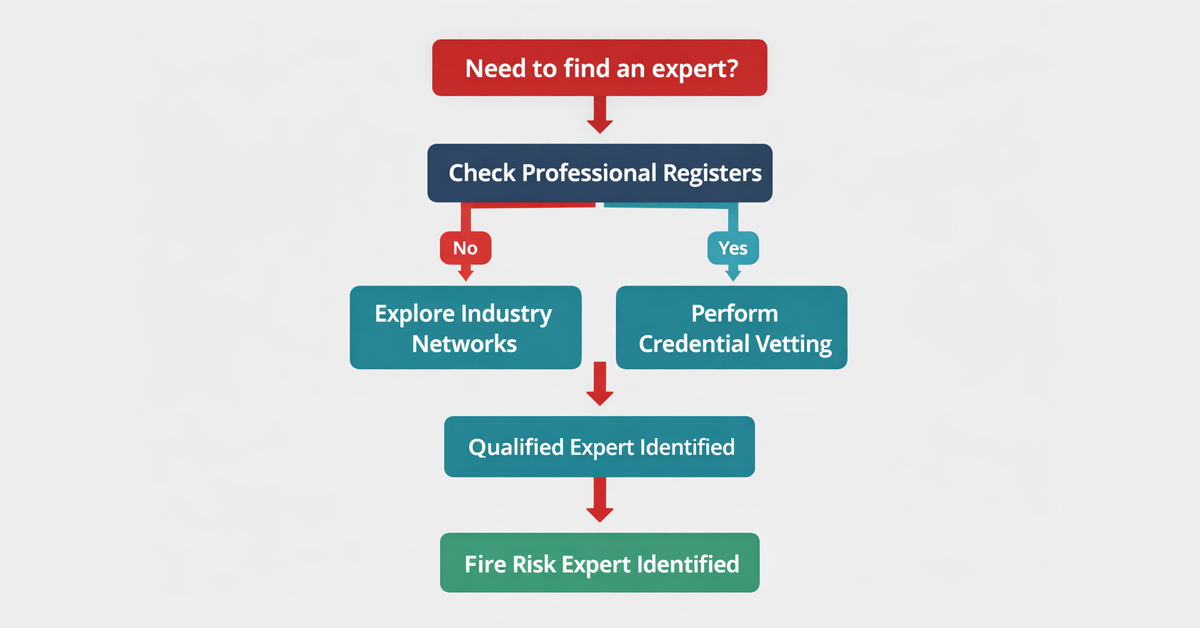
This visual guide reinforces that verifying credentials through official channels is a fundamental step before making any hiring decision.
Beyond formal qualifications, certain behaviours can signal incompetence or a poor-quality service. Remember, you are seeking a reliable partner, not just the cheapest quotation.
A suspiciously low price is often the biggest red flag. A thorough fire risk assessment requires time and expertise; a rock-bottom price usually means corners are being cut, resulting in a superficial tick-box report that offers no real legal protection.
Other major warning signs include a reluctance to provide client references or show you sample reports. A confident, experienced consultant will be proud of their work and happy to share examples that demonstrate their thoroughness and clarity. If they avoid the request, it is best to look elsewhere.
The UK fire protection system market has seen significant growth, surging to over £4.6 billion in 2024 and projected to hit nearly £7.7 billion by 2030, as detailed in this UK fire protection system market report. While this reflects an increased focus on safety post-Grenfell, it also attracts unqualified providers. This makes your vetting process more important than ever.
To help you distinguish a genuine expert from a potential liability, use this checklist to guide your evaluation.
| Verification Area | What to Look For (Green Flags) | What to Avoid (Red Flags) |
|---|---|---|
| Qualifications | Verifiable credentials (e.g., NEBOSH, IFE). Listed on a professional register. | Vague answers, no proof of qualifications, unable to provide membership details. |
| Experience | Provides clear examples of similar properties they have assessed. | Experience is irrelevant to your property type (e.g., retail vs. HMO). |
| Insurance | Readily provides current Professional Indemnity & Public Liability certificates. | Reluctant to share insurance details, or the cover is out of date. |
| Pricing | The quotation reflects the time and expertise required for a thorough assessment. | A price that seems too good to be true. It usually is. |
| Transparency | Happy to share sample reports and provide client references upon request. | Refuses to show past work or connect you with previous clients. |
| Professionalism | Clear communication, professional website, and a clear scope of work. | Evasive answers, poor communication, lack of a professional online presence. |
By methodically checking these areas, you can significantly reduce the risk of appointing an incompetent provider and ensure the person you choose is genuinely qualified to help you meet your legal duties.
See our guide to fire safety certificates for landlords for what’s actually required.
When you engage a fire safety consultant, the service they offer is not a one-size-fits-all solution. The term ‘fire risk assessment’ covers several distinct types, each with a different level of detail and intrusiveness. Selecting the right one is vital to meet your legal duties without paying for an assessment that is either excessive or dangerously inadequate for your building.
A preliminary discussion with a potential consultant is essential. They need to understand your building’s construction, its use, and its occupants to recommend the correct approach. The needs of a modern, purpose-built office block are very different from those of a Victorian house converted into a House in Multiple Occupation (HMO), and the assessment type must reflect that.
A Type 1 fire risk assessment is the most common and is the standard for the vast majority of purpose-built blocks of flats. It is a non-destructive assessment, meaning the assessor will not open up the building fabric. Instead, it focuses purely on the common parts of the building.
This includes areas like entrance halls, corridors, staircases, and plant rooms. The assessor will not inspect the inside of any private flats. The principle is that the building’s original construction should provide adequate fire separation between flats. The assessment therefore concentrates on protecting the shared escape routes, ensuring they remain safe for use in an emergency.
A Type 1 assessment is the minimum legal requirement for the common areas of most blocks of flats under the Fire Safety Order. It is essential for managing agents and freeholders to ensure this is regularly reviewed and kept up to date.
A Type 2 assessment begins with the same inspection of common parts as a Type 1, but it adds a layer of intrusive inspection. The assessor may need to check the construction between a sample of flats and the common areas to verify fire separation. This usually only occurs if there is reason to believe the original fire protection has been damaged or compromised.
A Type 3 assessment is more comprehensive. It covers the common parts and also considers the fire risks within the flats themselves. The assessor will not enter every flat but will assess the means of escape and fire detection from a sample of them. This type is typically needed for older, converted buildings where fire separation between flats may not meet modern standards.
A Type 4 assessment is the most thorough and destructive of all. It involves carefully opening up parts of the building’s structure in both common areas and a sample of flats to inspect hidden structural fire protection.
This level of assessment is only necessary if there is a serious concern about the building’s construction. This could be after a major fire, if significant structural alterations have occurred, or if a previous, less intrusive assessment has flagged major concerns.
This assessment can be disruptive and costly, so it is only recommended when a Type 1, 2, or 3 assessment indicates that a deeper investigation is essential. You can discover more insights about fire safety trends and their impact on UK business protection.
The fire risk assessment report is the most important document you will receive from your consultant. It is not just a document for your records; it is a practical management tool that forms the foundation of your entire fire safety strategy. A good report provides a clear, defensible record of your compliance efforts and, more importantly, a roadmap for making your building safer.
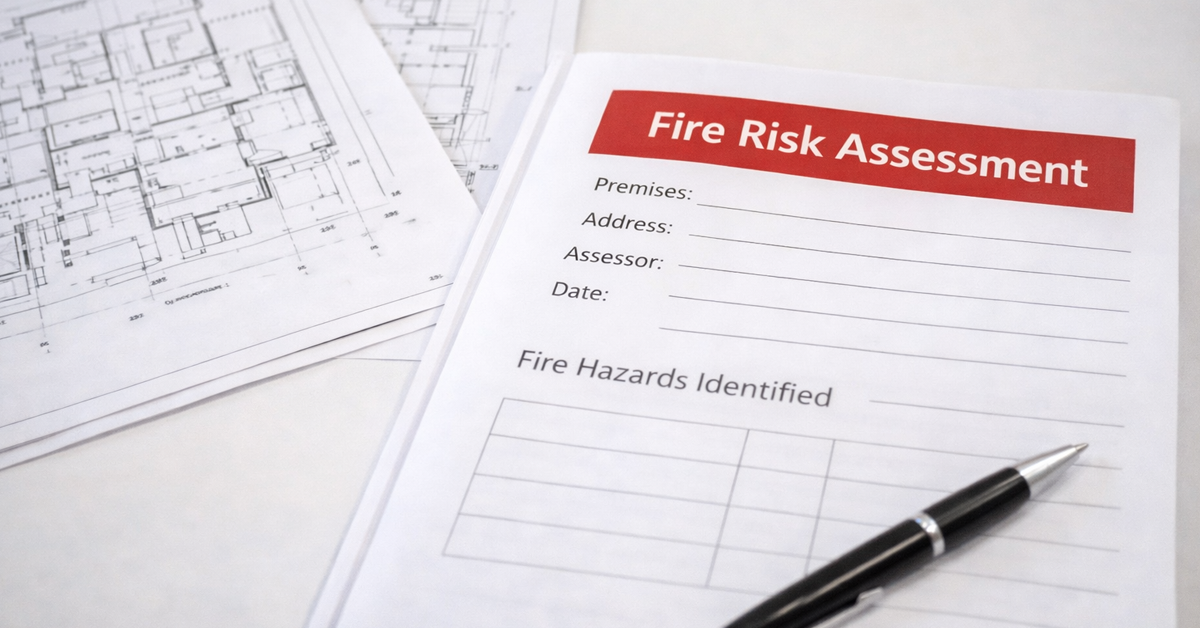
A genuinely useful report goes beyond a simple pass-or-fail verdict. It should be a detailed but understandable document that empowers you, the Responsible Person, to manage your legal duties effectively. It must be written in plain English, avoiding the technical jargon that can make official documents difficult to act upon.
While the format can vary, any high-quality report must contain specific elements to be considered ‘suitable and sufficient’ under the Fire Safety Order. You should expect to see clear sections covering:
The purpose of the report is to translate complex fire safety principles into practical, manageable tasks. A document that remains on a shelf is useless; its value is in its active use within your management system. You can see a detailed example of a fire risk assessment here to understand what a professional format looks like.
The action plan is the heart of the report. A competent consultant will provide clear, prioritised recommendations with realistic timeframes for completion. This allows you to address the most urgent issues first, demonstrating a systematic approach to risk reduction.
A report that simply lists problems without offering practical solutions or priorities is a major red flag. The action plan should empower you to make informed decisions, manage resources effectively, and demonstrate due diligence to any enforcing authority.
This proactive approach is essential. Of the 51,020 fire safety audits carried out by Fire and Rescue Services in the year ending March 2025, a concerning 42% were found to be unsatisfactory. These statistics from the fire prevention and protection statistics on GOV.UK underscore how widespread compliance issues are and why a clear, actionable report from a professional is so important.
Engaging a fire safety expert for the first time often raises practical questions. As the Responsible Person, you need clear, straightforward answers to feel confident you are making the right decisions and meeting your legal duties. Here are some of the most common queries we receive.
The cost of a fire risk assessment depends entirely on the size, complexity, and use of your premises. There is no standard price.
A small, simple retail unit or a single HMO might cost a few hundred pounds. In contrast, a large, multi-storey commercial building with complex layouts will be significantly more.
Any reputable consultant will provide a fixed, transparent quotation after a proper discussion about your property. Be wary of unusually low prices; this is often a major red flag for a superficial exercise that offers no real legal protection.
UK fire safety law requires you to keep your assessment under regular review. While there is not a single legally mandated deadline for every property, established best practice is to conduct a formal review at least annually.
A review is also required immediately following any significant changes.
What counts as a “significant change”?
Your consultant should advise on a review schedule appropriate for your property’s specific risk profile.
The law states the assessment must be carried out by a ‘competent’ person. If you run a very small, simple, low-risk business, such as a small shop with one or two staff members, you may be able to complete it yourself with appropriate guidance.
However, for most commercial properties, Houses in Multiple Occupation (HMOs), and blocks of flats, the risks and complexity make appointing a qualified professional essential. An expert ensures the assessment is thorough, impartial, and will withstand scrutiny from the Fire and Rescue Service.
Hiring a professional is not an admission of a lack of knowledge. It is a sign of due diligence and a responsible decision to ensure the safety of everyone in your building and the compliance of your property.
Receiving the report is not the end of the process; it is the beginning of the next phase. Your legal duty as the Responsible Person is to act on the significant findings outlined in the document’s action plan.
This means you must work through the identified issues within the recommended timeframes. These actions could range from simple fixes like repairing fire doors and upgrading emergency lighting to more significant tasks like improving staff fire safety training.
A good consultant does not just provide a list of problems. They deliver a practical, prioritised roadmap for you to follow to achieve and maintain compliance.
At HMO Fire Risk Assessment, we provide clear, actionable reports from certified assessors to help you meet your legal duties with confidence. If you need a professional fire risk assessment for your property, book your assessment with us today. Find out more at https://hmofireriskassessment.com.
Most HMO landlords I talk to can rattle off their fire door requirements, their alarm grade, and their emergency lighting checks without missing a beat....

Most of the fire safety advice on this site assumes you already have a working HMO. This one is for the stage before that: the...